Starmer is set to win, but an election of indifference will come back to bite

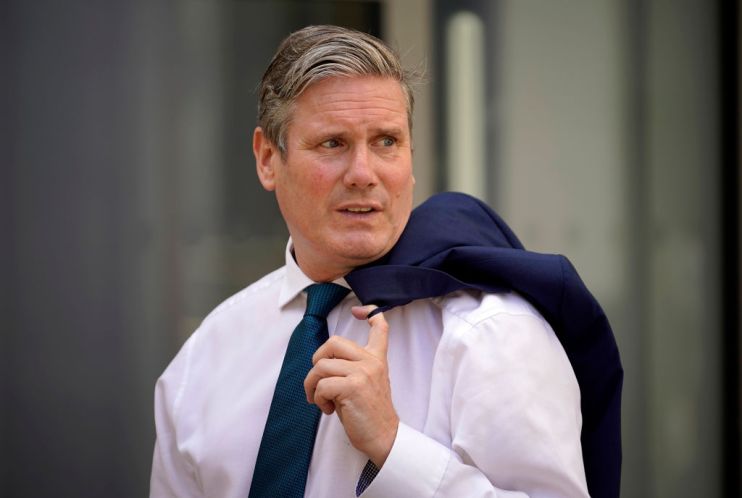
Labour is set to win the next election, but only a third of voters think the party is ready to govern. Is Britain sleepwalking into a new government, asks Eliot Wilson.
The overwhelming likelihood now is that the Conservative Party will lose next year’s general election, whenever it comes, and that Sir Keir Starmer will become the Labour Party’s seventh prime minister. It will be the 100th anniversary year of the first, Ramsay MacDonald, accepting George V’s invitation to form a ministry in January 1924. (The king thought of his grandmother Victoria and wrote in his diary: “I wonder what she would have thought of a Labour government!”)
There are some in Westminster who still think the details of this broad picture are in flux. Some within Labour, haunted by the memory of 1992 when victory under Neil Kinnock was almost taken as read, fret that the party might win only a slender majority, or even be the largest group but a minority in the new House of Commons. There are bullish Tories who think much can be pulled back, though generally only if their own favoured policies are implemented without delay. Meanwhile Richard Tice, the Reform UK leader who appears every inch the public-school millionaire property developer he is, points to a recent poll which put his party in third position, and anticipates a tectonic upheaval.
In many ways the Conservatives, as they did in the mid-1990s, are not only digging their own electoral grave but hiring earth-moving equipment to do the job very thoroughly. It is a widely accepted maxim that divided parties do not win elections (though the Financial Times’s Stephen Bush recently observed that it applies at election time but that temporary division is often a necessary part of reaching workable policy).
Yet the Tories have fought each other openly on immigration, net zero, taxation, infrastructure projects and myriad other issues. Each armed camp seems to think it can prevail just in time to avert disaster.
That comparison to the 1990s is, however, striking in another way. If you are old enough to remember the rise of Sir Tony Blair, you will remember the extraordinary enthusiasm, far outside normal politics, which surrounded him. Not only did the Labour Party enjoy consistent opinion poll leads in the high 20s, it broke through the magic 50 per cent barrier in 1994 and only dipped back underneath in the last days of the election campaign. Blair himself attracted favourability ratings in the range of plus 20-24.
Starmer has none of this buzz around him. While the Prime Minister thrashes around on a level of -49, according to YouGov, the Labour leader is on -22: those who regard him favourably are far outnumbered by those who don’t. His deputy, Angela Rayner, has a cult following for her outspokenness and lack of pretension, but most of the shadow cabinet is anonymous.
The electorate seems to be sleepwalking into a Labour administration. Only a third of voters think the party is “ready for government”. Starmer has warned that public services must be braced for “reform”, but four in 10 people say they do not know what he stands for and that he is untrustworthy. Those who retain some faith in politics are projecting their own aspirations on to Starmer’s slightly blank countenance.
Disillusion is corrosive. Whether or not voters have lost confidence in our political institutions, they are what we have, and Starmer has only modest plans to change them: greater devolution in England, a constitutionally enshrined sense of “purpose” and a new upper chamber of parliament. He has rejected the idea that public spending is “the only lever that can ever be pulled”, and will not pledge to reverse the measures of the government’s Autumn Statement. There is little prospect of a deluge of new money.
Starmer is an anxious realist. Last week after a major speech on the economy, he said gravely of his party’s task, “It will be a hard road to walk – no doubt about it”. But do voters understand that this is what they seem about to vote for? Is this enough? I hope the electorate is not drifting towards bitter, searing disappointment.