Starmer’s social media ban puts emotions above data

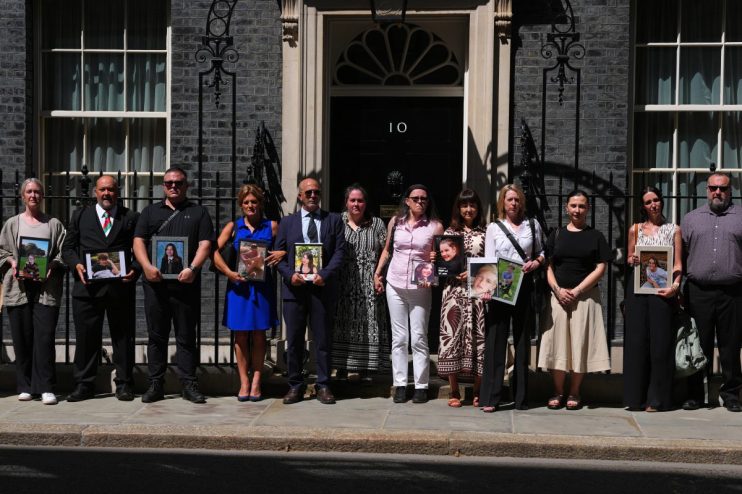
By parading grieving parents through Downing Street, Number 10 risks presenting an irresponsibly false picture of the dangers of social media, writes Tom Harwood
This week the Prime Minister invited bereaved parents to Downing Street to discuss social media regulation. They held up pictures of their deceased children, before heading inside. The message was sober and clear: social media is causing a wave of deaths among our children.
The only problem for the government is that the data does not support their message.
Indeed, by parading grieving parents through Downing Street, Number 10 risks presenting an irresponsibly false picture of what is happening with young people and suicide.
Teen suicide rates are lower than the 80s
Official ONS data shows that teenage suicide is lower today than it was in the late 1980s and 1990s. Rates are exceptionally low, and there is no data to show a statistically significant rise in teenage suicides compared to previous decades. Put simply, there just isn’t credible evidence to suggest social media has led to more teen suicides than there would otherwise be.
There has been an unusual rise in suicide of one demographic, however: men in their 40s and 50s. Not exactly the most Instagram-obsessed cohort.
We should not for a single second blame bereaved parents, or belittle their experiences. Many find comfort in taking up a cause, and it is entirely understandable that they will unite in their experiences. But hard cases often make bad law.
Martyn’s Law, introduced after a formidable campaign by the mother of Manchester Arena bomb victim Martyn Hett, has required venues capable of hosting events with over 200 participants to make plans and train staff for potential terrorist attacks. The costs of this policy were found by the government to massively outweigh the benefits, with a net present value calculation of an astonishing -£2.6bn hit to business.
Social media is not the evil force
There is no way of knowing whether the bereaved parents who visited Downing Street this week would have not been bereaved had social media never existed. The wider suicide data would suggest sadly before the age of Tiktok and Instagram, there was just as much bullying and ostracisation that led to unimaginable pain for just as many families.
It is worth noting not all of the bereaved parents were affected by suicide. Among them was the mother of the savagely murdered teenager Brianna Ghey. While Esther Ghey has clearly found purpose in social media campaigning, it is hard to see how her daughter’s death was brought about by social media. Her vicious, evil murderers did not gain their lust for blood through some Instagram algorithm. Scarlett Jenkinson and Eddie Ratcliffe were found to have accessed illegal videos of torture and murder on the dark web, not social media. They used sophisticated tools to evade restrictions, and access and sites that are already outlawed.
In fact it was Brianna’s friends online on Tiktok who rallied to hold vigils and mourn her after her horrific and tragic murder. Her internet friends were her support network. It was people she knew in real life who killed her.
Starmer is putting politics above data
Following its meeting at Downing Street, the government has briefed the media that it will announce a social media crackdown “within weeks”. A cynic might say that an embattled Prime Minister is rushing to deliver a legacy defining change before he might be swept from office as soon as this summer. In doing so this government risks putting emotion above data, and delivering the kind of disaster we are slowly seeing play out in Australia.
Polling by the Molly Rose foundation found that an astonishing 61 per cent of 12-15 year-olds are evading the social media ban Down Under. Ultimately, emotionally-driven sledgehammer solutions are rarely the best way to crack a nut. If the Prime Minister is looking for a legacy that works, he should steer clear of an outright social media ban.
Tom Harwood is deputy political editor at GB News