This is the start of a new democratic space race – and Britain is at its head

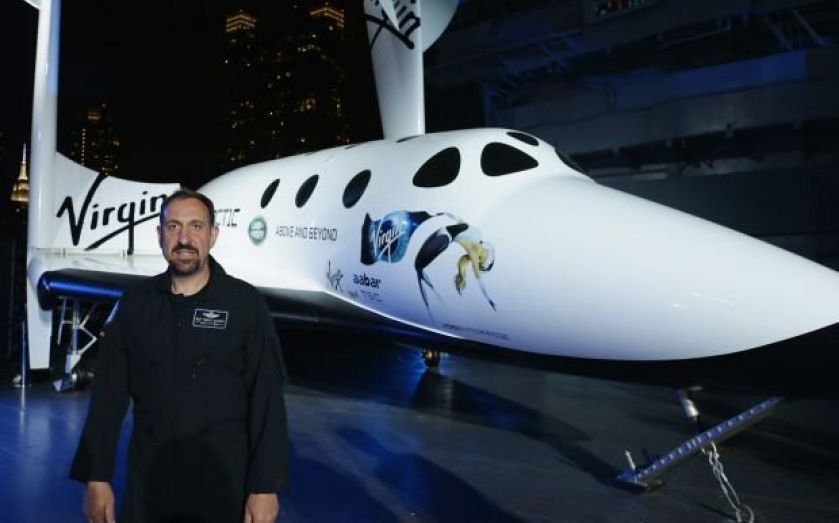
Yesterday's announcement that the government has shortlisted eight potential sites for a UK spaceport, and enabled a regulatory regime for manned spaceflight, is a breakthrough moment for our £11bn space sector. While the industry has already enjoyed Bric-style growth rates in recent years, we are now on track to remove crucial blockages to UK leadership in the new private sector space race.
Two years ago, the Institute of Directors produced a report, Space: Britain’s New Infrastructure Frontier, calling for the establishment of a spaceport and an enabling regulatory regime. To his great credit, David Willetts – then space minister (and cruelly denied his big announcing moment yesterday due to the reshuffle) – saw the opportunity and launched a government review into commercial spaceplanes. This will stand out as his lasting achievement.
But assuming all goes to plan, what will this emerging space sector look like? Perhaps like the City, it will not be a “British” space sector per se, but lots of foreign and domestically-owned firms, capital and technology all jostling to move ahead, working with universities, colleges, and local and central government. Moreover, it will drive dispersed economic growth that is emphatically not in London, but often in remote-ish rural areas. And the sector is changing so fast because there is a real prospect of new kinds of growth. To name but three, Britain has huge potential in low-cost access to space for satellite launch, space passengers, and remote observation.
Remote observation is an interesting one. Images taken above water vapour and the ozone layer by suborbital space vehicles at 350,000 feet will be cheaper than satellite or manned aircraft, allowing a clear and wide synoptic view. Further, a vehicle like Lynx II, produced by commercial space company Xcor Aerospace, could take these images up to four times a day. In the not too distant future, online map images will no longer look two years out of date.
Forecasting the size of any market that does not yet exist is always hard. But with space tourism, while around 550 have been into space since Yuri Gagarin on government-funded space programs, over 900 tickets have already been sold by Virgin Galactic and Xcor Aerospace before they have even begun operations. As prices come down, and vehicles become tangible and available, ticket sales are likely to take off.
And we mustn’t forget small satellite launch. The UK already has a strong niche in small satellite manufacturing with Surrey Satellite Technology, and is also established in satellite insurance. Yet the lack of a UK spaceport has held the industry back. As prices and size requirements have fallen, with satellites now more accessible, the costs and time delay of getting a launch slot have become so prohibitive at the likes of the equator or Russia’s cosmodromes that a polar launch of less than 500kg from Scotland starts to make sense.
So where does the government’s review say the spaceports could be? Taking into account sites that are available now (or with a few modifications), that are relatively free of air traffic, are close to the sea for safety, and which are a good strategic fit, the government has come up with an eight-strong shortlist: Stornoway, Lossiemouth, Kinloss, Leuchars, Campbelltown, and Glasgow Prestwick in Scotland, Llanbedr in Wales, and Newquay in Cornwall.
Theoretically, with a long-enough runway, more of the UK’s 500 odd aerodromes could launch a vehicle like the vertical take-off and landing Lynx II, or air-launched vehicles such as those operated by Virgin Galactic and a Swiss Space Systems – the three leading suborbital contenders for the UK. But airspace is crowded in the UK, so spaceports, and the economic clusters that will come with them, are best located away from population centres. This could change over time, however, as safety records improve with the number of uneventful flights. In the future, we will certainly need several spaceports for competition and to hedge against bad weather.
The other key component of the review yesterday was to embrace the need for future spaceplanes to have the regulatory freedom to operate as experimental craft. Unlike aircraft, which have 120 years of flight experimentation, there is enormous variation between prospective suborbital spaceplanes – air-launched, horizontal or vertical take-off and landing, manned and unmanned, carrying between two and eight people. No one knows what the best and safest design will be until many thousands of flight hours have been completed. And risk has always been a part of space.
We are witnessing nothing short of the democratisation of space – as prices fall and the level of market participation and innovation rises. In the future, schools and entrepreneurs and not just universities and governments will be able to afford their own micro space projects and businesses. Yesterday was a landmark day for Britain.
Dan Lewis is senior infrastructure policy adviser to the Institute of Directors and author of Space: Britain’s New Infrastructure Frontier.