Stokes, McCullum, ECB: Who’s to blame for England’s latest Ashes failings?

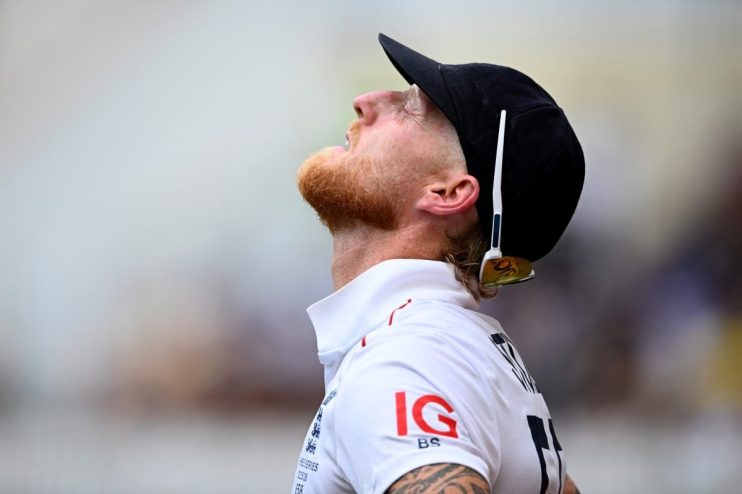
Assessing true accountability for England’s Ashes collapse requires tracing failure back through the chain, argues Ed Warner.
“Still seething!” The WhatsApp from a prominent cricket podcaster arrived a full 48 hours after England’s capitulation in the opening Ashes Test. Did I want to provide him with a sound-bite on what appeared more than just a bad day at the crease?
A blame game is certainly in full swing (or lazy waft of a bat, perhaps). This was a collapse that has reignited the perennial debate about accountability in sport.
When performances nosedive, where should the buck stop? Is it the player who edges tamely to slip, concedes a penalty or fades in the home straight, the coach who picked them, the sporting or performance director who set the strategy, the chief executive who hired that director, or the chair of the board that appointed the CEO?
In sport, as in any business, accountability is a chain of command – and chains are only as strong as their weakest link.
The player is always first in the firing line. Zak Crawley’s pair of ducks and the meagre 10 runs mustered in the second innings by the trio of heavyweight batters in England’s middle order constitute highly visible failures. Fans instinctively blame the individual because their mistakes are in plain sight.
Yet players operate within systems. They are selected, coached, conditioned, and managed. To only blame a single athlete is to ignore the scaffolding that has been assembled around them.
Teams can underperform collectively too. England’s batting didn’t just collapse individually; it folded as a unit. In rugby when a pack is bullied, it’s likely not one prop’s fault but a systemic failure. Football fans the world over will have witnessed an apparently contagious crumbling of morale and discipline.
Blaming “the team” in such circumstances is easy shorthand, but it risks diluting accountability into vagueness. Who, precisely, failed to prepare them to perform effectively together?
Is the coach to blame?
The coach is the obvious lightning rod. Brendon McCullum’s “Bazball” philosophy (not a moniker England’s head coach himself uses) is lauded when his teams chase down improbable totals, but when they collapse as they did last Saturday that same philosophy is deemed reckless.
Gareth Southgate was praised for England’s tournament progress under his leadership, yet criticised for conservatism when the stakes were highest. Is it any wonder that head coaches often develop a laager mentality?
“I’d say keep the faith. We know what our best game is. We’ve been in this situation before, we’ve been insulating against morale dropping too low for the last few years and nothing will change that. We head into Brisbane with high hopes.”
Brendon McCullum, England coach
The coach selects the players, sets the tactics and creates the culture. If the team is undercooked or overawed, the coach is culpable. But coaches don’t spring from nowhere, nor do they operate in an organisational vacuum.
Above the coach sits the performance director, often unseen but hugely influential. They shape long‑term strategy, oversee recruitment and decide an organisation’s sporting philosophy.
In recent years, across sport, these individuals have enjoyed an increasingly high media profile – and, in football at least, heightened job insecurity. Boards and fans are apportioning them greater blame for failure.
In Britain’s Olympic and Paralympic system, performance directors perform a pivotal role between the lottery funding agency, UK Sport, and the coaches working day-to-day with athletes.
When UK Sport’s much-lauded “no compromise” model delivered medal success, PDs were feted behind the scenes and occasionally in public too. When athlete welfare scandals emerged, the same directors stood accused of fostering toxic cultures.
Once again, accountability is unclear. Performance directors don’t drop catches, but they create the environment in which catches might be dropped. Culture is largely their responsibility, but this is merely one (albeit very significant) part of the whole. In case you were wondering, Rob Key is the Managing Director of England Men’s Cricket.
What about chairs, CEOs and directors?
CEOs are the bridge between sport on the field or court and the business of sport. Typically, they appoint the performance director, oversee budgets, and ultimately answer to the board for sporting outcomes, even if they are in reality very remote from the detail.
Those chief executives most vilified by fans for sporting failure are likely to have exposed themselves by being closely and publicly involved in the selection and management of their organisation’s key coaching staff. Sometimes such association is unavoidable; at other times it is an active choice.
With commercial and sporting results closely correlated, perhaps it is inevitable that CEOs so often make that choice. However little one might know about the alchemy of sporting success, it is very hard to keep its pursuit at arm’s length when ultimately your own job may be on the line. If your KPIs include tickets sold and sponsorship deals signed, it sure helps to have a winning team.
At the very top sits the board. Led by its chair, the board sets an organisation’s vision, appoints its CEO, and ultimately bears responsibility for its outcomes. The board is the origin point of accountability. If it appoints poorly, or endorses an unwise strategy, the unintended consequences trickle down.
Criticism of the England cricket team began before the first Test and focused on its apparent lack of preparation. The head coach and managing director could as easily direct such criticism to those at the boardroom table who have pursued a commercial strategy built around an over-crowded cricket calendar.
The ECB is led by the “Two Richards”, chair Thompson and CEO Gould – again, in case you were wondering. They won’t be fretting about the Ashes just because they are cricket fans. Their reputations and legacies will be shaped in part by on-field results.
Yet this debate can’t be confined to an organisation’s hierarchy. The media plays its part in sensationalising failure. A batting collapse becomes a crisis, a sending-off or missed penalty a national trauma.
Headlines amplify blame, often reducing complex chains of accountability to a single scapegoat. The narrative thrives on drama, because drama sells. Fans eagerly consume it, and the cycle of outrage spins faster.
And then there are those fans themselves – passionate, loyal, but capable of being as fickle as the media. They can turn on a player overnight, with David Beckham’s red card in the 1998 World Cup the crowning example.
From hero to villain in a single match but, almost three decades on, now a knighted national treasure. Fandom is emotional, not rational, and its volatility fuels the blame game.
“I wish there was a pill you could take which could erase certain memories.”
David Beckham on that red card
Don’t give up on England in the Ashes yet
This game demands nuance if it is to be fair. Players must own their mistakes, but they are products of systems overseen by coaches appointed by sporting directors who are in turn hired by CEOs charged with delivering a board’s vision.
To focus blame on any one link in the accountability chain is overly simplistic – just as to spread it evenly risks absolving everyone.
Scapegoating is easy but lazy. Assessing true accountability requires tracing failure back through the chain. England’s Ashes collapse wasn’t just about Root, Brook and Stokes in the second innings, or McCullum’s in-play tactics. It was about preparation, playing philosophy, and corporate priorities set years earlier.
Perspective matters too. This was only the first Test. There are still four to come. The temptation to sensationalise, to scapegoat, to declare crisis is strong. But sport is a long game – few more so than Test cricket – and accountability must be measured not just in moments of failure but across the arc of a series, a season, a cycle.
Mad though it might seem in the aftermath of the first Test, I for one am prepared to watch this Ashes contest play out over the coming weeks before rushing to any judgement. That urn may yet be coming home.
Ed Warner is chair of GB Wheelchair Rugby and writes his sport column at sportinc.substack.com