Stop blaming bad weather for empty shelves, it’s a lack of competition in the food industry

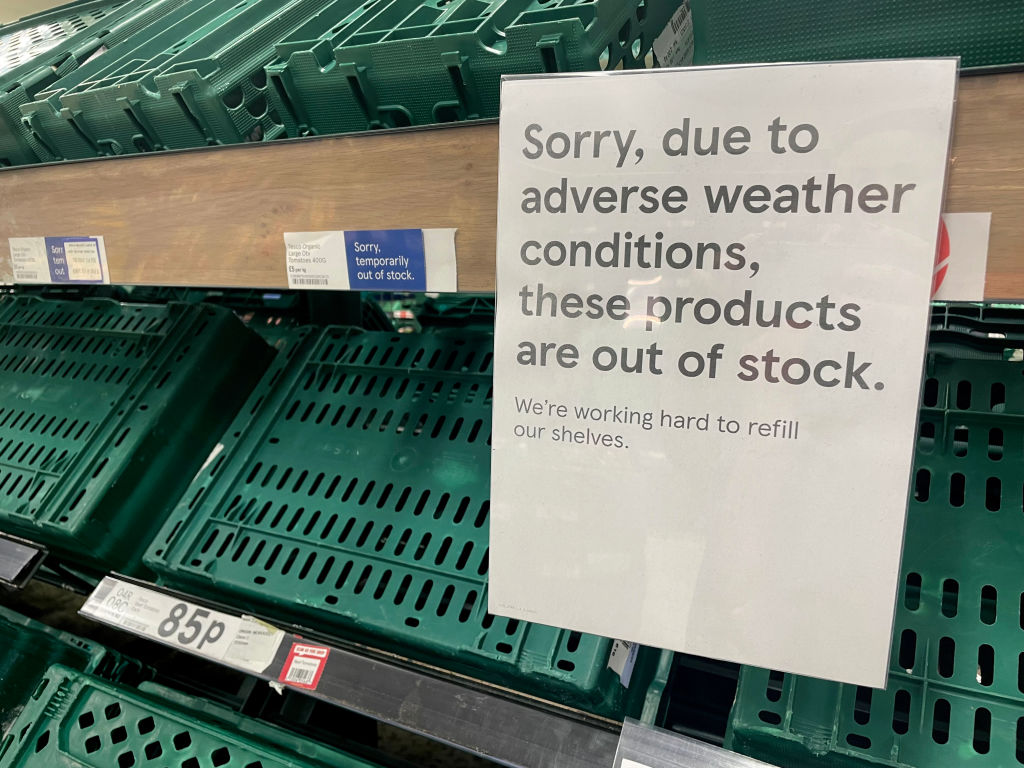
Supermarkets up and down the country have blamed bad weather for empty shelves, but monopolies in the food industry have left supply chains more and more fragile, writes Nick Dearden.
Many Britons, in recent weeks, have found themselves wandering through the empty aisles of their local supermarkets with rows of empty crates, where fresh produce once sat. Shops even began to ration fruit and vegetables as consumers demanded answers for the shortages.
Supermarkets cite disrupted harvests in Spain and Morocco due to deteriorated weather. That might be true enough, but it doesn’t explain the pictures circulating on social media of well-stocked shelves right across the EU.
It turns out, Britain’s messy divorce from our biggest trading partner did nothing to cement our supply chains, and we are now firmly at the back of the queue. Meanwhile, farming has been thrown into disarray. New trade deals like the Australian agreement – dubbed “not very good” by a former British minister – have not helped.
But on another level, these disruptions have only exposed a food and farming system which is stretched to near breaking point. They have shown up long-term problems we need to tackle because they will only get worse in years to come.
We might like to imagine our food comes from millions of small farmers scattered around Britain, and the wider world, selling into a global marketplace, where we use our spending decisions to send messages back to the producers about what we like to buy. But this bears no resemblance to our food system.
A recent report by the ETC group shows many parts of the agricultural and food system have been captured by between four and six giant companies. While 25 years ago, ten corporations controlled 40 per cent of the seed market, today it is just two giants, who also have a significant foothold in agrochemicals. Meanwhile, at the other end of the scale, just three supermarkets control more than half of Britain’s grocery retail.
The trade of agricultural commodities like grains, meat and sugar, is also dominated by a small handful of companies, with Cargill one of four giants controlling between 75 per cent and 90 per cent of the grain trade after gobbling up dozens of competitors.
These giants have also increasingly become speculators on financial markets, making money not from actually producing or transporting food, but gambling on the price – a process which can itself increase those prices. Commodity trading as a whole generated $115bn last year for food, energy and financial firms, profiting from the very chaos which devastates the lives of farmers and consumers.
Monopoly power means that companies don’t need to respond to crises by lowering prices. Oxfam reports that over 50 per cent of the price rises we’ve seen are simply markups charged by these massive businesses.
But the cost is not only seen in the prices we’re paying. The control which food giants exert means they can effectively regulate the food and agricultural system. They decide on production, distribution, and pricing across the food chain. They have forced down their costs by creating dangerously long and fragile supply chains to meet just-in-time deliveries. Even leaving aside the exploitation across these supply chains, they leave us highly vulnerable to external shocks, whether a particularly rainy winter or a global pandemic.
This vulnerability is increased by the biodiversity loss, deforestation, and water loss inherent in industrial-scale farming. Something like 75 per cent of plant genetic diversity has been lost since the 1990s as farmers are encouraged to cultivate similar high-yielding crops. Around three-quarters of the food we consume now comes from only twelve plant and five animal species.
We should take the lack of fresh produce on our shelves as a wake-up call to restructure our food system. That means investing in local farmers here, rather than hoping trade deals will provide the cheap produce we need. It means cracking down on harmful food speculation in the financial markets. But more than anything, it means breaking up the monopoly control of our food system.