Skip to content
Saturday 5 September 2026London --:--Frankfurt --:--Zurich --:--
NewslettersSearchEN · DE · FR
MorningWire

European business, markets and politics

FTSE 100
10,831.09
0.00%
DAX
26,046.40
+0.17%
CAC 40
8,278.77
-0.09%
STOXX 50
6,392.93
+0.16%
  • Europe
  • Markets
  • Business
  • Economy
  • Regulation
  • Politics
  • Opinion
More
GermanyFranceEU InstitutionsCompetitionPublic AffairsBankingTechnologyEnergy
  • Germany
  • France
  • Europe
  • Markets
  • Business
  • Economy
  • Regulation
  • Politics
  • Opinion
  • DE
Monday 10 February 2020 4:43 am  |  Updated:  Friday 07 February 2020 5:45 pm

Stop clinging to the last century and let the high street evolve

By: Bill Grimsey

Add as a preferred source on Google
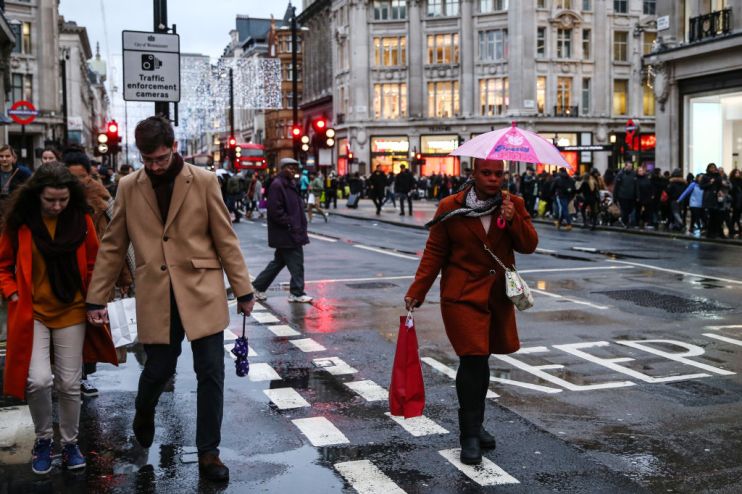
Selfridges Opens Its Doors On Their Boxing Day Sale
High streets can no longer be synonymous with just retail

Every January, without fail, the hand-wringing begins.

After predictably poor Christmas retail results, everyone wants to know: are we seeing the death of the high street?

The gloom doesn’t stop. Last week, the boss of John Lewis was the latest to lament the retail landscape, warning of potential store closures and job losses. 

Why are we still questioning the high street’s future? Haven’t thousands of shop closures, the disappearance of household names, and the hollowing out of our town centres taught us anything? It’s a bit like commentators in 2045 asking “is climate change a real problem?” when the first coastal town in Norfolk disappears under water.

Seven years ago, I gathered a team of experts to carry out a review into the challenges facing the high street and called on policymakers to accept that there is already too much retail space in the UK. But for many, the penny still hasn’t dropped.

We need to accept that the twentieth-century model is over, and no amount of nostalgic hand-wringing is going to bring it back. It’s time we asked what a future high street that is no longer dominated by retail looks like, and how can we ensure that they remain the beating heart of communities.

We know some of the answers already. Beyond gloomy headlines of closures and struggling retailers looking for the CVA escape route, a positive new landscape is already taking shape. 

The experience economy is going from strength to strength, and Brits are forecast to spend £141bn on leisure by 2022. Research tells us that growing numbers of generation Z and millennials would rather spend their money on experiences than material items, and this is driving high street change through the growth of leisure, entertainment, and new dining experiences. 

Likewise, as retail continues to shrink, we’re starting to see more housing on the high street. The number of applications for change of use from stores to homes has doubled over the past five years. 

Read more

The decline of Harvey Nichols is a tale of London’s decline too

Harvey Nichols department store at night, illuminated with neon signs and colorful window displays.

The growth of co-working space, business centres and trendy office studios on high streets gives a further clue to what the future will look like. Research by the Centre for Cities shows that areas with higher levels of modern workspace are more likely to have vibrant and successful high streets than areas that don’t. Leisure, living and working will be key drivers shaping the new landscape.

All these factors point to community being the biggest force powering change. You can see this in the new wave of high street food halls bringing together people from all walks of life to eat under one roof, and in the work by local authorities.

Stockton Council is buying up 1960s shopping centres to demolish them and create more green space and housing, while Bath Council is creating clean air zones to tackle pollution in the city centre. High streets of the future are going to be more liveable, social spaces.

The new reality is that high streets can no longer be synonymous with just retail. In Hull, there are proposals to replace an empty BHS store with an ice rink. In Southend, Havens Department Store was turned into a community hub. And in Stockport, an empty M&S building is being converted into offices and leisure space.

The real question we should be asking is what’s holding up this change and preventing high streets from leaving the last century and grabbing the opportunities of a new one? 

There is massive potential to be unlocked, particularly in building civic pride, people’s sense of belonging and local identity. Yet there are still too many places in denial. 

The 2020s must be a decade in which high streets finally move from crisis to hope. And we’ll only do that when we move the debate away from retail, onto the future instead of the past.

Main image credit: Getty

Read more

Tesco and M&S warn Burnham against Budget tax raid on retailers

Andy Burnham, Mayor of Greater Manchester, in a suit, holding a red folder, walking past railings

Share this article

  • Facebook
  • X
  • LinkedIn
  • WhatsApp
  • Email

Similarly tagged content:

Sections

  • News
  • Opinion

Categories

  • Business
  • Opinion
  • Retail

Trending Articles

  • Victoria Beckham owed £350,000 by Harvey Nichols

  • M&G: FTSE 100 giant hits out at Rayner’s ground rent cap as it suffers loss

  • Fulham owner Khan sees his £1bn stadium construction project take next steps

  • John Lewis boss: UK economy facing a ‘permacrisis’ 

  • Don’t underestimate the free trade agreement Britain just joined

More from Morning Wire

  • The decline of Harvey Nichols is a tale of London’s decline too

    Opinion
    Harvey Nichols department store at night, illuminated with neon signs and colorful window displays.
  • Tesco and M&S warn Burnham against Budget tax raid on retailers

    Retail
    Andy Burnham, Mayor of Greater Manchester, in a suit, holding a red folder, walking past railings
  • Back to basics: Sainsbury’s gradual retreat from the British high street

    Retail
    Sainsbury’s Cobham. Credit: David Parry/PA Media Assignments.
  • Burnham to crack down on vape and betting shops 

    Politics
    Retail display shelf in a shop showing various vape products, candy, and gum, with clear pricing and warning labels.
  • Why did Pinterest choose Oxford Street for its new HQ?

    Opinion
    Gregory Owens and Sadiq Khan, London Mayor, stand smiling in a gallery with various framed images.
  • Consumer confidence extends upward streak in boost to Burnham and Healey

    Politics
    High street bustling with shoppers and vibrant storefronts, showcasing dynamic urban life and economic activity
  • Mike Ashley slams Burnham’s ‘populist’ plans to revive high street

    Retail
    Mike Ashley in a business setting, wearing a suit, likely discussing sports retail strategy or recent business developments.
  • Retailers call for ‘lifeline’ from Healey as cooler weather fails to boost footfall

    Retail
    A woman in sunglasses and a hat holding a black umbrella on a sunny city street, with blurred people in the foreground.
MorningWire

Independent European business, markets and political news for decision-makers.

Morning Briefing

Europe

  • Germany
  • France
  • EU Institutions
  • Europe

Business

  • Markets
  • Business
  • Economy
  • Regulation
  • Competition
  • Public Affairs

Editorial

  • Opinion
  • Editorial Policy
  • Corrections
  • Contact

Company

  • About Morning Wire
  • Privacy Policy
  • Terms of Use
  • Cookie Policy
© 2026 Morning Wire Ltd · Published by Morning Wire Media, Bahnhofstrasse 65, 8001 Zürich, Switzerland
Privacy · Terms · Cookies · Facebook