The subscription economy may be the future for businesses, as firms switch to selling outcomes rather than products

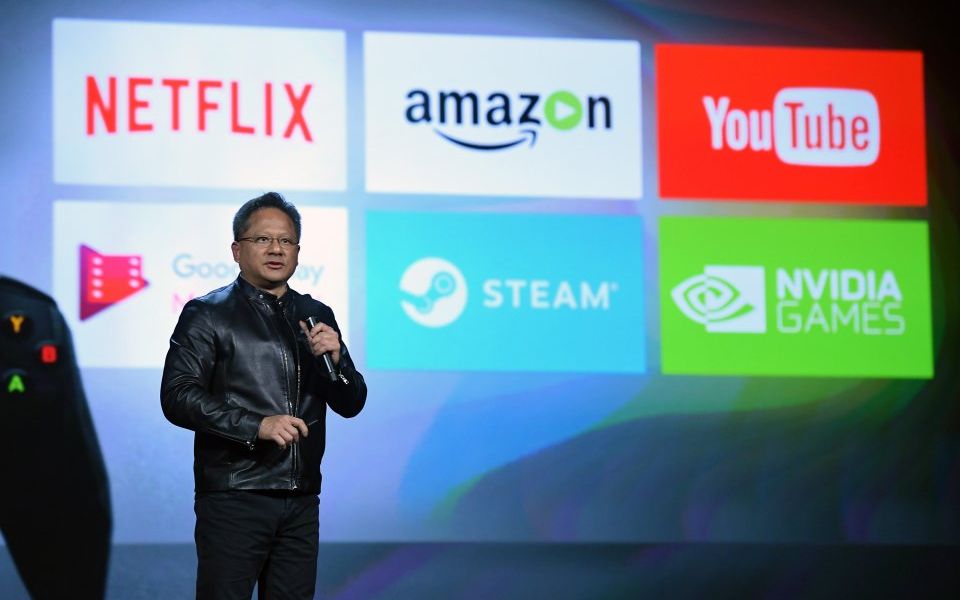
When was the last time you actually bought a DVD or CD? Most likely, you subscribe to a digital streaming service, like Netflix or Spotify. Congratulations, you’re part of the burgeoning subscription economy.
But this subscription-based economy isn’t just limited to entertainment media. Increasingly, both individual consumers and big businesses are finding it more convenient to subscribe to services, rather than owning or buying products outright.
At one end, you have consumers subscribing to Apple Music in order to access millions of songs, instead of buying new albums; subscribing to Amazon Prime in order to get faster deliveries of physical goods; or signing up to a car subscription service such as Zipcar, so that they don’t have to own a vehicle themselves.
Read more: Deliveroo's testing an Amazon Prime-style delivery subscription
Meanwhile, many businesses are now subscribing to cloud computing services and tech platforms to design products or manage customer relations, rather than paying the large cost of buying expensive programmes outright. These types of subscription are known as “software as a service” (SaaS).
For both big and small customers, these types of subscription services offer convenience and flexibility, as consumers can trial it and switch before they commit, and often at a lower cost.
The advantages for customers are clear, but what about sellers? Moving to a subscription model introduces the risk that customers will stop subscribing and sacrifices the upfront benefit of making a large, one-off sale. However, the subscription model offers a significant long-term advantage to sellers too, as loyal subscribers will generate constant income on a regular basis.
“When I wake up at the start of the year, or start of the quarter, or start of the month, I have a known predictable revenue,” says Tien Tzuo, co-founder of Zuora, which designs SaaS applications for firms keen to switch to the subscription model.
“That’s a much better model than, say, the old Hollywood model, where you spend $200m making a movie and you hope it might work out.”
You want to extract what the customer is really looking for out of the product
Tzuo, who spent nine years working at US company Salesforce which was an early kickstarter of the SaaS trend, is evangelical about the subscription model, and predicts that in the future, more and more businesses will switch to it, rather than simply selling individual products. As well as the regular income stream, Tzuo believes that subscription companies need to have a closer one-to-one relationship with their customers (and thus capture more data about them), which gives them a competitive advantage.
“Let’s contrast Amazon to Walmart. Amazon has the advantage, because everything you’ve ever done with it is tied back to your ID. Amazon knows all the movies I watch and the music I listen to, knows what time I wake up, pretty soon it’ll know all the groceries I buy at Wholefoods,” Tzuo explains.
“You compare that to Walmart, where millions of people walk through a Walmart every two weeks and buy something, but the company doesn’t know who they are. Walmart is thinking ‘how do I sell more products’ instead of ‘how do I build a relationship with my customers’.”
According to Tzuo, the relationship between a subscriber and the provider will deepen based on the value they create. The firm can then use data to refine that relationship and become even more valuable to that customer.
But surely there are limits to this trend? While many customers are subscribing to software platforms or to stream entertainment, won’t they still need to buy other products? For example, farmers and construction companies will still have to buy physical vehicles and equipment.
Not necessarily, according to Tzuo.
“We try to tell companies, it’s not about the product – you want to extract what the customer is really looking for out of the product. It was never about the CD, it was about the enjoyment of music; it was never about the car, it was always about getting from point A to point B, in the easiest way possible. Let’s start with tractors – are you really trying to buy a tractor, or are you really trying to move some dirt?”
Tzuo explains that companies like heavy equipment manufacturer Caterpillar are working on services where they can use drones and aerial technology to map out a space, and then send instructions to autonomous machines that can then do precision excavations.
“Why should I buy the tractor when I can go to someone and say ‘I’m trying to build the golf course, I want it to look this’ and just pay for the benefit of the outcome I’m looking for? When you look at it that way, any business can transform to provide the outcome the customer is looking for, without having to force them to buy all these products and figure it out for themselves.”
This subscription-based economy does have it challenges. Transitioning to a subscription service requires understanding new technology, as well as embracing a completely different business model that offers less upfront revenue and risks losing subscribers to competitors unless companies work harder to keep them loyal.
But companies like Zuora are hoping to guide businesses into the future and make this transition. As long as they subscribe, of course.