Sunak is right, Labour spending plans are stuck in a bind without tax hikes

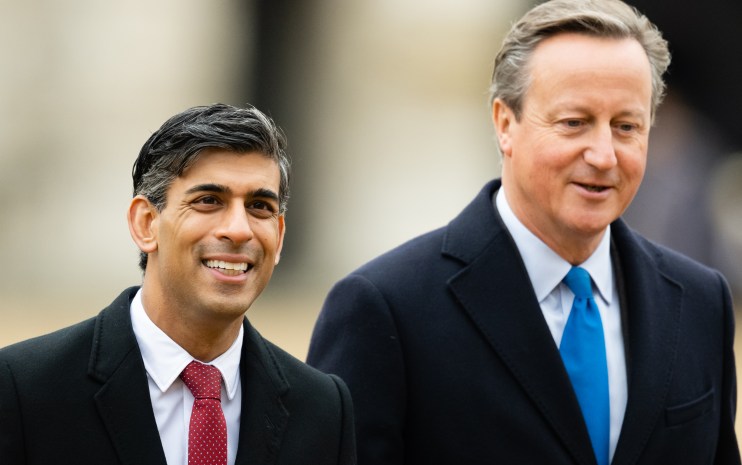
The ghost of Liz Truss risks haunting both parties at the next election. For the Tories, the damage her short-lived premiership did to their economic credibility is obvious. The threat to Labour is, admittedly, less intuitive. On Monday, Rishi Sunak argued that Truss and Rachel Reeves were two sides of the same fiscally irresponsible coin. The former wanted to borrow tens of billions for unfunded tax cuts; the latter to borrow a similar amount for new spending. The comparison might feel like a stretch – but as Labour look to an election, they should be concerned that it will stick.
The most eye-catching number among Labour’s pledges is their £28bn-a-year Green Prosperity Plan. Shadow energy secretary Ed Milliband’s package is what Sir Humphrey would describe as “courageous” – meaning, of course, that it could lose an election. Unsurprisingly, Labour’s extremely hawkish shadow Treasury team has repeatedly chipped away at the overall figure to reduce its electoral toxicity.
First they pushed the £28bn target back, explaining that a Labour government would “ramp up” to the total amount over five years. Later, shadow ministers clarified that £8bn of the pledge wasn’t new spending at all. But the Institute for Fiscal Studies has argued their plans would still see government capital investment 60 per cent higher than recent historical averages.
Labour’s idea takes inspiration from America, but differs in one crucial respect. Biden’s Inflation Reduction Act included around $350bn of investment into clean energy, designed to kickstart growth and improve energy security. Many looked enviously at spending on this scale, explaining it away by pointing to the dollar’s status as a reserve currency. Others argued that lots of this new investment could become a short term sugar rush and long term deadweight.
What is widely misunderstood about Biden’s green plans is that they are fiscally neutral – unlike Labour’s proposals. Congress constantly battles over the budget deficit and, as the name suggests, the plan didn’t want to increase inflation by injecting lots of new money into the economy. So, the $350bn was funded through reforms to pharmaceutical pricing in Medicare and tax increases on large corporations.
Other countries have taken a similar approach. Germany’s Climate and Transformation Fund, cited by Reeves as an inspiration, is funded through income from its Emissions Trading Scheme. Yet Labour hasn’t earmarked any tax-raising measures or savings against their headline green pledge – which, according to The Economist, is ten times larger than the Inflation Reduction Act as a share of GDP.
How on earth will Labour pay for it? Reeves has set out fiscal rules that look remarkably similar to the Chancellor’s – pledging not to borrow to fund day-to-day spending and reducing national debt as a share of the economy. It’s the second rule, on debt, where she could have some wiggle room. Several commentators have made a case for changing how we think about types of government investment, recognising that some kinds of investment create valuable new assets like new hospitals or roads. Why not, they argue, move to a model that recognises this “public sector net worth” and opens up space for more investment?
But there’s a catch: the markets might not buy it. Counting assets to let you borrow more only works if lenders think they could recoup those assets in the event of a default, to prevent them losing their money. And recent research by the Institute for Fiscal Studies says that’s unlikely – a new roundabout isn’t a particularly attractive asset to own for anyone but the Department for Transport.
So Labour are stuck: they don’t want to raise taxes, have left little space to borrow, and are committed to major new investment. They could engage in some creative fiscal trickery, like putting the brand new GB Energy off government books by making it functionally independent. But what use is a state-backed energy company if it operates fully outside of government influence? There is no shortage of global capital looking to invest in renewables projects on commercial terms. And history has shown us that these sorts of financial sleights of hand can backfire for Labour – most famously, with the enormously wasteful “PFI” contracts for new school buildings.
Rishi Sunak’s fiscal conservatism is nothing if not consistent. His warnings cost him a leadership race against an opponent who immediately came crashing back to economic reality. At the next election, might the public be more open to his message?