Sunak’s climate rowback depends on an anti-net zero populism that may not exist

Ten days ago, Chris Skidmore, the former climate change and clean energy minister who chaired the government’s Net Zero Review in 2022-23, surprised Westminster by announcing his immediate departure from the House of Commons. He had already decided not to stand at the general election, but he brought the move forward in protest at the Offshore Petroleum Licensing Bill, which was scheduled to be debated last Monday.
The proposed legislation invites applications for production licences on an annual basis, which the government argues will provide “clarity and certainty” for the fossil fuel industry in the North Sea. Skidmore was adamant in his opposition: “there is no case to be made for increasing fossil fuel production at a time when investment should be made elsewhere”. He added that “history will judge harshly” those who supported the bill.
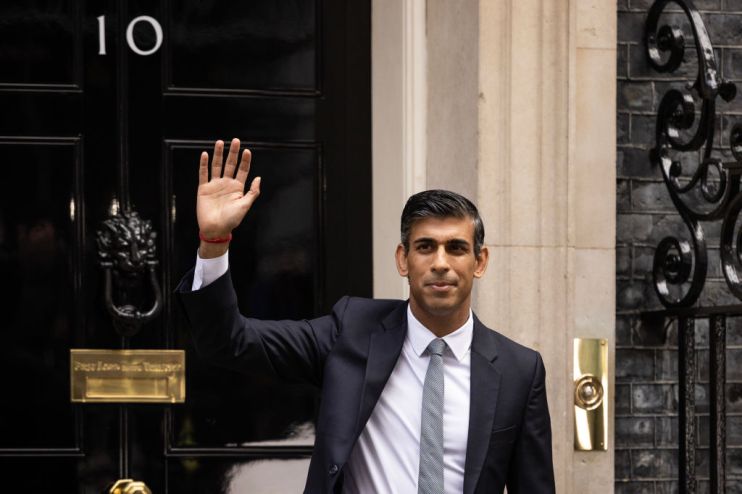
Skidmore is not some radical tree-hugging outlier. He was the minister in charge of energy and climate change when, in 2019, he signed the government’s formal commitment to achieve a 100 per cent reduction in greenhouse gases by 2050. His appointment to chair the Net Zero Review was made during Liz Truss’s brief premiership by the then-BEIS secretary Jacob Rees-Mogg, a politician at the robustly sceptical end of the climate change debate. But he has been caught out by Rishi Sunak’s reset of net-zero policies last September, when the prime minister promised “a more pragmatic, proportionate, and realistic approach to meeting net zero that eases the burdens on working people”.
The prime minister has thrown aside a number of environmentally friendly measures: the ban on the sale of new petrol and diesel vehicles was deferred by five years; obligations on landlords to improve the energy efficiency of their properties were scrapped; and a ban on fossil fuel heating for off-gas-grid homes was pushed back from 2026 to 2035. At the same time, he placed a much greater emphasis on energy security and the resilience of supply and distribution networks, since the Russian invasion of Ukraine drove up the price of wholesale natural gas and therefore energy costs in the UK.
Last week the energy security secretary, Claire Coutinho, announced “the biggest expansion of nuclear power for 70 years to reduce electricity bills, support thousands of jobs and improve UK energy security”. Essentially, the Civil Nuclear Roadmap promises a fourfold increase in generation from nuclear sources, £300m invested in the domestic production of high-assay, low-enriched uranium fuel and a review of the planning and development of nuclear projects.
A recent study identified a tendency it called “anti-net zero populism” favoured by the section of the Conservative Party that also wants tough immigration measures and swift tax cuts.
To an extent Coutinho is an avatar of the prime minister. The 38-year-old East Surrey MP was Sunak’s special adviser at the Treasury, promoted to cabinet last August and is heavily tipped as a future chancellor or party leader. This has the imprimatur of Downing Street, and fits into a wider framework of moving away from an overarching focus on green targets to a broader strategy which accommodates immediate financial costs and UK energy security.
The government has not had much success in articulating it, but there is in fact an intellectual policy coherence here. At Westminster, however, it has been subsumed into deeper sectarian divisions: a recent study from the University of Manchester identified a tendency it called “anti-net zero populism” which is favoured by the section of the Conservative Party that also wants tough immigration measures and swift tax cuts.
If the prime minister is hoping to build an electoral coalition out of these strands, he may end up disappointed. Polling last September showed 47 per cent of those surveyed agreed with Sunak’s changes to net zero policies, while 46 per cent thought they were mistaken. Tellingly, around two-thirds of Conservative voters thought he had done the right thing, while a similar proportion of Labour voters was opposed.
In purely electoral terms, all of these changes seem not to have moved the needle at all. Of course the government will say that was not their motivation. But this is an election year, and in practical terms every syllable uttered will be weighed for any effect it might have when people come to vote. The fierce arguments between and within the parties may in the end be sound and fury, signifying nothing.
Eliot Wilson is co-founder of Pivot Point Group