Skip to content
Sunday 13 September 2026London --:--Frankfurt --:--Zurich --:--
NewslettersSearchEN · DE · FR
MorningWire

European business, markets and politics

FTSE 100
10,650.44
+0.39%
DAX
25,568.56
+0.82%
CAC 40
8,179.77
+0.78%
STOXX 50
6,325.13
+0.90%
  • Europe
  • Markets
  • Business
  • Economy
  • Regulation
  • Politics
  • Opinion
More
GermanyFranceEU InstitutionsCompetitionPublic AffairsBankingTechnologyEnergy
  • Germany
  • France
  • Europe
  • Markets
  • Business
  • Economy
  • Regulation
  • Politics
  • Opinion
  • DE
Friday 11 March 2022 6:15 am  |  Updated:  Friday 11 March 2022 9:20 am

Supermarkets made hay from restrictions, now they need to consolidate to keep going

By: Freddie John

Add as a preferred source on Google
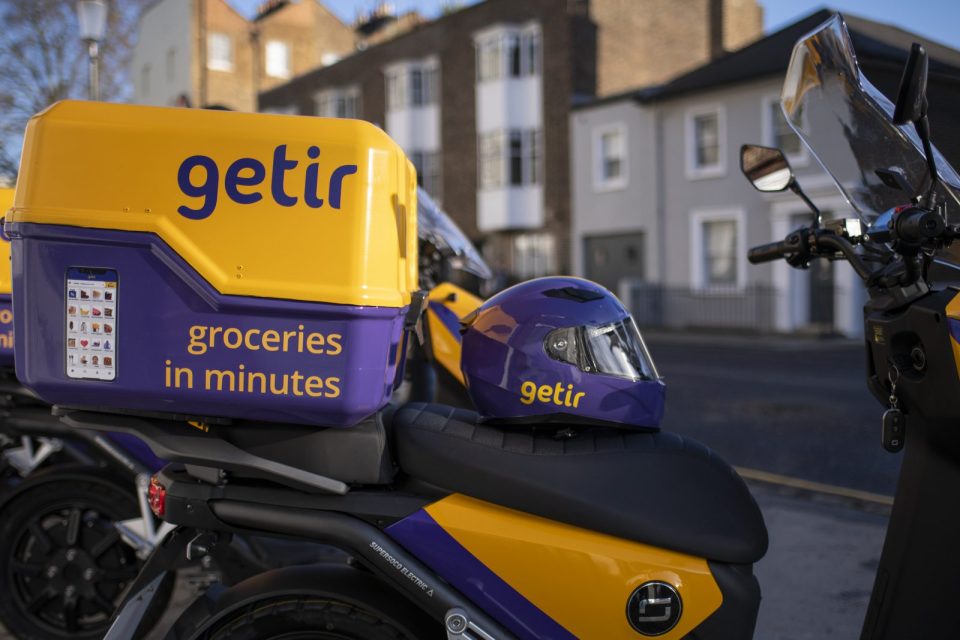
Getir is one of the leaders in the rapid grocery delivery sector

THE rapid grocery delivery sector has grown at a staggering pace across Europe and the US. Two years on from when we first saw Getir, Weezy, Zapp and Gorillas advertised on buses and hoardings across London, data from the ONS revealed the average weekly sales of online groceries in December 2021 were £372m – more than double the sales achieved pre-pandemic. The online food sector has consistently gained market share and now accounts for 11 per cent of all food retail. 

The rapidly maturing sector also started to consolidate towards the end of 2021: Getir acquired UK rival, Weezy and Gopuff acquired UK competitor, Dija. Gorillas and Tesco have co-located warehouses, granting customers access to Tesco’s products via the Gorillas “delivery in minutes” model. Co-op announced its partnership with Amazon, allowing Prime customers same-day delivery on a minimum order of £15.

The larger operators have now established themselves in most inner-London locations. Some occupiers are adopting a Venn-diagram approach, with the delivery reach of each store overlapping, in an attempt to crowd-out competition. Meanwhile, big-name occupiers have also acquired space at speed: Ocado plans to open in Canning Town and has secured several new sites across other core locations. 

Targets in the sector are now likely to be outer-London regions, with expansion into other major UK cities. In time, the growth of the rapid grocery market will be just as prevalent in other major UK cities as it has been in London. But this growth will be limited to high-density urban cities, such as Manchester, Liverpool and Cardiff, rather than suburban locations.

The UK’s well-documented supply chain issues have led to a significant shift in the rapid grocery market. Getir acquired circa 110,000 sq ft in Waltham Cross – a huge amount of space for a sector typically interested in smaller warehouses. The store focusses on large-scale storage to protect the ongoing pressure on Getir’s supply chain. Zapp also acquired 25,000 sq ft in Park Royal; though not on the same scale, the move is indicative of the expansive strategies of rapid grocery businesses.

Further mergers and acquisitions are inevitable, though it is hard to predict what shape these will take. We may see more mergers of existing businesses; or businesses like Amazon or Uber may already have their eye on the real estate platforms established by smaller rapid grocery companies, removing competition from the market and providing more space for their existing models.

 The rapid grocery sector will need to continue to evolve its product offering to keep consumers engaged. So far, they’ve had a first mover advantage, taking on a market full of distressed purchasers during the pandemic. With the continued growth of Ocado Zoom and Amazon Fresh, combined with rising living costs, consumers may start to favour models that offer a greater range of products with competitive delivery and product pricing.

Automation is also part of the picture. Co-op is adopting a robotic delivery system in Northampton, allowing automated delivery within a three-mile radius of a store. Likewise, Domino’s has partnered with Nuro to bring automated delivery to Houston.

 The cost of living crisis will put pressure on the sector to adapt and may hasten a consolidation of the market, but traditional supermarkets will also be under a spotlight to adapt to a faster delivery model. 

Read more

Picky Brits: Heatwave fuels surge in finger food spending

Tesco quiche, cured meats, olives, and dip on a wooden board, ready for a party or meal.

Share this article

  • Facebook
  • X
  • LinkedIn
  • WhatsApp
  • Email

Similarly tagged content:

Sections

  • Opinion

Categories

  • Opinion

Trending Articles

  • Wetherspoon boss: ‘Not up to Burnham’ to choose who is on the high street 

  • Badger Beer maker Hall & Woodhouse doubles profit ahead of tie-up with James May

  • Four interest rate hikes loom despite surprise economic growth

  • Primark sales slip as owner dresses up retailer for demerger

  • As it happened: FTSE 100 rallies as economy beats forecasts; oil falls back

More from Morning Wire

  • Picky Brits: Heatwave fuels surge in finger food spending

    Retail
    Tesco quiche, cured meats, olives, and dip on a wooden board, ready for a party or meal.
  • Morrisons pledges to slash prices as price war intensifies

    Retail
    Shopper holding a basket filled with Morrisons groceries, including tortilla chips, bread, and flour, next to an Unbeatabl...
  • Could a ‘land blocking’ rule change spell danger for Aldi and Lidl?

    Retail
    Lidl supermarket sign with blue, yellow, and red logo against a clear blue sky
  • Can debt-ridden Morrisons become a Big Four supermarket again?

    Retail
    Green Instacart shopping cart outside a modern Morrisons supermarket entrance with large glass windows
  • UK economy’s rebound fails to stem two years of mass job losses 

    Economics
    LONDON, UNITED KINGDOM - JANUARY 31: The Shard is seen on the horizon as commuters cross London Bridge during the morning rush hour on January 31, 2023 in London, United Kingdom. The IMF reports that the UK economy will contract by 0.6% in 2023, as opposed to the previous prediction it might grow, and will perform worse than many other advanced economies, including Russia.The cost of living continues to hit households with grocery inflation for the first four weeks of 2023 rising to 16.7% which would add a further £788 per year to family food bills. (Photo by Leon Neal/Getty Images)
  • Poundland owners rush to sell discount retailer before Christmas

    Retail
    Poundland storefront with shoppers entering and exiting, showcasing the brands logo and discount signage in a bustling str...
  • Great Britain Leads Europe’s FMCG Inflation as NIQ Launches New Inflation Barometer

    Business Wire
  • Primark sales slip as owner dresses up retailer for demerger

    Retail
    Primark store exterior showcasing modern architectural design and branded signage on a bustling shopping street.
MorningWire

Independent European business, markets and political news for decision-makers.

Morning Briefing

Europe

  • Germany
  • France
  • EU Institutions
  • Europe

Business

  • Markets
  • Business
  • Economy
  • Regulation
  • Competition
  • Public Affairs

Editorial

  • Opinion
  • Editorial Policy
  • Corrections
  • Contact

Company

  • About Morning Wire
  • Privacy Policy
  • Terms of Use
  • Cookie Policy
© 2026 Morning Wire Ltd · Published by Morning Wire Media, Bahnhofstrasse 65, 8001 Zürich, Switzerland
Privacy · Terms · Cookies · Facebook