Skip to content
Friday 7 August 2026London --:--Frankfurt --:--Zurich --:--
NewslettersSearchEN · DE
MorningWire

European business, markets and politics

FTSE 100
10,901.09
+0.31%
DAX
26,319.45
+0.69%
CAC 40
8,714.93
+0.17%
STOXX 50
6,523.86
+0.33%
  • Europe
  • Markets
  • Business
  • Economy
  • Technology
  • Politics
  • Opinion
More
GermanyFranceBankingAIEnergyFintechPropertyCapital Markets
  • Germany
  • France
  • Europe
  • Markets
  • Business
  • Economy
  • Technology
  • Politics
  • Opinion
  • DE
Monday 26 January 2026 10:09 pm  |  Updated:  Tuesday 27 January 2026 9:18 am

Save billions by reforming ‘unsustainable’ public sector pensions

By: Chris Dorrell

Add as a preferred source on Google
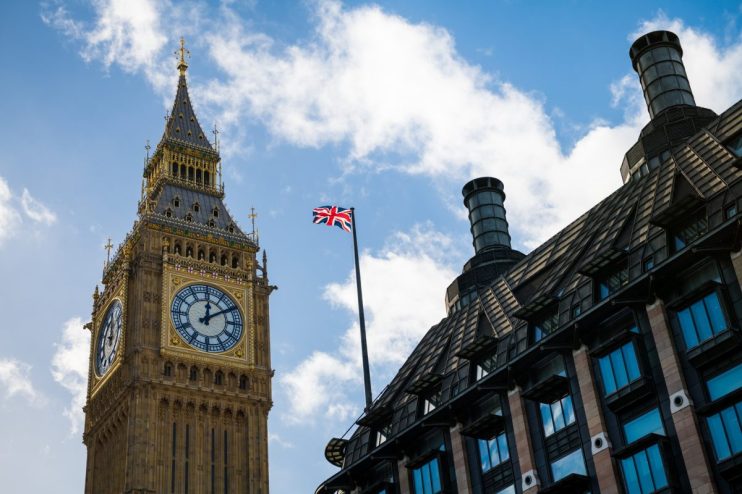
Westminster Parliament building under a cloudy sky, showcasing iconic architecture and historic significance in central Lo...
Employers make a contribution of 25-30 per cent for public sector schemes

Moving new public sector employees onto defined contribution (DC) pension schemes could save taxpayers £37bn a year in the long run, a new report has found. 

The report, produced by Policy Exchange, argues that moving public sector workers onto a DC scheme would also send an “important signal” to the bond market that the government was serious about tackling public debt. 

Most public sector pensions operate as defined benefit (DB) schemes, whereas private sector schemes tend to be DC. The former provide savers a guaranteed income in retirement, with employers often contributing more to ensure that this is the case. 

DC schemes, in contrast, are funded primarily by the employee, as the participant defers a portion of their gross salary into a fund. Employers may then match the contribution.  

Richard Tice, deputy lead of Reform, welcomed the report. “The current situation with public sector pensions is unsustainable and needs reform. We are very focused on this issue,” he said. 

Huge employer contributions

Policy Exchange noted that employers make a contribution of 25-30 per cent for public sector schemes, compared to an average private sector contribution of six per cent.

Additionally, in most public sector pension schemes, the contributions of existing public sector workers are not invested, but rather returned to the Treasury. 

This means the pensions of current retirees are generally paid for out of current spending, which Policy Exchange said creates “massive spending liabilities” for taxpayers – currently valued at £1.4bn. 

It argued that the government should gradually move public sector workers onto a DC scheme with a standardised employer contribution of 10 per cent, with employees contributing five per cent. 

“Such a scheme would still compare favourably with the majority of private sector schemes and would ensure public sector employees continued to receive a good income in retirement, with the total proportion of salary being invested into an employee’s pension being above the 12 per cent recommended by Pensions UK,” the think tank said. 

Read more

State-backed pension scheme plans to pump £1bn into start-ups

City economists have warned that the triple lock pension is unsustainable and unaffordable given the state of the UK's public finances.

The move would cause a short-term increase in public spending, as existing liabilities were met and new scheme contributions would be invested in a dedicated fund, rather than taken into general Treasury funding. 

The additional cost would rise to a peak of £3.4bn six years after adoption, according to Policy Exchange, before decreasing and turning positive for the government after around 14 years. 

But Policy Exchange said that the costs of the scheme may never materialise if the measure eased concerns in the bond market about levels of government debt, helping to lower the cost of government borrowing. 

“A fall in interest rates as a result of just 16 basis points would fully negate the peak additional short-term costs, and create additional savings in every other year,” Policy Exchange said.

Future affordability

However, Steve Webb, pensions minister from 2010-15 and now a partner at consultancy firm LCP, said the “best way” to assess the future affordability of a policy was to look at its share of national income, rather than its total cost.  

“Public service pension reforms which have already taken place mean that future costs are falling as a share of GDP,” he said, pointing to the latest long-term forecasts from the Office for Budget Responsibility (OBR). 

The watchdog predicts that the cost of public service pensions will fall to 1.4 per cent of GDP by 2053, down from 1.9 per cent at the moment

Webb doubted whether the policy would really have any significant impact on the UK’s borrowing costs. “The argument that this ‘tough’ long-term decision (which saves nothing for 14 years) will impress the bond markets so much that you get lower interest rates needs to be taken with a pinch of salt,” he said. 

“It’s exceptionally unlikely that the OBR would scale back the estimated cost of this policy on the basis of a hypothetical interest saving.”

Read more

Pension funds pledged a private investment splurge. Three years on, has anything changed?

Mansion House meeting of pension fund leaders discussing investment strategies and financial accords in a grand boardroom ...

Share this article

  • Facebook
  • X
  • LinkedIn
  • WhatsApp
  • Email

Similarly tagged content:

Sections

  • News

Categories

  • Business
  • Economics

People & Organisations

  • defined benefit
  • defined contribution
  • pension
  • pension contributions
  • policy
  • Policy Exchange
  • UK economy
  • UK Government

Related Topics

  • Pensions

Trending Articles

  • Revolut founder’s wealth set to balloon amid talks of share award at $500bn valuation

  • Rupert Lowe axes pensions triple lock and pledges tax cuts in economic plan

  • Liverpool owners tipped to sell – but not to Amazon boss Bezos – by former CEO

  • As it happened: Stocks rise as oil fluctuates after Red Sea attack; US-Iran deal ‘being circulated’

  • WPP slashes jobs as revenue continues to fall

More from Morning Wire

  • State-backed pension scheme plans to pump £1bn into start-ups

    Investing
    City economists have warned that the triple lock pension is unsustainable and unaffordable given the state of the UK's public finances.
  • Pension funds pledged a private investment splurge. Three years on, has anything changed?

    Markets
    Mansion House meeting of pension fund leaders discussing investment strategies and financial accords in a grand boardroom ...
  • Andy Burnham will find there is a limit to tax rises

    Opinion
    At its core, an ISA is a "tax wrapper," a protective shell that shields your money from income tax and capital gains tax.
  • The pensions triple lock is a travesty. Our politicians must fess up

    Opinion
    Young people face the risk of failing to save enough in their pension
  • The devastating prognosis for the UK’s public finances

    Economic News/Analysis
    Dramatic cloud formation over Westminster, capturing a striking skyline with iconic landmarks under a moody sky.
  • Pensioners hit with £8bn tax bill after government freezes allowances

    Personal Finance
    City economists have warned that the triple lock pension is unsustainable and unaffordable given the state of the UK's public finances.
  • UK debt ‘hits £3 trillion’ milestone

    Economics
    Houses of Parliament in Westminster showcasing historic architecture under a clear sky, central to UK government and politics
  • Pension pressure to help swell UK debt to three times size of economy

    Economics
    Two older women exercising at an outdoor gym in sunshine
MorningWire

Independent European business, markets and political news for decision-makers.

Morning Briefing

Europe

  • Germany
  • France
  • Europe
  • UK & Ireland

Business

  • Markets
  • Banking
  • Technology
  • Energy
  • Property
  • Fintech

Editorial

  • Opinion
  • Editorial Policy
  • Corrections
  • Contact

Company

  • About Morning Wire
  • Privacy Policy
  • Terms of Use
  • Cookie Policy
© 2026 Morning Wire Ltd · Published by Morning Wire Media, Bahnhofstrasse 65, 8001 Zürich, Switzerland
Privacy · Terms · Cookies · Facebook