The behind-the-scenes plans taking place after the Queen’s death

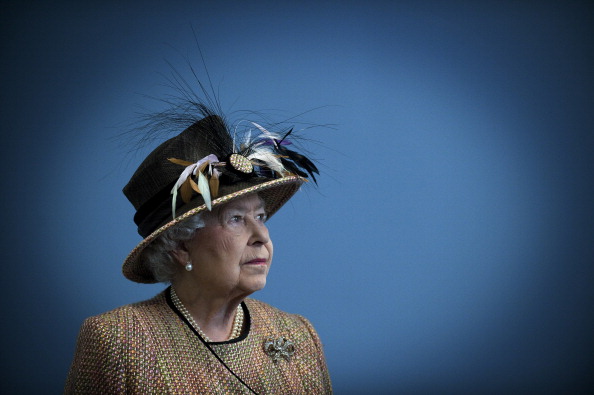
As the nation comes to terms with the death of the Queen, behind the scenes the detailed plans set aside for the aftermath are being rapidly put into action.
The arrangements, which have the codename London Bridge, have been in place for many years and were updated and reviewed regularly by palace aides in consultation with the Queen herself, and also the Government.
The strategy for the final farewell to Elizabeth II will be set in motion once approved by Charles, the new King.
The task is a major undertaking on a scale never seen before – and has added challenges with the death of the Queen at Balmoral, with the contingency Scottish plans known as Operation Unicorn now part of the process.
With the monarch spending several months a year at her beloved home in the Highlands, the plans for a Scottish element have long been organised just in case.
The coronavirus pandemic also forced the Royal Household to rapidly bring together an additional programme in case the monarch died during the crisis, just like the Duke of Edinburgh.
A “London minus” version of the London Bridge arrangements was ready to use if necessary, with all the original elements but the involvement of fewer people.
When Philip died in April 2021 during the pandemic, a coronavirus version of his Forth Bridge death plans had been prepared after being reworked in the months beforehand.
Restrictions meant all military processions through London and Windsor were off the table.
The funeral was entirely contained within the walls of Windsor, with a guest list of just 30 inside St George’s Chapel, and the grieving Queen sat alone in a face mask, socially distanced from her loved ones.
But with coronavirus cases continuing to fall and no restrictions in place, the scale and look of the next 10 or so days, ending with the Queen’s funeral, is expected to, by and large, be back to the original plans.
The Government is, however, said to fear a worst-case scenario in which London becomes “full” for the first time as hundreds of people try to make their way to the capital, with accommodation, roads, transport and policing stretched to breaking point.
But now the Westminster and Scottish Governments will have to ensure the smooth running of public events in both Edinburgh and London, with crowds expected to flock to both cities.
Documents seen by Politico in 2021 said the departments facing the greatest challenges are the Foreign Office, the Home Office and the Department for Transport.
The Foreign Office is tasked with arranging arrivals of heads of state and VIPs from abroad amid the pandemic; the Home Office with the vast security arrangements and any increased terror threat; and the Transport Department has expressed concern that the network could become overwhelmed, with the city facing overcrowding.
In charge is the Earl Marshal, Edward Fitzalan-Howard, the Duke of Norfolk, one of the two Great Officers of State.
He is responsible for arranging both sovereigns’ state funerals and the accession and coronation of new monarchs.
The carefully choreographed London Bridge plan treats the day of the Queen’s death as D-Day or D+0, and the following days are marked accordingly as D+1 – the day after the death, then D+2, D+3 and so on, until the final day, D+10, which is the expected day of the funeral, unless this is a Sunday.
London Bridge – the process between the death of the Queen and her funeral – falls under the remit of Operation Lion, the plan covering all royal deaths.
A series of other coded operations will get under way.
Operation Marquee covers the Queen’s lying in state inside Westminster Hall, while Operation Feather deals with the logistics and crowds outside during the lying in state.
Operation Spring Tide will set in motion Charles’s first trip as King to the other three countries of the UK – Scotland, Wales and Northern Ireland ahead of the funeral.
The Queen’s coffin will also have to be moved logistically and ceremonially at different stages over the coming days.
Thousands of people will be involved over the next week-and-a-half – from military guards, the clergy and the Government to staff at Buckingham Palace, Clarence House and Kensington Palace who will be ensuring the households continue to run smoothly during this traumatic time for the royal family.
The palace will be Monarchy HQ amid the transition to kingship and the funeral preparations.
After the death of the Queen Mother in 2002 the military was drafted in to help and the palace cinema was turned into an operations centre.
Although there is a job to be done, those in the palace will have to ensure they are sensitive to the family’s grief.
The Queen’s children and grandchildren will enter a period of official mourning for their matriarch, which could last for several weeks.
Official engagements can continue during this time, although most will be postponed or cancelled.
However, it will depend on the wishes of the new King.
Social engagements are usually cancelled, except those for charitable causes.
There are various types of mourning, but royal, also known as court, mourning includes the royal family, royal households and the Queen’s representatives in the UK and abroad wearing black and also using black-edged writing paper.
The Queen decided on two weeks of royal mourning, with engagements continuing appropriate to the circumstances, following the Duke of Edinburgh’s death in April 2021.
There is also family mourning, which was observed after the death of the Queen Mother.
It is undertaken by the royal family and also their households when they are in personal attendance.
Black-edged writing paper is not used and family mourning is often shorter than court morning.
It will be up to Charles, as the new King, to decide how long the mourning should last and what form it should take.
He is expected to choose a month of royal mourning.
The UK will also have a period of national mourning for the general public, which is usually shorter, and will be expected to last until the day after the funeral.
Following a royal death and during other periods of national mourning, Union flags are now flown at half-mast on royal buildings when the monarch is not in residence.
But the Royal Standard, flown when the sovereign is in residence at a royal palace, is the symbol of the continuation of the monarchy and never flies at half-mast.
After the death of Diana, Princess of Wales, in 1997, there was a public outcry when the flagpole at Buckingham Palace remained bare, as was the convention.
The Queen was not in residence as she was away at Balmoral.
In a break with protocol, she eventually ordered that a Union flag be flown at half-mast for the first time at her London home after she left to attend Diana’s funeral.
It has since been flown at full mast above Buckingham Palace, Windsor Castle and Sandringham whenever the sovereign is not in residence.
Such is the sensitivity of lowering flags after the Diana uproar that Downing Street reportedly expressed concern in the past that the Government would face a wave of public anger if it did not lower its flags within 10 minutes of the announcement of the Queen’s death.
Books of condolence for members of the public to write messages in may also be opened at selected venues, although online books, just like after Philip’s death, are also likely to be available.
Hundreds of journalists and broadcasters will descend on London, Balmoral and Edinburgh from around the globe, with a broadcast centre set to be erected in Green Park, next to Buckingham Palace.
Television schedules will be abandoned to pay tribute to the Queen.
The military will be required to practise their ceremonial roles and ensure any funeral duties are executed perfectly in pristine uniforms for events such as the lying in state, while the horses will have to be groomed and prepared.
Royal dressers will be fastidiously choosing and preparing black mourning ensembles.
Choristers will start their preparations for the music at the funeral, while the Metropolitan Police will be tasked with managing the crowds and dealing with the unprecedented security needed in the days ahead.
Big events or shows may be cancelled, and black armbands, worn on the left arm, will be expected to be donned by certain members of the military, as well as by sportsmen and women, although most matches and fixtures are likely to be postponed.
The order of service for the funeral will have been settled upon long ago, with hymns and readings approved by the Queen herself.
The royal households have a history of making detailed plans for royal funerals.
In 2004, thieves broke into a car which belonged to a palace press officer at a motorway service station and made off with a laptop computer and a briefcase which contained the secret plans for the Queen’s funeral.
Royal correspondents received briefings on London Bridge from the palace over the years, on the understanding they would not divulge the arrangements.
But elements would occasionally be leaked, with The Guardian exploring the secret plans in 2017 and Politico giving a day-by-day account in September 2021 after it obtained documents detailing the schedule.
Arrangements for the Queen Mother’s funeral, known as Operation Tay Bridge, were 22 years old by the time she died at the age of 101.
Queen Victoria died at the age of 81 in 1901 after a period of ill-health, but the Earl Marshal had no plans in place.
The complex funeral arrangements, including transporting Victoria’s body across the Solent from the Isle of Wight and facilitating a two-hour military procession through London involving thousands of people, had to be organised from scratch in 10 days.
In contrast, her son, Edward VII, insisted his own funeral was planned well in advance.