The climate activist case for continued drilling for fossil fuels

A pragmatic energy transition requires maintaining domestic oil and gas production as a strategic bridge to a renewable future, in order to prevent higher emissions from foreign imports while securing national energy sovereignty, says Callum Adamson
“Drill, baby, drill” is not something you’d expect a ‘climate activist’ to say. You probably wouldn’t hear it from Just Stop Oil. But it is something I think you’ll hear more and more from serious climate commentators.
We need to champion homegrown, sovereign and traditional energy. Not just for price-stability, but also as part of a grown-up energy mix.
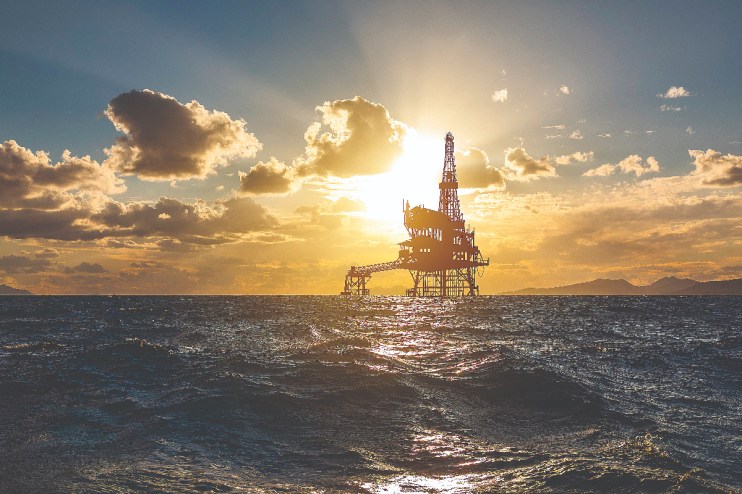
The conversation around Rosebank and the future of North Sea oil in the UK, for example, has become dangerously binary: shut it all down, or stall climate progress. But this framing obscures the nuanced reality of energy transition and risks both climate integrity and national resilience.
From a climate perspective, maintaining a measured level of domestic North Sea production is more responsible than shifting demand offshore to jurisdictions with looser environmental standards and higher emissions per barrel.
From a climate perspective, maintaining a measured level of domestic North Sea production is more responsible than shifting demand offshore to jurisdictions with looser environmental standards and higher emissions per barrel.
The same could be said for fracking and Gulf of Mexico oil production in the US.
Every barrel we refuse to produce here at home is likely replaced with one produced under far worse ecological oversight – undermining the very emissions gains we claim to pursue.
Climate gains, after all, come not just from renewable energy replacement – but also by making the traditional energy we’re going to continue to rely on for decades to come, cleaner.
Climate progress meets reality
Recent momentum on green energy in Britain is commendable, but it does not mean we can abandon domestic fossil infrastructure overnight. Other European grid operators still retain significantly more winter buffers than the UK can currently muster.
Global developments only heighten the argument for a managed, responsible transition. On the geopolitical stage, uncertainty is mounting. During his recent visit to Scotland, Donald Trump revived calls for the UK to unleash its North Sea “treasure chest”, condemning high taxes on oil and gas companies and urging the government to incentivise drilling.
His comments echo the growing perception that climate-driven cutbacks may compromise energy sovereignty. Also relevant is the state of global oil markets. OPEC’s supply decisions are showing signs of oversupply, putting pressure on US shale and unsettling traditional energy dynamics.
All the more reason for the western nations to bolster domestic control, rather than remain at the mercy of shifting global politics and market swings.
The energy ‘mix’ doesn’t just mean renewables
Our energy ‘mix’ and transition is not about stubbornly clinging to the past. It is about a pragmatic, phased approach – preserving energy security while investing in the clean infrastructure of tomorrow. That includes:
- Sustaining domestic energy autonomy. Again looking at the UK as an example, but this can be applied to any major western economy – Centrica’s recent £1.5bn acquisition of the Isle of Grain LNG terminal highlights the UK’s continued reliance on imported fossil energy – forcing us here to reckon with the reality that gas will remain part of our energy mix for years to come, especially as heating-sector electrification lags.
- Building public clean-energy muscle. The Great British Energy Act 2025 has now established a state-owned clean energy body with a clear mandate to drive renewables and net zero delivery. That is vital – but it also needs the interstitial space to scale without crisis.
- Planning credible wind-to-power-legacy schemes. Floating wind farms like the Green Volt project off Scotland’s north-east coast offer a clear path: repurposing oil-field infrastructure into renewable energy powerhouses.
- We at Applied Computing are not climate deniers. Quite the opposite. Through our Orbital platform, we help energy firms – often operating legacy oil and gas assets – to cut emissions and improve efficiency from day one using foundational AI. Optimising what exists today extends the lifecycle of assets within a declining schedule and supports the clean transition tomorrow. AI innovations like this will make it significantly easier to cut emissions from pre-existing traditional energy sources.
The climate case for oil drilling
That is the core of the climate-activist’s case for a delayed North Sea decline – not overnight shutdowns, but thoughtful stewardship.
Oil and gas usage is going to happen for at least 30 years to come. Globally, each refinery supports infrastructure relied upon by up to 18m people – from food and transport to medicine and manufacturing.
By keeping wells open for the foreseeable future, we can limit carbon leakage by avoiding outsourcing emissions to more polluting regimes; retain industrial capability by preserving skilled British engineering and infrastructure.
It can also make it easier for these energy firms – with greater stability and a timeline to work to – to train their staff for whatever comes next, and to train up a new generation of employees without fear of having their livelihoods taken away by ill-thought through climate policy.
Sovereignty in a highly uncertain world
We are also anchoring energy resilience by guarding against external shocks such as geopolitical realignments or import disruptions – and provide transition time, enabling public clean-energy agencies, offshore renewables, storage, and grid upgrades to scale without leaving gaps.
Trump’s meeting with Putin on Friday must surely remind everyone of how urgent homegrown sovereignty – of everything from energy to tech – is at this chaotic moment in time.
In Europe, we must stop treating North Sea oil like a battleground in ideological wars. This is not about preserving anachronistic industries. It is about acknowledging the pragmatic physics of energy systems, and treating our domestic hydrocarbon legacy as a bridge – not an anchor.
A future of sustainable abundance depends on western leadership: engineering solutions, optimising today’s assets, and growing cleaner alternatives at pace. That is how we secure our economy, our climate credibility, and our future – not by choosing sides, but by managing the transition on our terms.
Callum Adamson is CEO of Applied Computing