The Conservatives need to embrace a capitalism that serves young Britons

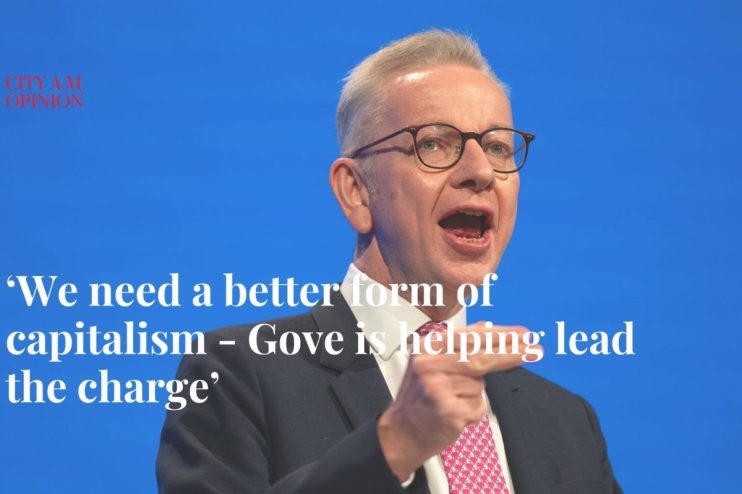
Michael Gove and Paul Marshall are paving a new direction for capitalism that the Conservatives would do well to follow, writes Adam Hawksbee
You don’t normally find big gatherings of right wingers in East London. But last week, the Alliance for Responsible Citizenship came to town. While the shock jocks and MAGA Republicans grabbed much of the attention, the two most powerful speeches were from a little-known hedge fund manager and a cabinet minister. Together, they pointed to a compelling way forward for Tory politics.
Paul Marshall, the multi-millionaire investor in Unherd and GB News, makes an unlikely critic of modern capitalism. Yet he delivered an excoriating case that markets today are held back by unchecked monopolies, regulatory capture, and corporate virtue-signalling. His vision for restoring growth to the British economy didn’t coalesce around the old familiar playbook of tax cuts and a smaller state, but a modern mission to take on entrenched interests and increase dynamism. Corporatism has led to a “crisis of legitimacy”, he argued. His mission was to restore faith in capitalism.
Michael Gove took to the stage with a similar call to arms. He spoke of an unholy alliance between the self-serving privileged and the corrosive “resentment industry”. Asset managers starve utility companies of investment while some homeowners block new infrastructure in their patch – the result is constrained productivity and polluted rivers. Gove argued for “the Promethean spirit that grabs fire from the gods, and the Rabbinical sense of obligation to our culture”, rebuffing both stagnation and individualism. The key to tackling resentment isn’t by pandering to simplistic narratives, but creating a better form of capitalism.
We have heard some of this before. Vote Leave’s Brexit campaign was littered with criticisms of unaccountable and distant elites, and more recently, there’s been discussion of a “New Elite” wielding control in the media, business, and politics. But these cultural criticisms have rarely been paired with a powerful economic critique that chimed with a public hammered by cost of living pressures. Liz Truss lambasted the “Anti-Growth Coalition”, but her analysis and policy ideas were characteristically shallow. More recently, Nick Timothy and Gavin Rice have begun to sketch a centre-right vision that unites these cultural and economic critiques in Onward’s Future of Conservatism project.
What was striking about both Marshall and Gove’s arguments is their focus on the young. The real victims of crony capitalism, they claimed, are those who had been least able to accumulate capital, particularly in the form of housing. In Canada, the centre-right opposition leader Pierre Poilievre is deploying this argument to devastating effect. His criticism of “gatekeepers” that block new houses has secured him 40 per cent support among under-30s – an unthinkable level for Britain’s Conservative party.
The government might struggle to harness the power of this argument against entrenched interest and economic elites. It is difficult, though not impossible, to run an insurgency as an incumbent. The prime minister is not necessarily the most natural figurehead for such a campaign. And if the ARC conference suggested a positive way forward for the Conservatives, it was also a stark reminder of potential pitfalls. Other speakers offered reheated libertarianism or pro-Trump platitudes, and the event was infused with public displays of religion that felt out of step with today’s Britain. If the Conservative party chooses to go the way of Jordan Peterson or Christian rap, it is in trouble.
Both Marshall and Gove couched their arguments in the economics of Joseph Schumpeter, who argued that over time interest groups form within capitalism that seek to unpick it. They could just as easily have cited Mancur Olson, a prescient professor who predicted the rise of “distributional coalitions” in developed economies that protect the status quo and undermine growth. Alarmingly, Olson’s book was titled “The Rise and Decline of Nations”. It should be required reading for anyone trying to understand the UK’s productivity problem.
Paul Marshall ended his speech with a call for “a new Teddy Roosevelt — someone who is prepared to take on the vested interest, to rid the business world of cronyism, regulatory capture, and false virtue.” The analysis is accurate, the problem urgent, the symptoms all around us. But when, and from where, will the answer to his call emerge?