The Danish retailer plotting to outsmart ‘unsentimental’ Modella Capital

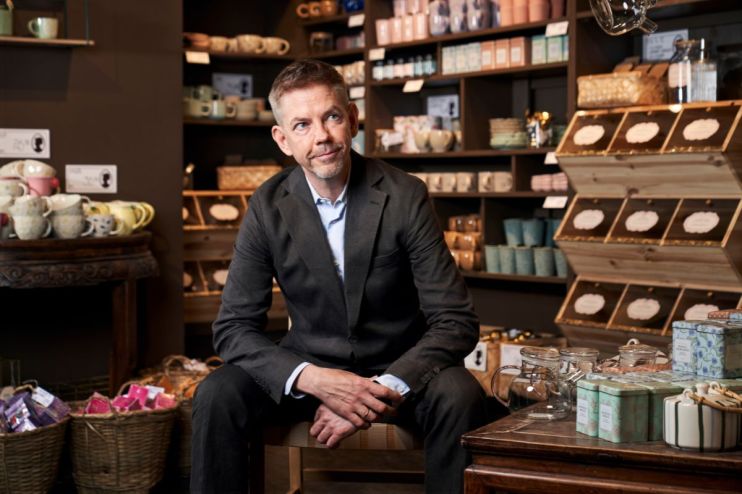
On the modern-day British high street, a Scandinavian shop featuring maze-like aisles, quirky homeware and bags of licorice near the till is not quite a reinvention of the wheel.
But Mikkel Grene, chief executive of Danish homeware retailer Søstrene Grene, believes his business can go toe-to-toe with Ikea and Flying Tiger for pride of place in the living rooms and kitchens of UK shoppers.
Flying Tiger, which Grene concedes is seen as his closest competitor, was snapped up by private equity firm Modella Capital in May.
This year, Modella drew criticism for pushing through a drastic restructuring of TG Jones – the former high street arm of WH Smith – and oversaw the collapse of Claire’s Accessories.
Though Modella is yet to launch a restructuring of Flying Tiger in the UK, Grene tells Morning Wire that Søstrene Grene has already begun taking over a number of stores vacated by its Danish rival in two other markets.
He would consider opening stores in former Flying Tiger sites in Britain too, he says. “We’ll just look at these units as any other unit. It will just be another unit for us because we don’t see Flying Tiger as a competitor, really, because we have such a different offering.” Flying Tiger declined to comment.
Family ownership key for Søstrene Grene
Grene is keen to emphasise that he doesn’t view Flying Tiger and Søstrene Grene as comparable, because the latter is family-owned. Grene’s parents founded the business in 1973 and his brother Cresten serves as its creative director.
Being family-owned allows the retailer to “think long term” and “leaves room for all the whimsical and non-commercial things that we do,” he says.
This is a sharp comparison to Modella, Grene says: “[They] are going to be quite unsentimental, these new owners. It’s going to be a big question mark whether they are going to work really long term. That remains to be seen.
“What I said about the benefits of our family ownership, I obviously don’t think they have that, but maybe they have something else that we don’t have that they can benefit from.”
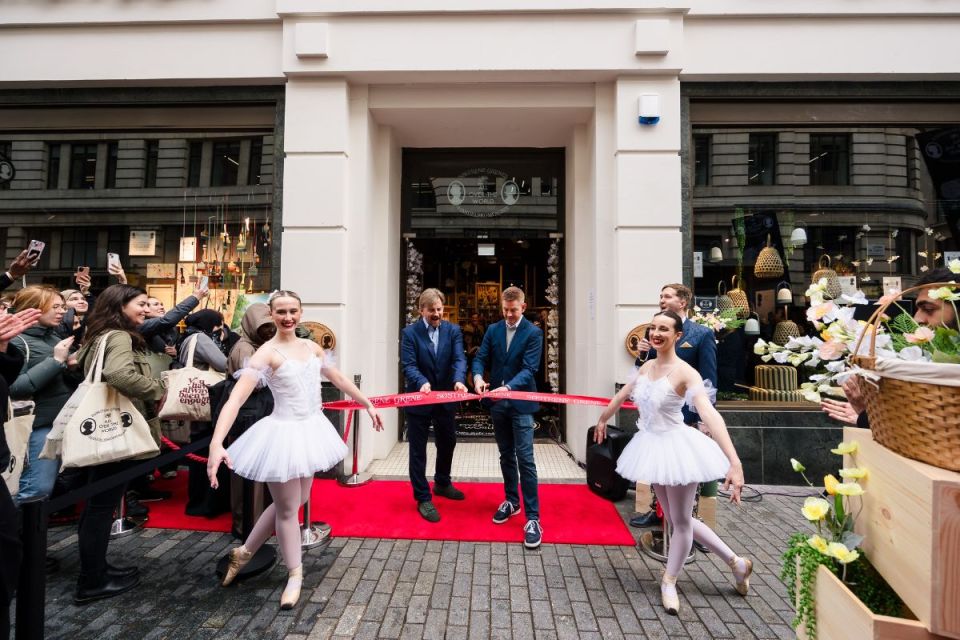
One such “non-commercial” move for Søstrene Grene was the opening of its flagship store on Oxford Circus last year. “We knew it was not going to be an easy case, and it was probably not going to be the most profitable store because the rent levels are really high there,” he says.
“But it is the best store in terms of turnover in all of the UK stores. So I’m really happy with it, and it’s more like a flagship store where we want to showcase the brand. So it’s important in that sense to be in these high-traffic locations.”
Before opening in one of the world’s most well-known shopping destinations, Søstrene Grene hunted for lower rents in the outskirts of Britain’s cities. Grene points to Manchester, where the retailer opened in “one of the back streets” before moving to the Arndale, one of the UK’s biggest shopping centres.
E-commerce ‘putting retailers out of business’
Grene says he was surprised by the tax bill facing retailers when the company first expanded into the UK in 2016. Business rates account for as much as 50 per cent of the bill his shops pay to landlords, he said, compared to 10 per cent for the equivalent tax in much of Europe.
“I think that’s probably the main reason why we see so many empty units in London because it’s still [at] a high level. So even though it has come down, it’s still very expensive,” he says.
While Søstrene Grene has become well-known for its low prices, its boss says that his and other retailers are routinely undercut by Chinese e-commerce giants like Shein and Temu.
The government should take action to “level the playing field,” he says. “We have the muscles to battle all this, but we also have small retailers and small players in the UK that are really struggling to compete with this for and for a good reason. There are some companies being put out of business, and is that really fair?”
Shein and Temu did not respond to requests for comment.
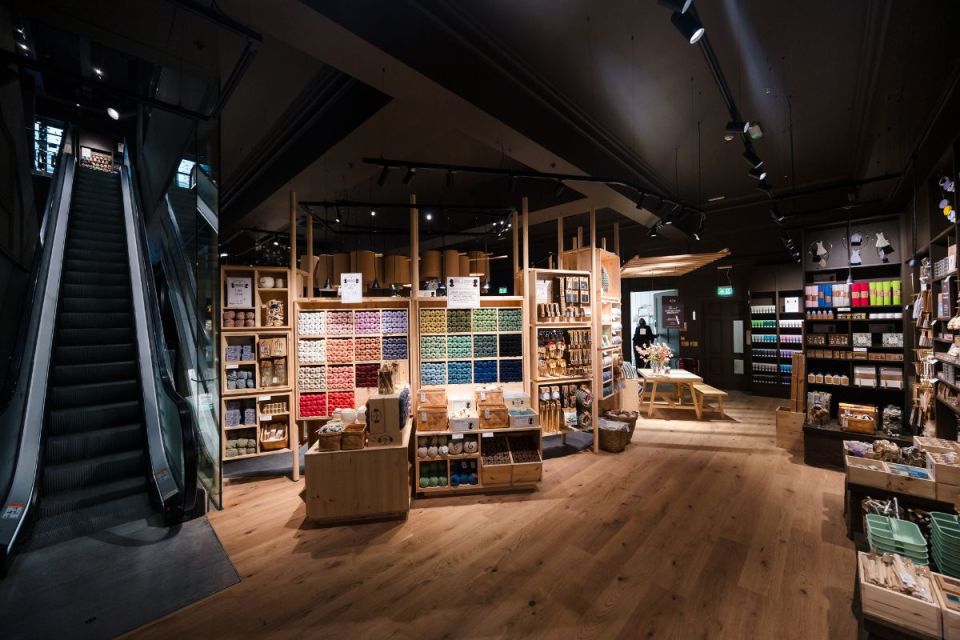
The Treasury has acknowledged the damaging impact of “low-value” imports and is set to shut the ‘de-minimis’ loophole – which exempts small parcels from import duties – in October 2028. But retailers have warned that the EU’s crackdown on small imports earlier this month will cause these e-commerce firms to redouble their focus on the UK market.
Søstrene Grene operates about 47 stores in the UK and plans to reach 100 locations next year. The retailer saw pre-tax profit dip one per cent to 213m Danish Krone (£24m) in the year to April 2025, while its turnover jumped by a record 31 per cent to 2.9bn Danish Krone (£327m).
Grene says there is no need for external funding or a public listing despite the retailer’s ambitious expansion plans.
“We’re quite pleased with being a family-owned and operated company,” he says. “I think it gives us some good opportunities to think long term and work long term, and sometimes you need to sacrifice one quarter or one year to be really strong in three years from now.”
The retailer has just completed a “really expensive” overhaul of its back-office systems and a programme to automate most of its warehouse operations, which Grene says were “difficult bets” made easier by the firm’s family ownership.
Taking the retailer out of the hands of the Grene family would force the business to become more “logical,” the chief executive says. “We could definitely streamline Søstrene Grene more as Flying Tiger is doing, as Ikea is doing. But I also think that we will lose something because the whole idea about Søstrene Grene is that it is a bit mysterious, it’s a bit quirky, it’s a bit whimsical.”