The Debate: Do too many people go to university?

Morning Wire’s weekly feature takes the fiercest water-cooler debates and pits two candidates head to head before delivering The Judge’s ultimate verdict.
This week: Do too many people go to university?
50 per cent of young people now go to university, up from 30 per cent in the 1990s. But when they leave they are saddled with at least £30,000 of debt plus interest – so are we wasting young people’s time and money with false hopes and dreams?

Andy Twelves: Yes, snobbish graduates are shunning the real jobs that our nation relies on
When this question is asked, my instinct is always to think not of schools and university campuses, but of construction sites. There is an objective shortage of bricklayers, scaffolders, labourers and many many more tradesmen in the construction industry, more now in a post-Brexit Britain than ever before.
20 years ago, these sites would have been staffed by polytechnic graduates or workers that came straight from school. This is the same across a range of industries that now have barely any workers, because graduates think they are too good to work manual labour jobs.
As someone with a non-traditional educational background, who has never put my primary value on whether or not I possess a piece of paper that says I’m a Bachelor of anything, I do not think that anyone is “too good” or “too overqualified” to work in the industries that are understaffed in this country. However, promises from teachers make it seem that if students go and spend three years handing in assignments and being late for lectures, that they will achieve a better standard of life than those that don’t.
After graduating, many graduates then remember all of these promises and will initially move away from applying for these “non-graduate jobs” in industries like construction or retail.
However, the sad reality soon descends upon them, as detailed in this report produced by the Chartered Institute of Personnel and Development back in November of 2022. This report makes it exceptionally clear that there are far too many graduates for the amount of graduate roles in the UK. For instance, only 54 per cent of overqualified graduates are satisfied with their jobs affecting their wellbeing and the organisation’s productivity.
A strong proportion of graduates, particularly those that attended universities that were once polytechnics, are now working in non-graduate roles – leaving them saddled with around 30 grand worth of student debt, for something that could have been achieved three years earlier for free. The existence of this complete imbalance of skills to job requirements is clearly indicative that too many people go to university!
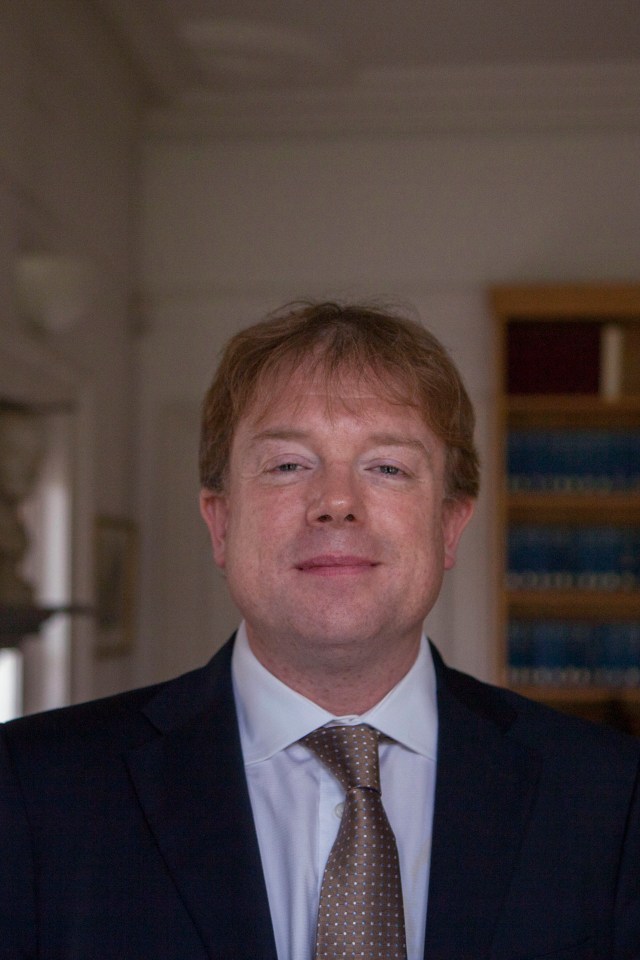
Nick Hillman: No, I’m glad my nurses are highly educated
In the 1960s, Kingsley Amis complained “more will mean worse” when it comes to higher education. Yet back then, only five per cent of young people went to university. Today, nearly 50 per cent go. We are a much better country for it. That ten-fold increase is worth celebrating.
Many professions insist new staff are graduates because people with degrees make better employees. In the past, you did not need a degree to be a teacher and you did not need a degree to be a nurse. Yet my children’s schools are much improved because their teachers are graduates. Meanwhile, evidence from around the world shows you are less likely to die in a hospital with a higher proportion of graduate nurses.
There is a strong link between economic growth and the level of education. The Tony Blair Institute has shown recent economic growth rests almost entirely on rising educational levels. The same research shows, if we are to go on getting wealthier, we need to continue this trend. Employers want to recruit more high-skilled people, not more low-skilled ones.
There are also huge personal benefits from staying in education. People with degrees are less likely to drink heavily, are less likely to end up in prison and are more likely to vote – they are even likely to live longer. No wonder 97 per cent of mothers want their children to go to university, according to the Millennium Cohort Study.
Those who think too many people go to university must say exactly who they want to shut out. You can bet your bottom dollar it won’t be their own children.
The Verdict: We’ve lost the telos of university
It was Tony Blair who in the 1990s pledged to get half Britain’s youth enrolled onto a university course. In 2019, we hit that target, and it fell on the shoulders of Euan Blair, the former’s son, to decry it. Many students end up in jobs “that would not need a degree in the first place,” he said (Blair Jr runs a tech firm focused on hiring apprentices).
This point is echoed by Twelves, who underlines the disparity between education level and job requirements. He goes further than Blair, suggesting grads end up too snobbish to enter ‘real-world’ sectors like housebuilding. It’s true we lack labourers in Britain and rely on less well paid immigrants to do our dirty work. Research shows one in two recent graduates are not in graduate work.
But discouraging people from doing degrees feels wrong – especially if it’s against their free will as Hillman claims. Yet perhaps so many people so compelled by ‘uni’ because of the lack of alternatives?
If school leavers had more, appealing options, they might take them. There is something disingenuous about the school-to-university pipeline as it is presented to pupils, and something distinctly un-university-like about many university experiences (smoking weed and clubbing defines too much of many degree-takers’ lived experience – there may be nothing wrong with either, but it shouldn’t be necessary to pay £9,000 a year to party).
A radical experiment expanding post-sixth form options could help find a new equilibrium. A skilled workforce is necessary, but a media degree is not. A course in coding could be far more useful and cost-time effective. Give students more choice outside the university bracket, more help to make a decision aged 18, and be more honest about what is required to undergo a Bachelor’s degree. This would make a better country, and likely one in which fewer people went to university.