The Debate: Has having more women in the boardroom helped overall progress?

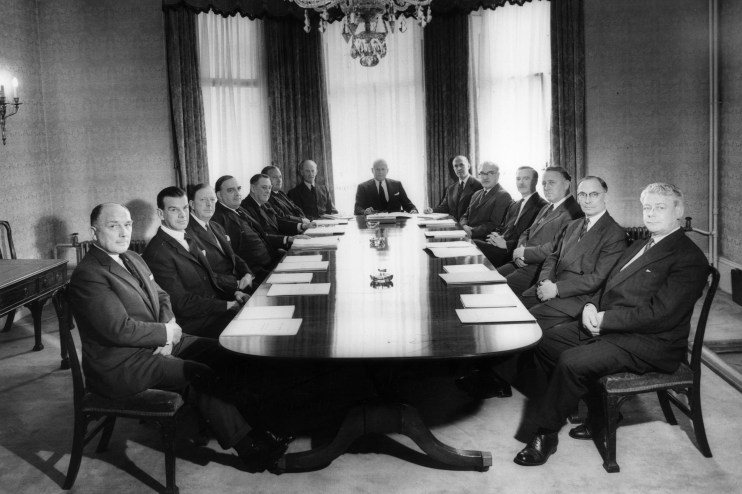
More women may now hold board positions, but has a boardroom focus helped women overall in the workplace? We get two writers to hash it out in this week’s Debate
YES: Normalising female leadership is critical to inspire those further down
Over the last 10 years the UK has made significant progress on gender representation in the boardroom; almost three quarters of FTSE 350 companies have met the government target of 40 per cent of women on boards, according to the FTSE Women Leaders Review 2025. We are one of the few countries to have achieved this without quotas. A voluntary approach, led by business leaders in the boardroom, has been key to this success.
Currently, only nine per cent of FTSE 100 CEOs are women, highlighting the opportunity for businesses to take more deliberate action in preparing and promoting female talent. Ensuring more women are placed in key succession roles will widen the pool of future CEOs, and improve gender diversity overall. The 30% Club has set ambitious new targets, encouraging organisations to work towards 50 per cent gender representation, driving long-term change at every level.
We need to challenge the assumption that the most senior leaders are men. Normalising female leadership is critical if we are to encourage young women to aspire to lead at the top of organisations in all settings. Even the most progressive board must guard against the assumptions and blind spots that help perpetuate barriers to equal participation. It is on all of us to ensure the path to parity doesn’t take another 10 years.
Pavita Cooper is the UK chair of the 30% Club
NO: Most women on boards are in non-executive positions. We need more CEOs!
Last week, FTSE 350 published this year’s Women Leaders Review Report, which looks at the number of women in board positions. Whilst yes, more women hold board positions than 10 years ago, these are mostly non-executive roles (43 per cent) vs leadership positions (35 per cent). The number of women in CEO positions has dropped by one, to five per cent.
The data is simple, our gender pay gap isn’t going to decrease overall unless we see more women take up the most senior position: CEO.
Quotas don’t work, as we’ve seen, as a single focus, as it just becomes a tick-box exercise that drives the wrong behaviour in organisations. Yet they do work if they sit alongside a change in corporate governance, change in parental leave policies and leadership behaviour, such as in Norway, where 14 per cent of CEO positions are held by women.
The UK voluntary approach to gender diversity is the right one, that is government-backed and business-led. But it will only work if organisations look at changes to behaviour and systems within businesses to encourage women to take up the CEO role and other revenue-generating roles.
So why after decades of work have we made such poor progress on women taking up this most senior position? Human psychology, and our lack of understanding of it within boardrooms, is, I believe, part of the problem. We invest billions in sports and consumer psychology, but very little on the psychology of leadership behaviour and what can drive a change in the decisions to appoint women into these roles. A recent study showed that 59 per cent of men aspire to be CEOs vs 40 per cent of women. Yet, this doesn’t account for the fact that men outnumber women approximately 17 to 1 in this position.
The approach must be holistic, focusing on systems and behaviour change. We need to continue to focus on gender diversity, but move away from D&I initiative overload and focus on really understanding the psychology of leadership and how this drives positive change.
Johanna Beresford is the CEO and founder at In Diverse Company
THE VERDICT: A top-down approach is no silver bullet
As International Women’s Day approaches, it is only natural to turn our attention for yet another year to gender equality in the workplace. As a recent boardroom report, cited by both our combatants, revealed: the proportion of board positions held by women in listed companies reached an all-time high last year, with women occupying more than two in five seats on the boards of FTSE 350 companies. But does this signal real progress?
In some ways, of course. As Ms Cooper argues, this is a significant change and, even more encouragingly, it’s been led by businesses themselves. Having women in the boardroom is not trivial, it sets the standard for the rest of the company and representation increases ambition from women lower down.
But, as Ms Bereford points out, this may not be enough; in particular, this headline statistic about female boardroom representation masks the fact that most of these positions are non-executive, meaning women are by and large still not actually pulling the levers.
And, indeed, we need only look at the numbers to confirm this prosperity is not exactly trickling down. As more women have taken their seats in boardrooms, the UK has simultaneously fallen to its lowest ever ranking in PwC’s Women in Work Index, thanks to a sluggish gender pay gap and low female employment. So it looks like a top-down approach is no silver bullet after all.