The Debate: Is it time for driverless trains on the Tube?

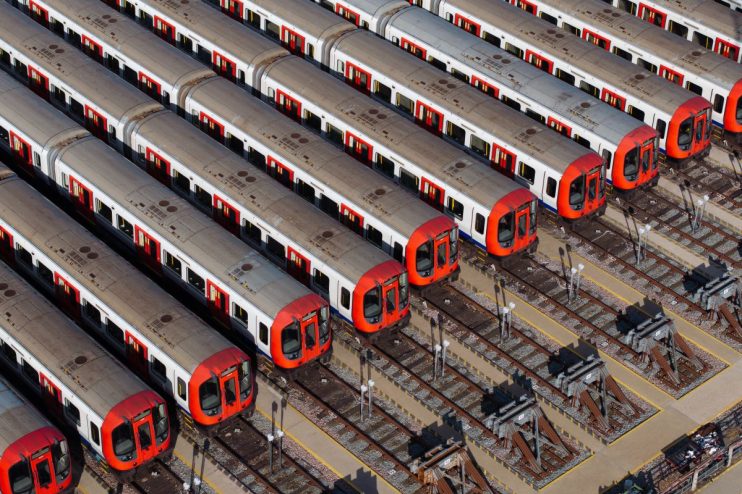
As London is crippled once again by Tube strikes, we ask whether driverless trains are really the answer in this week’s Debate
YES: Automated systems would improve safety and could eliminate strikes
As London grinds to a halt yet again, RMT unions demand a 32-hour working week with no pay cuts. With strike action expected to cost up to £230m, the long-term case for driverless tubes becomes undeniable.
Critics cite Transport for London’s 2024 analysis claiming £7bn conversion costs with “no additional benefits.” Yet this represents institutional bias from an organisation whose leadership depends on union relationships. Global evidence is overwhelming; as of 2018, 64 fully automated lines across 42 cities prove the technology works. Dubai Metro achieves 99 per cent punctuality, Paris converted Line 1 without service interruption and no city has ever reversed automation.
Opponents claim London’s infrastructure is uniquely challenging, citing varied platform heights and single-bore tunnels. But aging infrastructure requires replacement regardless. The choice isn’t between expensive automation and cheap status quo; it’s between intelligent modernisation and perpetual patch-jobs that waste billions.
London already experiences automation daily. The DLR has served London reliably since 1987. Automated systems deliver superior performance: the Dubai Metro achieved one fault per 4m kilometres Properly implemented automation eliminates human error, one of the primary causes of accidents.
Automation could eliminate driver strikes entirely. Beyond labour disputes, automated systems provide enhanced safety, improved customer service, operational flexibility and reduced environmental impact. Crucially for taxpayers, automation delivers economic balance: better services while controlling costs that spiral with every union negotiation.
Admittedly, full conversion would require decades of phased implementation. But delay compounds costs and cements union veto power. Short-term solutions must include opening operations to competitive tender, breaking TfL’s stranglehold.
London deserves transport matching its global peers: modern, reliable and beyond the reach of perpetual industrial action.
Anne Strickland is a researcher at the Taxpayers’ Alliance
NO: Most Tube lines are already automated, yet we still need drivers on board
Every time there is industrial trouble on the Tube, there are calls for the Underground to be made driverless. Well, here’s the spoiler. Most of the lines are already operated by an automatic train operation system which means they are driven by computer software and controlled remotely. The Victoria, Jubilee, and Northern lines, along with large parts of the Central, Circle, District, Hammersmith & City, and Metropolitan lines all use it and eventually other lines, as they get new trains, will transfer over to the system. The Elizabeth Line is also run automatically in the tunnel section but driven normally in the outside parts, and similarly Thameslink trains have an automated section through the centre of London.
London Underground lines are relatively simple with few junctions and therefore have been easy to adapt to automatic running. However, the London suburban rail network is considered far too complex with its numerous junctions and intense timetables to be able to adapt to automatic operation.
So how come the Tube trains have someone at the front who looks as if they are driving it? Well, they are there for two reasons. First they can take over in an emergency if the automated system fails to react to an incident. The Underground tunnels are very narrow and in an emergency it is essential to have a staff member on board given there can be as many as 1,000 panicking passengers. And secondly, they operate the doors and ensure that they are safely closed before the trains set off. The one exception is the Docklands Light Railway, which provides endless pleasure for those who love sitting on the seats at the front and fantasising about driving trains. This, however, is because it was built as a fully automated system from its inception.
Christian Wolmar is a writer and broadcaster. Find him on Substack or listen to his podcast, Calling All Stations
THE VERDICT
No doubt many of us, battling through packed buses and desolate Lime bike banks this week, have cursed Tube drivers and swore we should do away with the lot of them – but are driverless Tubes the actual answer to London’s transport woes?
First off, it’s prudent to note that Tube drivers are not the primary culprits for this week’s strikes, with station and depot staff driving the industrial action. Claims that a driverless Tube network would rid London of walkouts thus amount to wishful thinking – as further evidenced by the fact the beloved (and driverless) DLR is also on strike this week.
Nevertheless, as Ms Strickland points out, there are plenty other compelling reasons to automate the Tube, and objections that it is simply too hard and too expensive feel defeatist. On this occasion, though, they may really be justified, as the costs are staggering. TfL’s leaked 2020 document put the cost at over £7bn, though other reports have cited figures from £20bn-£60bn. Perhaps those driver salaries aren’t too high after all.