The Debate: Is there any merit in a wealth tax?

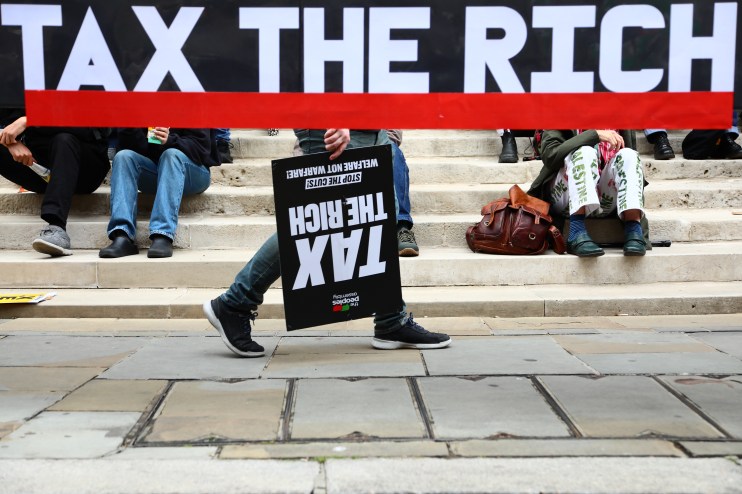
Pledges to impose a wealth tax are often well received among the public, but would such a policy actually help Brits? Rebecca Gowland of Patriotic Millionaires and Rathbones’ Oliver Jones make the case for and against in this week’s Debate
YES: Our millionaire members say they wouldn’t even notice a two per cent wealth tax
The government currently considers tax policy primarily as a way to raise revenue, but the merit of a wealth tax – and taxing wealth more broadly – goes way beyond this. Yes, the projections show that a two per cent tax on wealth over £10m could generate around £24bn a year – that’s with behavioural change factored in. But the long-term, serious merits of taxing wealth are bigger than this and twofold.
The first is political. Taxing wealth demonstrates to the country that the government is serious about putting ordinary people first. For years tax rises have sat with small businesses and ordinary workers, while the effective tax rate of the richest remains eye-wateringly low. Patriotic Millionaires know they should be paying more – they can afford it. Our members who would pay a two per cent tax talk to me about how they won’t even notice it given the rate of return they enjoy on their wealth. At a time when economic distress is pushing people towards the far right, taxing wealth provides a clear policy choice that shows people the government is putting them and the country’s needs first.
Secondly, it’s about long term economic stability and sustainability. Wealth inequality is soaring. This is not simply a moral dilemma; the wealth divide is a key factor causing economic stagnation and wastage. No money in your pocket means low consumption; fewer opportunities means wasted talent; weak public investment means beaten infrastructure and public services – none of this is conducive to growth or good for a healthy economy. Unproductive wealth accruing with a small number of people is not doing this country any good.
We need to tax wealth. However the government chooses to do it they must do it with bravery and with commitment – and they must do it as soon as they can. Let’s cross our fingers that November’s Budget delivers what our country needs.
Rebecca Gowland is the executive director of Patriotic Millionaires
NO: Our research shows a wealth tax could drive over £100bn out of the UK
Our analysis – based on official economic data and the most detailed academic studies to date – suggests that a wealth tax could drive over £100bn out of the UK or into less productive assets. It also has a couple of other significant drawbacks that would make it a poor choice for the Chancellor as she tries to raise revenue.
Wealth taxes – such as the one backed by 42 MPs – are also costly to administer and require regular valuations of a wide range of assets, including those without a clear market price. Experts estimate that the initial setup cost to the government would be nearly £600m, with ongoing compliance costs to taxpayers reaching £700m annually.
These taxes also pose challenges for people with wealth tied up in private businesses, who may struggle to meet annual tax payments. Two studies from Norway and one covering multiple countries show that private firms whose owners are subject to wealth taxes tend to pay higher dividends to help meet tax liabilities – so these firms invest and grow less.
Looking outside the UK, there is only one country in the world – Switzerland – which raises significant revenue from wealth taxation, but its entire tax system is structured differently, with minimal taxes on income, dividends and inheritance.
These drawbacks help explain why the number of wealthy countries levying wealth taxes has fallen from 12 to just three since the early 1990s. Even the Labour government of the 1970s never implemented the one it promised. We suspect the Chancellor will reach the same conclusion and look elsewhere to raise revenue in the upcoming Budget, while aiming to protect “working people”.
Oliver Jones is the head of asset allocation at Rathbones
THE VERDICT
Zack Polanski this week doubled down on the Green Party’s pledge to introduce a wealth tax, specifically an annual tax of one per cent on assets above £10m and two per cent on assets above £1bn. It’s a provocative policy with political expediency (indeed, the Greens gained 1,000 members following Polanski’s interview with Laura Kuenssberg on Sunday), but would it actually help anyone?
Of course, on a surface level, it would raise money. The Greens, and Ms Rowland, suggest up to £25bn a year. But this is illusive. In reality, wealth taxes have rarely raised significant funds – and history shows it. While a dozen OECD countries had wealth taxes in 1990, only three (Norway, Spain and Switzerland) retain them. For the rest, they largely proved too difficult to run (valuing an individual’s total wealth, which can encompass property, investments, cash and even art, is hard and costly to do) and were ultimately ineffective in raising revenues.
Political cache for a misguided policy? It’s a big no to a wealth tax from Morning Wire.