The Debate: Should we ban smartphones in schools?

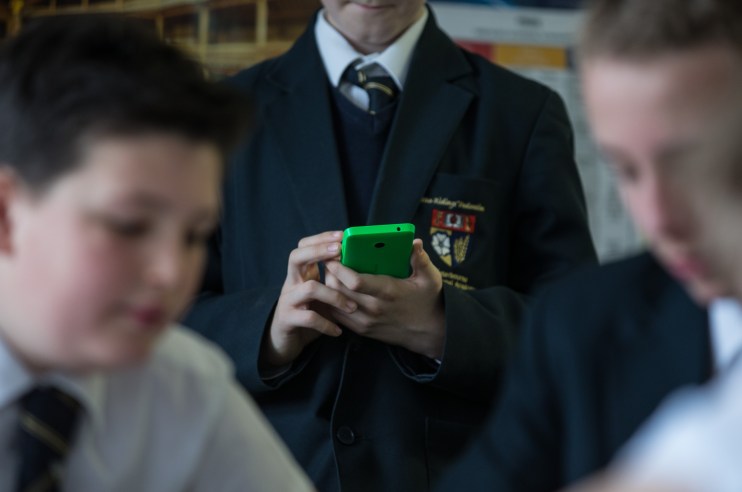
As Keir Starmer calls for schools to pay attention to the hit drama Adolescence, could a smartphone ban be next? We get two writers to argue for and against banning phones in schools in this week’s Debate
YES: There is a clear correlation between smartphones and mental health issues
I believe schools should ban smartphones, and I petitioned for this alongside fellow parents at my son’s school. This is due to the clear correlation between social media and gaming with mental health issues. Despite the government citing insufficient evidence linking phone use to mental health issues, the effects are undeniable to parents.
The recently rolled out Online Safety Act is designed to ensure safer online environments and places more responsibility on technology companies and online platforms. If executed correctly, it is a much-needed measure to safeguard our children and govern the unethical practices of some advertisers who target under-16s. It means that advertisers will need to ensure their campaigns are ethically sound and do not contribute to negative outcomes like mental health issues, unhealthy habits or misinformation. Continued innovation around first-party data strategies within advertising will also help with this, ensuring that brands still find value in their campaigns but minimise tracking.
While we all know new technology can be a powerful force for good, more research is needed to guide schools, parents and children alike to navigate these new technologies. This is ever more profound and important with the rise of AI. Parents need tools and understanding to know how to keep potentially harmful algorithms at bay, and to be informed about the implications and opportunities that new legislation like the Online Safety Bill provide.
Sarah Pettitt, Senior Group Business Director at Seedtag
NO: Education – not prohibition – is the key to guiding responsible phone use
While the intention behind banning smartphones in schools is understandable, a blanket ban risks creating more problems than it solves.
Logistically, schools face serious challenges managing large volumes of phones daily. Collecting, storing and returning hundreds of devices safely takes time and resources – particularly difficult for schools spread across multiple sites. There’s also the matter of responsibility. If a phone is lost or stolen, who is liable? These are practical issues that can’t be ignored.
Moreover, bans aren’t foolproof. Reports of students using “burner phones” – handing in old or inactive devices while keeping their real phones – highlight how easily rules can be undermined. Instead of eliminating distractions, bans may simply push phone use out of sight and make it harder to monitor.
Beyond logistics, we must also consider the role smartphones play in modern life. They’re used to top up lunch accounts, coordinate family plans and stay connected in emergencies. In a world where most adult coordination – from group chats to transport – is done digitally, expecting students to rely solely on receptionists or landlines seems outdated.
But most importantly, banning smartphones ignores a fundamental responsibility: to teach young people how to use technology responsibly. Simply removing devices doesn’t help students develop digital discipline or understand context-appropriate use. Education – not prohibition – is the key to guiding responsible behaviour.
Rather than banning smartphones altogether, schools should focus on structured guidance and clear expectations. Helping students learn when and how to engage with technology is a far more sustainable, and educational, approach.
Josh Blackburn, CEO at online tutoring company TLC LIVE
THE VERDICT:
Whether you think TV setting policy agenda is a good thing or not, there is no doubt the success of Netflix drama Adolescence could prove significant in moving the dial on the growing debate around online safety for young people. Jack Thorne, who wrote the show alongside actor Stephen Graham and attended a roundtable with Keir Starmer yesterday, has urged the PM to consider a smartphone ban in schools, as recently implemented in Australia. But is a ban really the answer?
Ms Pettitt cites many reasonable points. Social media’s potential to negatively impact mental health is certainly hard to ignore.
But, ultimately, as Mr Blackburn, a former secondary school teacher, points out: a ban misses the point. Smartphones are sewn into the fabric of modern life, and it’s unrealistic to portion off a section of society from that. Kids are smart, and will find ways to use them anyway. Better, then, it be done without the added glamour for teenagers of doing something they’re not meant to.