The Elizabeth Line anniversary is a reminder of what London and other cities can achieve with the right kind of investment

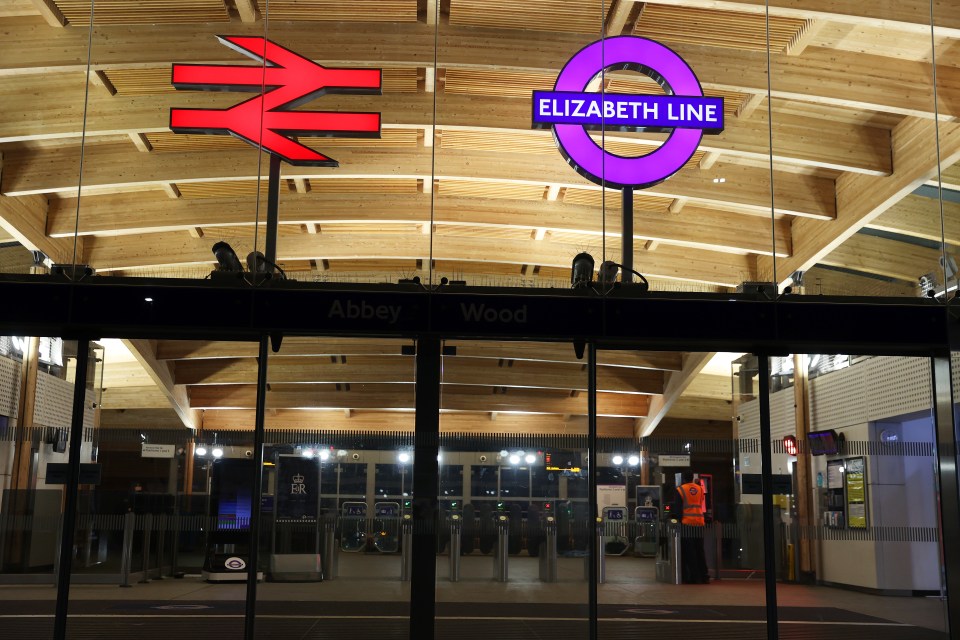
The Elizabeth Line, a clamorous success, was enabled by investment from the national government, but mainly from London’s government and businesses. It’s a model we should replicate, writes John Dickie
One year ago, the Elizabeth Line opened. It was the UK’s most successful major infrastructure project in a generation.
This weekend saw the final timetable for the project, formerly known as Crossrail, come into effect. Despite coming in over budget and delayed, it’s now carrying more than three million a week, well above the two million originally forecast. So the line’s benefits were underestimated, as well as its costs.
Lives and livelihoods have been transformed, as has the south-east’s economic geography, by quicker, simpler and more reliable journeys. And its positive impact has not been limited to the capital: 62 per cent of all the project’s contracts were awarded to companies based beyond the M25, creating high-skilled jobs across the country.
The UK desperately needs further transport infrastructure upgrades to drive sustainable economic growth. There are many lessons to be learned from the Elizabeth line.
The key piece of the jigsaw for this huge undertaking was an innovative funding deal. BusinessLDN helped to broker a collaborative package between the London government, national government and the capital’s business community under which, crucially, firms were willing to pay up to get shovels in the ground. Business leaders embraced the economic benefits that better connectivity and increased public transport capacity would bring – and agreed to be taxed more to make it happen.
As a result, roughly 40 per cent of the nearly £19bn cost has been paid for by London’s businesses. This is not money that would have otherwise been spent in other ways, but new money on top of existing tax contributions, with the balance coming from London government, Network Rail and general government funds.
The latter was significant but it needs to be put in context: the capital contributes a tax surplus equivalent to two whole Crossrails every year. So we can justifiably say that London has paid for the new line in its entirety.
London can deliver when it’s allowed to, and the same is true for other parts of the country. With the government struggling to balance the books, we need to consider how we can use innovative funding models like this to deliver the investment necessary for the next generation of infrastructure projects. Crucially, this should involve putting an end to the begging bowl relationship between the Treasury and cities and regions across the country by giving local leaders the fiscal freedom to prioritise investment where it is most needed.
Secondly, politicians of all stripes need to work together in a much more collaborative manner to modernise our transport system. A stable infrastructure investment pipeline would give businesses the certainty to develop skills, create jobs and drive growth.
This will require reaching an agreement with the unions to end the disruption caused by rail strikes as well as providing the long-term funding certainty needed to improve services. The support provided by the government for Transport for London through the pandemic expires next April. Political differences between the government and the Mayor of London should be put to one side so that a long-term settlement for TfL can be agreed, enabling the upgrades necessary for a vibrant, growing capital.
Finally, as a nation we need to lift the handbrake on economic growth by being more ambitious and focusing on the benefits of infrastructure projects, not just the costs. The Elizabeth line has shown how such investments can have a transformative impact for households, workers and businesses. This needs to be reflected in the debate around other heavily-politicised projects, such as HS2 and Northern Powerhouse Rail.
The Elizabeth line took more than a century to move from idea to completion. Taking that long again by failing to properly invest in London’s transport infrastructure would not only limit economic growth and productivity in the capital, but also affect every part of the UK economy for generations to come.