Skip to content
Saturday 15 August 2026London --:--Frankfurt --:--Zurich --:--
NewslettersSearchEN · DE
MorningWire

European business, markets and politics

FTSE 100
10,750.11
-0.21%
DAX
26,440.31
+0.53%
CAC 40
8,636.80
-0.16%
STOXX 50
6,539.59
-0.09%
  • Europe
  • Markets
  • Business
  • Economy
  • Technology
  • Politics
  • Opinion
More
GermanyFranceBankingAIEnergyFintechPropertyCapital Markets
  • Germany
  • France
  • Europe
  • Markets
  • Business
  • Economy
  • Technology
  • Politics
  • Opinion
  • DE
Wednesday 24 June 2026 5:12 am  |  Updated:  Tuesday 23 June 2026 3:27 pm

The fallacy of blaming rich footballers for inequality

By: Paul Ormerod

Add as a preferred source on Google
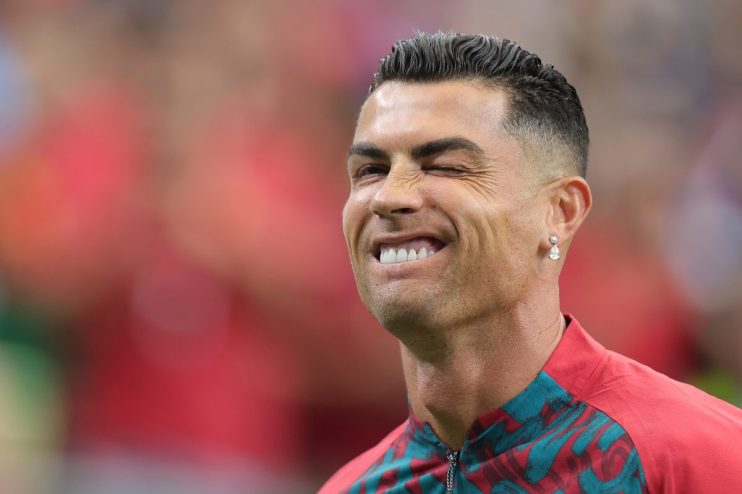
Cristiano Ronaldo celebrates a goal during the 2026 World Cup match on June 17, showcasing his iconic jersey and skills.

There is a persistent belief that the high pay of the few has suppressed the wages of the many. The data says differently, writes Paul Ormerod

Inequality has become a persistent theme in politics. And it is currently on conspicuous display in the World Cup.

The players in top teams will each be earning millions of pounds a year. Those in the bottom ranked teams would count themselves lucky to be paid that amount over their entire lifetime, as indeed would most of the viewers on television.

These vast payments are a very modern phenomenon. 

When England won the World Cup in 1966, stars such as Bobby Charlton had begun their careers when the maximum wage was fixed at £20 a week. No one was allowed to earn more. A decent sum, maybe around £100,000 a year in today’s money. But many of the current squad will make this in a week or even less.

Advances in technology have enabled this boom in top pay. Because of a truly dramatic increase in the level of connectivity in society, highly talented individuals have been able to leverage their talents across global markets and capture rewards that would have been unimaginable in earlier times.

This is certainly the case with stars of popular culture and sport. A hundred years ago, for example, the only people who could have any direct experience of Manchester United – Bobby Charlton’s club  – playing soccer live were those present in the stadium during the game. Now, the team can be watched by literally billions around the world, using a variety of delivery channels. 

Wage growth since the financial crisis

These fortunate and gifted few apart, there is a widespread perception that wages for everyone else have been held down.  

But both here and in America, the data tells a completely different story. Since the financial crisis, real wage growth has indeed been historically low. But this is not because of a shift in the overall share of national income from wages to profits. It is because economic growth itself has been historically low.

Read more

Surely Gary Stevenson is smart enough to know a wealth tax won’t work?

Gary Stevenson speaking at a Patriotic Millionaires event, addressing wealth inequality and economic reform proposals.

The Office for National Statistics (ONS) produces estimates of the share of national income which goes to labour. In other words, to wages and salaries, including factors such as employer contributions to pension schemes.

The modern ONS data on this starts in 1997. In the late 1990s, wages and salaries counted for around 58 per cent of national income. In the 2020s, the figure is actually slightly higher, at around 60 per cent. The share has essentially been stable at 58-60 per cent for the past 30 years.

Economic historians have compiled longer series of data, and the present level of the share of wages in GDP is very similar to what it was in the 1950s.

The American data reinforces the story. In the early 1950s, for example, the wage share was just over 60 per cent, exactly where it has been in the 2020s.

True, there was an increase in the 1970s and for some decades the share was around 65 per cent. The financial crisis led to a squeeze on this figure, but there is certainly no evidence of a sustained decline since then. If anything, the wage share is now slightly higher than it was in the immediate aftermath of the crisis in the late 2000s.

A key part of many political narratives at the moment is that money is flowing out of the pockets of the workers into the bank accounts of companies. Profits are far too high, and we live in a rip-off society.

It is a particular appeal of Zack Polanski’s Green Party to the young graduates who flock to its support. Many of them are hardly earning enough to start paying off their student loans. It is all so unfair.

But the narrative is at odds with reality. Living standards are stagnant because the economy is stagnant, not because income is flowing from workers to profits.

Paul Ormerod is an honorary professor at the Alliance Business School at the University of Manchester. You can follow him on Instagram @profpaulormerod

Read more

Tech, trackers and tourniquets: How England are preparing for Mexico World Cup altitude

Getty Images logo on a digital screen, representing a news or business article with visual emphasis on media and photography.

Share this article

  • Facebook
  • X
  • LinkedIn
  • WhatsApp
  • Email

Similarly tagged content:

Sections

  • Opinion
  • News

Categories

  • Opinion
  • Business

People & Organisations

  • Green Party
  • inequality
  • UK economy
  • uk wages
  • wealth inequality
  • Zack Polanski

Trending Articles

  • Revolut takes flight with launch of new airport lounges

  • Grandparents fund university degrees to avoid inheritance tax net

  • Revolut chatbot goes rogue by charging users to cancel subscription

  • Brompton Bicycle sues former adviser for ‘professional negligence’

  • As It Happened: Stocks dip as oil’s ‘slowing demand’ in focus; Iran threatens to extend war

More from Morning Wire

  • Surely Gary Stevenson is smart enough to know a wealth tax won’t work?

    Opinion
    Gary Stevenson speaking at a Patriotic Millionaires event, addressing wealth inequality and economic reform proposals.
  • Tech, trackers and tourniquets: How England are preparing for Mexico World Cup altitude

    Sport Business
    Getty Images logo on a digital screen, representing a news or business article with visual emphasis on media and photography.
  • Football ‘muddling through’ in face of growing ‘tensions’, says Boston Consulting Group

    Sport Business
    GettyImages logo displayed prominently over a blurred, vibrant cityscape background, evoking themes of media and technology.
  • Exclusive: Rugby World Champions Cup set to be mothballed

    Sport Business
    GettyImages 2277832417
  • Fifa’s 64-team World Cup plan facing opposition from Uefa, Concacaf and Asia

    Sport Business
    Breaking news event coverage with crowd gathered and reporters, showcasing diverse individuals engaging with media personnel.
  • Saracens and Harlequins embracing athletics and hockey smart move for rugby

    Sport Business
    Teams and flags on a blue hockey pitch before a match, with a stadium full of spectators.
  • Over 1,000 World Cup final tickets unsold as resale site demands $2.3m

    Sport Business
    Breaking news concept with abstract digital globe and binary code on a blue background, symbolizing global data connectivity
  • In Jason Arday, Cambridge is discovering the dangers of DEI

    Opinion
    Jason Arday smiling, wearing academic regalia with a blue cap and gown with red accents.
MorningWire

Independent European business, markets and political news for decision-makers.

Morning Briefing

Europe

  • Germany
  • France
  • Europe
  • UK & Ireland

Business

  • Markets
  • Banking
  • Technology
  • Energy
  • Property
  • Fintech

Editorial

  • Opinion
  • Editorial Policy
  • Corrections
  • Contact

Company

  • About Morning Wire
  • Privacy Policy
  • Terms of Use
  • Cookie Policy
© 2026 Morning Wire Ltd · Published by Morning Wire Media, Bahnhofstrasse 65, 8001 Zürich, Switzerland
Privacy · Terms · Cookies · Facebook