
The future of accountancy

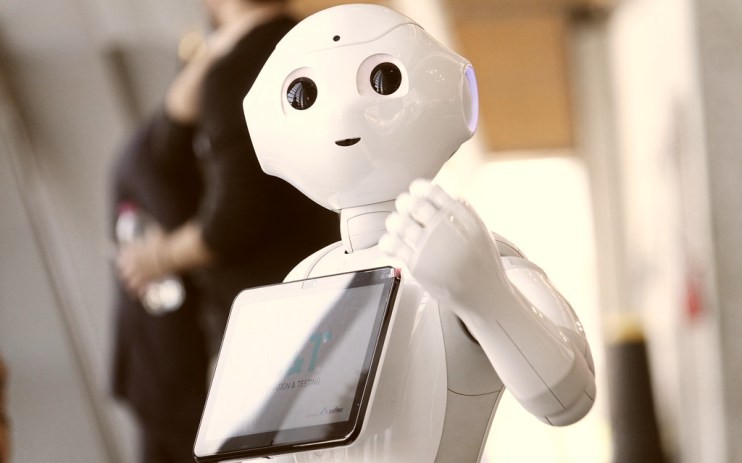
ICAS Lecturer, Molly Jamieson CA, discusses the increased use of technology in the accountancy world and the role of accountants in the future.
With the introduction of artificial intelligence (AI) and process automation, there has been vast changes to the world of accountancy as we know it in recent years. Changes made include the use of analytics to review the manual journal postings of a client. Using this, auditors can establish correlations with aid from new technology, enabling them to potentially review a full population of data which would previously not be possible due to time and technological constraints. Other introductions include bookkeeping apps from which you can simply scan your invoices via your mobile device, for example QuickBooks.
This begs the question of whether the role of accountants will be required in the future. Due to these vast increases in automation, could a robot produce your financial statements and perform your audit?
Role of accountancy
As accountants, we are required to use judgement significantly as part of our day-to-day roles. The exercise of judgement is fundamental to ensure that the financial statements of a company are free from material error and give a true and fair view of the company.
Further to this, we must ensure that the transactions are prudent. Prudence is the exercise of caution when making judgements under conditions of uncertainty. Being prudent means ensuring that the assets and income of a company are not overstated, and that the liabilities and expenses are not understated.
Areas of judgement
Areas that we review in Test of Competence Financial Accounting that would require a degree of judgement are as follows:
1. The review of the depreciation policy of the client
We are required to assess the useful life of the assets being depreciated to determine if this is appropriate. Whilst automated systems may be able to post the accounting journal to the general ledger of this transaction, it would not be able to consider if the asset was obsolete, if there should be any impairment of the asset due to damage or whether the amount being posted is correct.
Furthermore, the asset of the client may be out of the ordinary (e.g. not a standard motor vehicle that is easy to value) and may need specialist valuations from the use of an expert, for example an oil ring or a windmill would be classed as more difficult to value assets. An asset that requires the use of an expert is clearly more difficult to account for; the need for the expert judgement again is something that a computer would not be able to determine.
2. The allowance for doubtful debts
We are required to assess the likelihood of recoverability of debts and we would use judgement to consider whether a debt should have an allowance to offset the Trade Receivables or be written off in the Statement of Profit or Loss. Again, whilst automated systems may be able to post the relevant double entry to the nominal ledger to increase or decrease the allowance for doubtful debts, it would not be able to use judgement to consider what should or should not be included within this allowance.
A customer of the company may go into administration, with this administration being announced on the news. If this client was a debtor of the company, this debtor would be required to be written off to the Statement of Profit or Loss. An accountant would be aware of this administration and ultimately know to write off the amount to be prudent, but a computer would not be aware of the situation and again therefore would not be able to post the correct journal entry to account for this.
3. Correcting journal entries
If a mistake was made when posting a manual journal by one of the accounts team; would a robot be able to identify that an incorrect posting had been made, and also identify where the journal should have been posted and then ultimately post a correcting journal? This is something that requires an in depth knowledge of DEAL & CLIP and an understanding of the purpose of the journal entry made.
A further understanding is required of the accountant of the correlation between the Statement of Profit and Loss and the Statement of Financial Position, and how the journal entries posted to one of the statements may impact the other, which is very likely unless it is a reclassification. It is unlikely that a robot would be able to perform this without making a mistake.
4. Lastly, the allowance for damaged inventories
Management would be required to review the inventories that they had at the year end date for any items they believed to be obsolete, or damaged and either making an allowance for these or writing them off to the Statement of Profit or Loss. This would require a knowledge of the market, potential future sales and trends in relation to the items in stock, and a physical inspection of the materials to then be able to perform an analysis over these items and to determine what the accounting adjustment is.
As noted above, a robot would be able to create the journal entry, given that the input of information was correct. However, a robot clearly would not be able to perform the physical stock take and ensure further that the stock take was performed correctly, and therefore again people are needed to perform these roles.
Whilst these tools have become an asset for the use of auditors and accountants, allowing them to spend more time on the areas of significant judgement, as evidenced above it is clear that there is still a need for accountants and auditors to exercise judgement in various areas of the financial statements. Lastly, robots cannot emulate the conversations that accountants will have with their clients and the valuable advice that we are able to give. It is unlikely that robots will be able to be prudent and use professional judgement any time soon.