The legacy of the Berlin Wall is the city’s thriving tech scene

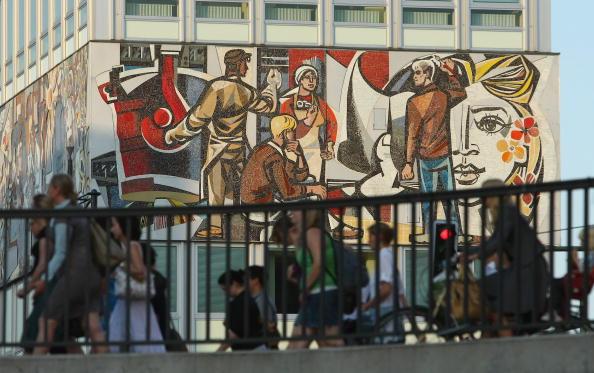
Tomorrow marks the thirtieth anniversary of the fall of the Berlin Wall, arguably the most symbolic political moment of the post-war twentieth century.
On 9 November 1989, tens of thousands of people flooded across a barrier that had divided ideologies for 28 years. The German capital was transformed.
Anniversaries like this are important because they remind us not to repeat the mistakes of the past and allow us to hold a sage, nostalgic microscope to the problems of the modern world. But they also inspire us to reflect on the legacy of seismic events and, with the 20/20 vision of hindsight, understand how the world has changed.
As a Canadian who moved to Germany in the late seventies and has worked in Berlin for the last few years, I have had a front-row seat to chapters of the city’s profound transformation. From the vantage point of my company’s office in Mitte, situated right where the Wall used to be, I’ve seen the remnants of a divided society evaporate, leaving in its stead a cohesive, creative, and productive capital.
The statistics reflect this. Berlin is the most populous city within Europe’s largest economy; its business, industry, and technology sectors are all thriving. According to official government figures, a company is founded in the capital every 20 minutes, and in 2018 German startups received a record €3.4bn of funding, with nearly 40 per cent of that going to businesses from Berlin (compared to 18 per cent in Munich and six per cent in Hamburg).
This rapid success has of course been in spite of the preceding decades of schism. But it’s worth pointing out that there are elements of divided Berlin society which have had the unintended consequence of enabling the city’s unique startup and tech ecosystem to flourish.
Berlin has a magnetic pull for young, bright people. The city’s open-mindedness attracts a diverse and multicultural workforce.
One of the main reasons for this is the low cost of living: rents are significantly cheaper than competing hubs like London, Amsterdam, and Stockholm. This is in part because East Berlin was inaccessible to the property developers who transformed other cities in the sixties and seventies — less luxury development then has meant more affordable central accommodation today.
The happy by-product of cheap rents is that it allows people the flexibility to take risks and fail — which are both prerequisites for founding successful tech companies. Startup salaries go much further in Berlin than elsewhere, meaning that talented employees aren’t as enticed by big firms offering generous remuneration.
The same goes for office spaces. Small, young businesses don’t become immediately hamstrung by rent costs. For comparatively little money, tech founders in Berlin can create the stripped-back aesthetic often loved by employees in their industry.
If the cost of living attracts a good volume of people, the social legacy of the Berlin Wall entices talent with the right mindset. During the Cold War, big corporations’ access to East Berlin was of course heavily limited. This meant that when the Wall finally fell, there was a vacuum in which smaller businesses could launch and thrive.
Such a focus on the underdog — the independent store, the creative business flowing upstream — draws people of a similar mindset to live in the city. And these individuals are perfectly positioned to work for tech companies looking to innovate and disrupt.
Recognising these advantages in no way means excusing the cruel inhumanity of dividing the city in 1961. The years of separation had a profound economic and social cost, and the anniversary of the fall of the Wall should be an occasion for celebration.
But the success story of the decades after the Berlin Wall came down is also worth telling. It’s an uplifting silver lining to years of hardship, and one that captures mankind’s amazing ability to recover from even the greatest adversity.
Main image credit: Getty