The man behind the Elizabeth Line: Building in the UK is “tough”

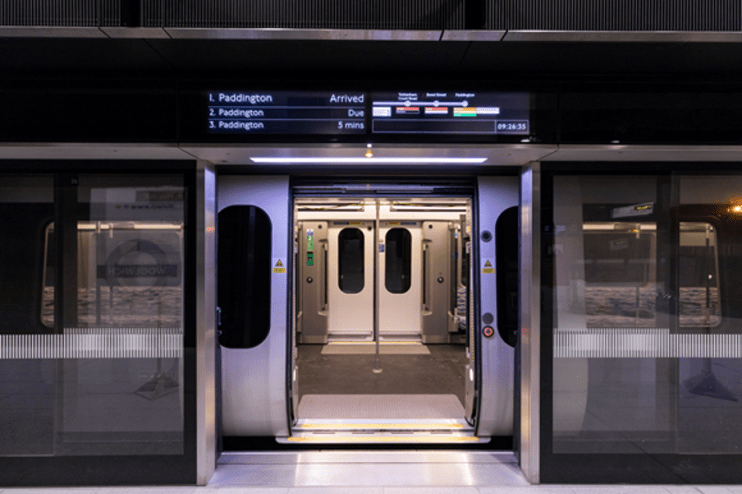
It’s been a year and a half since the launch of London’s Elizabeth Line and the roll-out has been, by all accounts, a remarkable success.
Few had as significant a role in its delivery as Hong Kong-based transport giant MTR Corporation’s UK chief executive, Steve Murphy. Prior to becoming top dog, he oversaw the project for more than five years, coming off the back of a near 30-year long career in the rail industry.
The Elizabeth Line carried 150m passengers in its first twelve months and in the latter part of 2022, became responsible for a staggering one-sixth of all journeys across Britain’s transport network.
It wasn’t all smooth sailing though. Chatting in MTR’s London offices, Murphy recalls some tough times half a decade ago, as the group struggled to map out a route to final delivery and not long before the pandemic wiped out passenger numbers.
“It has been an absolute journey,” he says. “If you go back to 2018… those were really, really challenging times because the project had to find a way through a plan to get to be operational.”
Now the Elizabeth Line carries around 750,000 passengers a day, connecting Londoners as far as Heathrow and Essex. No mean feat given a double whammy backdrop of the UK’s slow moving infrastructure sector and a rail system scarred by strikes and low post-pandemic passenger numbers.
Top tips
Murphy, who rose from a British Rail graduate trainee to top positions at Chiltern Railways, Arriva and the London Overground, is candid about the challenges facing major infrastructure projects in the UK.
Build phases are often “really tough, really fraught” and sometimes “people form their views on those projects then,” he explains.

His “golden rule”? Keeping “crystal clear” on the final vision despite any early setbacks. “If your vision at the end of it is still really good and you’re true to that, and you know it’s going to be successful, then it’s amazing actually how quickly things can turn around.”
In the thick of getting approval to proceed and “all the challenges you get with construction on a big project,” he adds, “that golden thread can be lost and suddenly the customer proposition, unless it’s very carefully watched, can get diluted or can get changed.”
His words may be too late for HS2, following the government’s controversial decision to axe the Northern Leg last month amid ballooning costs, but Murphy is optimistic for the future of British rail as a whole.
Passenger numbers are edging back from pandemic-era lows and the strike dispute, while a long way from reaching a resolution, saw its first breakthrough for months in November.
“So is there long term significant demand for more rail travel? I think undeniably there is and I think in urban centers, just to add on to that, there’s a need for metros, metroisation and mobility that isn’t about the private car in cities.”
“So is there long term significant demand for more rail travel? I think undeniably there is and I think in urban centers, just to add on to that, there’s a need for metros, metroisation and mobility that isn’t about the private car in cities.”
Steve Murphy, MTR Corporation’s UK chief executive
“All of those long term trends, I think, on their own are going to drive more and more requirements for expansion, improvement of railways, mass transit systems and cities and so on. Because without demand, then nothing could be optimistic.”
Yet no one can deny Britain’s rail network is walking on a tight rope, with operator’s finances still well off a full recovery from Covid.
Even the beloved ‘Lizzie Line’ is facing trouble, with Mayor Sadiq Khan coming under pressure to improve poor performance amid questionable punctuality over the summer.
“There’s lots to do,” Murphy says, putting a positive spin on recent performances as down to growing pains and strong demand. “Where we are now is, we absolutely want to get performance increasingly improving and actually, that’s within the context of we’re busy all the time, which creates more challenges. Good challenges.”
A host of different solutions have been floated to get British rail back to its best. From Great British Railways, a state-owned body designed to solve fragmentation, to Labour’s push for re-nationalisation, there is no one clear answer as yet.
‘Look east’
What are Murphy’s thoughts? The Hong Kong operator’s UK head believes looking east could hold the answers.
Murphy began his career as British Rail entered the privatisation-era and he speaks glowingly of Japan and Hong Kong’s vast networks. “In Japan, it’s legitimately privately funded [and] it’s pretty much the best railway in the world,” he told Morning Wire
The privatisation of Japanese rail in 1987 has been an undeniable success across its vast cities Tokyo, Osaka and Nagoya. Its system boasts the rare feat of being both profitable and punctual and has drawn consistent praise from other UK rail chiefs.
“The constant development of their high speed network is a pretty incredible story, the Shinkansen network and the level of market [share]… between Tokyo and Nagoya market share is phenomenal for rail,” Murphy said.
“It’s in everything you see over there. They’re constantly developing the next generation of high speed trains, they are obviously improving their infrastructure,” including with innovative developments to make the system “earthquake proof.”
Whether a carbon copy of Japanese rail would turn around British operator’s fortunes is up for debate. Either way, Murphy is certain more private investment would help MTR’s UK rail infrastructure projects speed ahead.
Bring in private investment or face ‘managed decline’
In Hong Kong, MTR is renowned for making use of so-called “air rights” in development projects. The company builds stations, before developing mixed-use commercial, residential and retail properties on top of them.
Murphy is looking to bring that model to the London hub. “There are air rights above Liverpool Street that haven’t been developed. There is a way of developing them, which importantly, doesn’t involve significant passenger disruption.”
The model creates a “virtuous circle,” he argues, in which commercial income is generated by building above, as opposed to relying on a cash-strapped government for more funds.
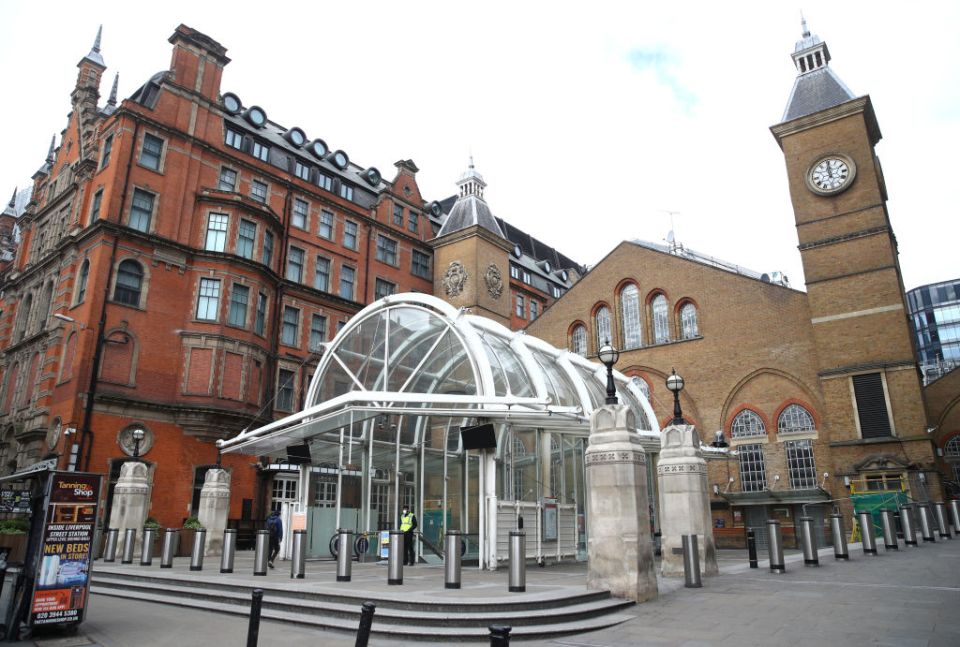
“Liverpool Street is kind of the first example in the UK we hope to bring up that philosophy and that’s also really common in Japan… they develop the income which they can then reinvest in the railway.” He did separately back partnering with state-owned Network Rail on the project, citing its vision and drive.
It’s not just the Central London hub which would benefit from more private investment. Murphy warned the wider industry faces “managed decline” if it uses an economic model of “everything has to be funded by central government.”
“We’re almost guaranteed to be in managed decline, and that’s not good… It’s not good actually for UK plc, it will inhibit growth, economic growth generally. So to me, big picture, a model that allows the industry to fund its own development, I think, is really exciting.”
It’s a long way to go and with a general election looming, the future of the UK’s rail sector sits at a crossroads.