The new model of American success: Win at all costs

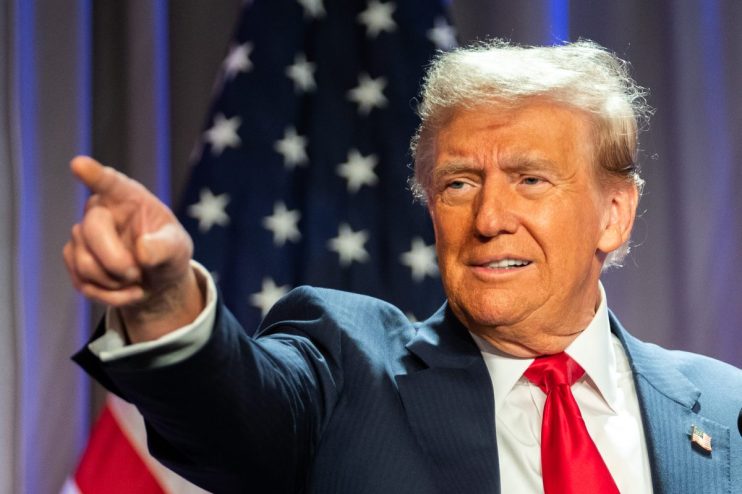
America has always been a hyper-individualistic society, but in the turbo-charged Trump era something has changed, says Lewis Liu
“What happened to your country?”
“Surely most Americans don’t agree with what is happening?”
Every single non-American I’ve encountered over the last six weeks has asked me questions like this. Over the past month, I’ve spent time in the Bay Area, New York, Switzerland, Austria and now, as I write this column, I’m flying back to the US after spending a week in London.
Americans have changed. I lived in London for almost 15 years before moving back to the US with my wife (an Irish American born in Kansas) and our two young sons three years ago. At first, I felt deeply alienated, experiencing intense reverse culture shock. Did I change, or did Americans change? The service culture wasn’t as friendly as I was used to; even French service seemed warmer! The cars on the road felt much more dangerous – I remember using my horn about once a month, but now it’s almost daily. I also noticed children and parents at my sons’ school racially self-segregating themselves. Surely this isn’t the behaviour of parents and children from the left-leaning American coastal elite?
If you dig into the numbers, you’ll find statistics that support my observations: 75 per cent of Americans believe tip culture is out of control, and the percentage of Americans having dinner or drinks with friends has declined by more than 30 per cent over the past 20 years. The US road fatality rate has increased by 25 per cent post-pandemic and is now two to three times higher than in other OECD countries. Researchers at Berkeley found that more than 80 per cent of the largest US metro areas are more segregated today than they were 20 years ago, with a significant migration of people moving to areas where they share political beliefs and/or racial identity.
What’s revealing is that this segregation even extends to the elite. When I attend a social or professional event in London – whether a reception at Downing Street or a cocktail party in Hampstead – I encounter people of various races and nationalities, and intermarriage is so common that no combination of gender or ethnicity raises an eyebrow. In the US, however, I notice people of the same race congregating together at similar events – charity fundraisers, political galas, my wife’s Stanford reunion and so on. Even in liberal elite enclaves like New York and San Francisco, people sometimes struggle to believe that my wife and I are a couple.
The question, then, is this: With all our wealth, education and “liberal values”, why are Americans still so isolated, lonely and insular? There is ample evidence that technology and the pandemic have pushed Americans even further in this direction, regardless of race or socio-economic status. The US has always been a highly individualistic country – far more so than its OECD peers – and this trend has accelerated exponentially in recent years.
In the US I notice people of the same race congregating together at similar events – charity fundraisers, political galas, my wife’s Stanford reunion and so on. Even in liberal elite enclaves like New York and San Francisco, people sometimes struggle to believe that my wife and I are a couple
Because the US has now entered a phase of hyper-individuality, Americans have also changed their modality of success. The US has always been a “winner-take-all” society. However, in the past, large parts of society still deferred to the legal system and upheld a certain code of honour. Growing up in the US, the ideals of the American constitution and George Washington’s deep integrity were etched into my consciousness. Today, when I bring up those principles, they feel like relics of another time. We’ve shifted to both a “winner-take-all” and a “win-at-all-costs” mentality.
For example, when I argue that OpenAI has engaged in large-scale IP theft to build its models, I receive nuanced discussion in Europe. In the US, however, my perspective is dismissed as “not with the times”. The prevailing view is that because OpenAI is “the winner,” it can and should ignore legal precedent in order to advance AI – there’s not even a debate. One of my neighbours, who is a portfolio manager for a top-tier hedge fund in New York, summed it up best: “The new American Dream is to be rich enough that the rules don’t apply to you.”
Europe’s ‘loser values’
As such, many Americans genuinely view Europe as irrelevant, with “loser values”. Last weekend, I was at one of my son’s friend’s birthday parties. As is typical in our school district, nearly all the parents were Ivy League-educated, Harris-voting millennial one-percenters. I got into a conversation about Greenland with one of the dads (who I know voted for Harris and had a BLM sign on his front lawn during the George Floyd protests). He said to me, “China’s very strong right now – we can’t deal with them. But Europe? They’re a bunch of weak losers. We should take Greenland if we can. They’re not going to do anything about it anyway.”
I pushed back, noting that while Europe’s GDP growth is anaemic compared to the US, GDP is not necessarily the best barometer of a country’s overall well-being. By other measures – such as life expectancy and education – most European countries perform significantly better. His response: “Europe only says GDP isn’t a good metric because Europe is poor. Wealth is the most important thing in today’s world. As for life expectancy, that’s because certain communities in the US do stupid things to themselves, so they die early. If we don’t count them, Americans actually live much longer.”
This perspective is not isolated. Whenever I bring up the life expectancy argument, I often hear some variation of this Ayn Randian logic, again from someone belonging to the liberal coastal elite. Just as a side note, Americans die younger than Brits across the entire income distribution spectrum – so even a one per cent American, despite being significantly wealthier, still dies earlier than a one per cent Brit.
Are we living in an era where Europeans and Americans now have fundamentally divergent values? Maybe. So, to answer the question, “What happened to your country?” – I would say: My country has changed; our people have changed. We have become more individualistic and less communal, driven by technology and the effects of Covid. This is who we are now, across the entire political and socio-economic spectrum.
However, I don’t want my readers to walk away with a black-and-white perspective. On the economic side, assuming tariffs and uncertainty don’t cause too much damage, this new American mentality will fuel enormous entrepreneurial hustle – new trillion-dollar companies will emerge from it. Moreover, not all Americans embrace the hyper-individualistic zeitgeist. Some pockets of Silicon Valley, Wall Street, New England and the industrial Midwest remain deeply rooted in honour and community. A small group of my American peers, regardless of political affiliation, are deeply committed to rebuilding our communities and social fabric. But just as Europeans could benefit from adopting more of America’s hustle culture, Americans can learn from Europeans how to prioritize community and humanity.
Dr Lewis Z Liu is a founder, investor, and AI scientist. As Founder & CEO of Eigen Technologies, he pioneered small language models and AI enterprise adoption, drawing on his Oxford Physics PhD. He sold Eigen in 2024 and now splits his time between New York, London, and San Francisco.