The next government must unashamedly champion London

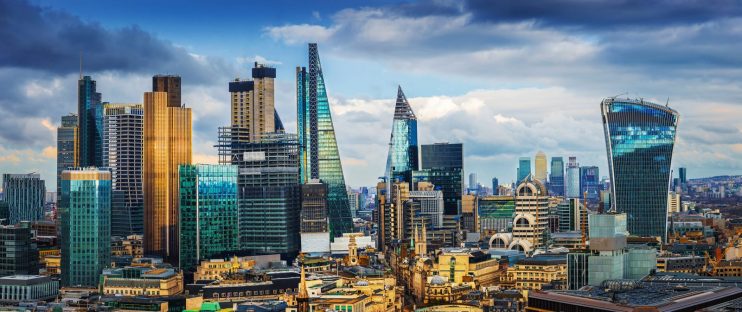
London’s productivity has flatlined since the financial crisis and the entire economy is suffering as a result. Changes to planning and tax raising powers could help change this, says Paul Swinney
To get the UK out of its economic coma, the next government will need to shake the capital awake. As is well known, London’s economy is better performing than the rest of the UK. A London worker produces as much in 3.5 days as workers in the rest of the country do in a week. And it accounts for a quarter of the UK’s economic output. Driven from a position of fairness, this leads to calls from some quarters to divert policy support away from London – transport spending has long been a good example of this.
But this comparison isn’t always that helpful. Economic policy at the cutting edge shouldn’t be governed by ‘fairness’. Big cities are supposed to be more productive than other parts of the country. We should expect London’s economy to perform better than smaller places.
So, if the Capital should have a higher benchmark, where should we set it? It should be how London measures up to other global cities.
Centre for Cities’ recent report on the performance of cities across the G7 showed that, compared to New York and Paris, London isn’t an outlier. If anything, it lags slightly behind.
What’s more alarming for both the capital and the national economy is how the city has stumbled since the Global Financial Crisis. The national flatlining of productivity – and living standards – over the last decade and a half is well known. What is less well known is London’s role in it. The capital led national productivity growth before 2008. But it has barely moved since. The result is that national growth has struggled.
And this has created an additional problem for UK PLC. The UK has long had an issue with the underperformance of large cities outside of London, such as Manchester and Glasgow. It now has a London problem too.
What should the next government do to address this? Not only are all of the UK’s large cities outliers in the G7 for their economic performance, they are also outliers in terms of the tools they have to address their challenges. Just five per cent of taxes raised in the UK are done at the local level (and even that is constrained by central government oversight). In Italy, the next lowest country, it is 12 per cent. And we’re bottom of the G7 league for local control of investment too.
To change this, the government should give London and other large UK cities the ability to raise and keep a larger share of their taxes, rather than sending it all to the exchequer. We propose doing this through changes to council tax, business rates and income tax. This change would give them greater freedom over how to spend money and how to compensate for the political pain that growth can bring with it.
And it should reform the planning system. The discretionary, case-by-case system we’ve had in place since the end of World War II has left us with a shortfall of 4.3m homes. The causes of the decline in housebuilding rates date back to planning legislation in the 1940s, much earlier than Right to Buy or even the decline in council housebuilding after a peak in the 1960s. This housing shortfall has bitten hardest in London and the Home Counties, evidenced by how much higher house prices are relative to incomes in this part of the country.
Switching to a rules-based system – which would allow any development to go ahead if it passes a set of agreed upon, pre-defined rules – would change this. It would inject certainty into the system, which would help London and its surrounding area build the homes that people are looking for.
All parts of the country will have a role to play in reviving the UK economy. But the next government should be unashamed in focusing on London, alongside the UK’s other large cities, if it is serious about reviving the UK economy.
Paul Swinney is director of policy and research at Centre for Cities.