The oil crisis isn’t just financial, it’s physical

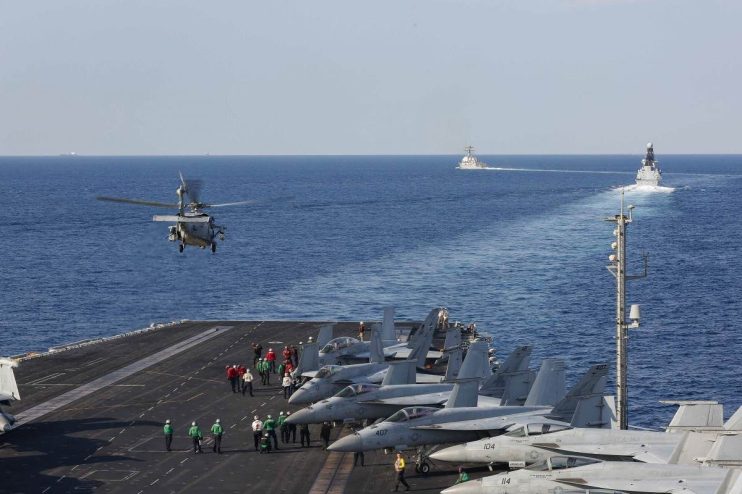
Disruption in the Strait of Hormuz isn’t just an economic shock, it’s harming the physical infrastructure that underpins global markets, says Helen Thomas
Five years ago this week, the Ever Given ran aground in the Suez Canal, blocking one of the world’s key waterways for six days. Oil prices jumped six per cent as roughly 3m barrels a day were delayed. In a pandemic-ravaged world, households fretted over supply shortages and delayed Amazon packages. By the time the ship was freed, 420 vessels were queued behind it. The backlog cleared within days. The disruption lingered for weeks.
And that was one ship, for one week, in one waterway.
Today, the disruption centred on the Strait of Hormuz is of a completely different order. Around 150 vessels typically pass through the strait each day. What we are now facing is the equivalent of thousands of Ever Givens meaning this is not a temporary blockage but a systemic breakdown.
Crucially, this is not just a financial shock. It is a physical one.
When energy cargoes cannot leave ports, the consequences cascade through the real economy. Oil that does not ship does not arrive at refineries. Refined fuel does not reach petrol stations. Workers cannot commute. Trains do not run. Aircraft cannot refuel for return journeys. Logistics networks slow, then stall. Goods fail to move through production chains. At the extreme, if fertiliser doesn’t make it to crops during the sowing season, harvests fail. Thai temples are already reporting that they can no longer afford to cremate the dearly departed.
At each stage, the impact compounds. Shortages trigger hoarding. Prices spike not gradually, but violently, as buyers scramble for whatever supply remains. What begins as a disruption becomes a feedback loop.
Even an immediate ceasefire would not halt what is already in motion. The shockwave has begun to propagate.
We have seen elements of this dynamic before. The collapse of Lehman Brothers froze trade finance as banks withdrew letters of credit and trust between counterparties evaporated, slowing global trade to a crawl. The eurozone crisis prompted bank runs as depositors chose cash under mattresses over money in financial institutions. During Covid, households stockpiled goods as people physically took themselves out of circulation. Each shock began in confidence and spread into the real economy. None could be easily reversed once underway.
The same logic now applies. Energy production cannot simply be switched back on overnight. Even in an optimistic scenario, it takes weeks to restart oil and LNG output. Tankers, already diverted, are in the wrong places. Refineries require additional time to return to full capacity. According to estimates from The Economist, even if hostilities ended immediately, it could take four months for energy markets to approach normality. And that assumes shipping confidence returns quickly which is far from guaranteed.
Throw out the playbook
The familiar policy playbook looks increasingly inadequate. Central banks can adjust interest rates, but they cannot conjure fertiliser shipments or reroute tankers. Strategic reserves offer only limited relief. The International Energy Agency can release around two million barrels per day from emergency stockpiles against a current shortfall closer to eight million.
More importantly, timing matters. April marks a critical window for South Asian economies to import fertiliser ahead of June planting and September harvests. Miss that window, and the consequences are not marginal, they are exponential. Lower yields today mean higher food prices tomorrow.
We have seen how fragile this balance can be. In Sri Lanka, a sudden shift to organic farming in 2021 which banned synthetic fertilisers devastated crop yields, drove up food prices and contributed directly to political collapse. What might appear a niche agricultural policy rapidly became a national crisis.
If that feels distant, the constraints closer to home are just as binding. Western governments are far less able to cushion shocks than they were during the pandemic. Debt levels are higher, inflation remains sticky, and borrowing costs are no longer near zero. The era of unlimited fiscal intervention has passed.
European governments have already moved to contain the pressure. Italy, Austria and Slovenia have cut fuel duties. Spain has reduced VAT on fuel. Portugal is preparing to cap electricity prices. Greece has imposed limits on fuel margins. Slovakia has introduced differential pricing, while Croatia has capped retail fuel prices outright.
The UK, by contrast, looks constrained. It faces structurally higher energy costs due to the legacy of weak policy choices alongside deteriorating fiscal dynamics. Political authority is lacking. Keir Starmer may hold office, but the sense of control is less clear.
That matters, because fuel crises have a habit of becoming political crises. The 2000 fuel protests tested Tony Blair early in his premiership. The petrol shortages of 2021, driven by HGV driver shortages, triggered widespread panic buying.
Today, the stakes are higher. The cost of living has remained a persistent concern for voters, and energy sits at the heart of it. When supply is physically constrained, the usual tools of monetary easing, fiscal transfers and political messaging lose much of their force. Central bankers are busy fighting the last war, fearful of de-anchoring inflation expectations.
This is what makes the current moment so dangerous. We are not dealing with a market correction or a temporary spike. We are confronting a disruption to the physical systems that underpin modern economies.
The dominoes are already falling. And once they are in motion, they are extraordinarily difficult to stop.
Helen Thomas is founder and CEO of Blonde Money