The only thing that’s growing in Britain is the civil service

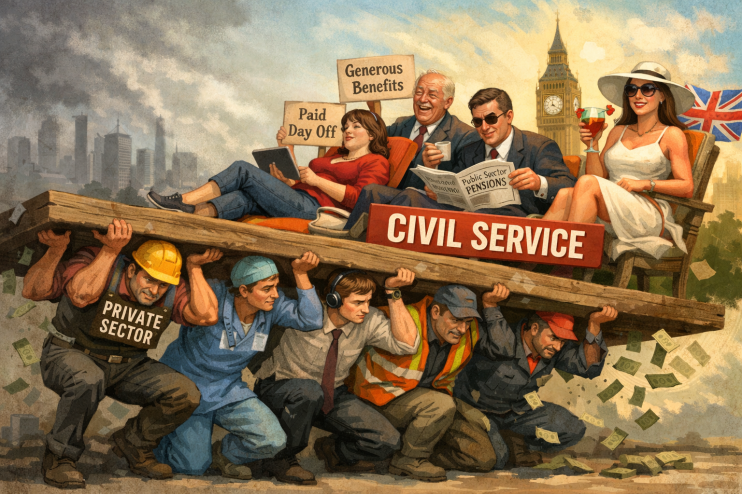
The salary bill for the civil service rose to £21bn last year, up more than seven per cent in a year when economic growth was anaemic at best. The private sector is funding a pay bonanza while businesses are ground down with higher taxes and more regulation, says John O’Connell
While Britain’s businesses struggle with soaring costs and working families tighten their belts, one sector continues to thrive: the civil service. New research from the TaxPayers’ Alliance now reveals a tale of two Britains.
Between March 2024 and March 2025, the civil service added another 6,820 employees. That means it’s had its ninth consecutive year of growth; our bloated bureaucracy now employs 550,000 people, a staggering 130,000 more civil servants than in 2016. So much for successive governments’ promises to slim down the state.
But the headline numbers only tell part of the story. If we look at where the growth is concentrated, the picture becomes more troubling still.
The number of senior staff jumped by nearly 10,000 last year. Meanwhile, junior administrative roles fell by over 4,500. The civil service is becoming more top-heavy, not more efficient, with more managers and fewer people doing frontline work.
Then consider pay. While inflation ran at 2.6 per cent, civil service median salaries jumped by five per cent and every single grade received an above-inflation increase. For senior mandarins, that meant an extra £3,570pa. The number receiving over £100,000 rose by a fifth – 590 additional civil servants on six-figure salaries. Those receiving between £150,000 and £200,000 saw their ranks increase by 44 per cent in just twelve months.
This takes the total salary bill up to £21bn, which is up more than seven per cent in a year when economic growth was anaemic at best. The private sector is funding a pay bonanza while businesses are ground down with higher taxes and more regulation.
Generous salaries are only part of it. Civil servants still enjoy defined benefit schemes that the private sector abandoned many years ago. Guaranteed income from unfunded schemes underwritten by taxpayers, who of course get no such guarantee themselves.
Think about the small business owners who struggle to contribute to their own savings while their taxes simultaneously fund lavish schemes for civil servants. Fundamentally unfair doesn’t quite cover it.
A tale of two Britains
Here’s where the tale of two Britains becomes impossible to ignore. GDP per capita has barely grown since 2010. Britain has suffered multiple ‘personal recessions’ in recent years where the average person has actually become poorer. The private sector has endured tax hike after tax hike, with businesses and working families bearing the burden of balancing the books.
Yet through it all, the civil service has thrived. While GDP per capita stagnated, civil service headcount grew by 130,000. While businesses struggled with the highest tax burden for over 70 years, civil servants received guaranteed above-inflation pay rises. While young people face a future with no guaranteed state pension and are simultaneously penalised for saving privately, Whitehall’s gold-plated schemes remained untouched.
The contrast could not be starker. On one side, working families pay mortgages, watch prices climb,and face tax bills that keep rising regardless of whether their own incomes do. On the other, we have a public sector insulated from economic reality, expanding its ranks, increasing its pay, and protecting benefits that the private sector can no longer afford to provide its own workers.
One Britain generates wealth. The other consumes it, apparently immune to the pressures everyone else faces
One Britain generates wealth. The other consumes it, apparently immune to the pressures everyone else faces.
The government talks about cutting 10,000 civil service posts to save £2bn. That barely scratches the surface when headcount has grown by more than 130,000 since 2016. What is needed is fundamental reform: performance-related pay, pensions brought into line with private sector reality, genuine workforce reductions and reforms, and an end to the fantasy that working for the government means immunity from economic pressures.
The civil service is supposed to serve the public. Right now, it is serving itself.
John O’Connell is CEO of the TaxPayers’ Alliance