The pandemic has the power to set back gender equality and care burdens – we mustn’t let it

Britain has been at the forefront of empowering women economically and combating gender inequality, but the uneven impact of the pandemic has thrown much of this progress into jeopardy. Research on the economic fallout has found that the pandemic-driven recession may be driving the first “she-cession” where women’s economic prosperity, relative to men’s, has slid backwards. Women’s work and women’s economic choices deserve consideration and respect in plans for the country’s economic recovery.
There have been two especially gendered hardships: women are a third more likely to work in a sector shut down during the pandemic and there has been a significant increase in the burden of unpaid care being shouldered by women. Even pre-pandemic, with all of the gender equality efforts of the last few years, breaks taken from work to care for family have been more harmful to women’s careers than men’s, with women less likely to return to work or returning on a lower wage and status trajectory. These issues are more prevalent among minority women.
A higher proportion of women work in contact-intensive service industries such as hospitality, the same industries forced to halt when the pandemic hit. In the UK, the furlough scheme saved many of the most high-risk jobs, resulting in far better employment results for women here than in other developed countries such as the US. However, as the scheme winds down it is likely we will begin to see the real effects on these jobs as many remain at risk. Close to a million UK businesses were at risk of failure in April of this year and many are struggling to stay open as a result of staff-shortages from self-isolation. For some industries, such as travel, even the reopening of the UK economy has not granted business a reprieve.
Plotting a recovery for travel, while there is still substantial uncertainty, will be difficult. Domestic tourism has proved a boon for many restaurants and pubs, but there needs to be a reopening which allows foreign tourists to visit Britain in order to help these businesses make up for lost revenue and keep their staff on into the autumn and winter.
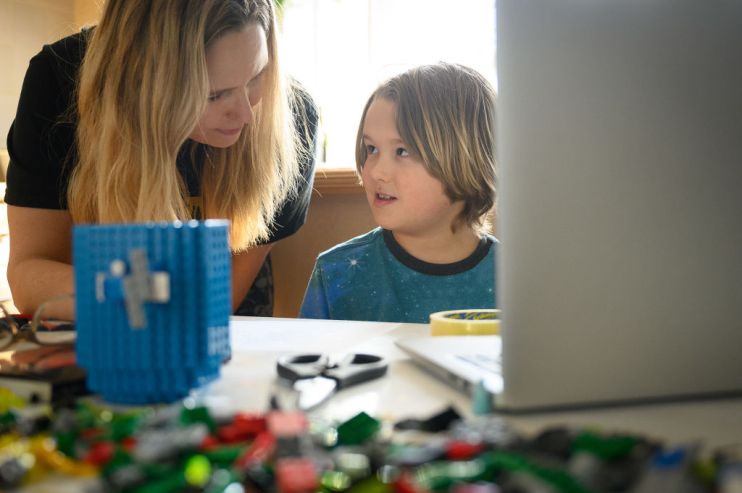
An even greater pressure going forward will need to be on rebalancing work in and out of the home. With schools shuttered, childcare suspended, and elderly relatives in need of more care, family responsibilities increased dramatically for many people over the past 18 months.
Although these tasks were taken on by everyone and both partners took on additional housework and childcare responsibilities, women took on a larger share of work during the lockdowns, according to date collected by the Institute for Fiscal Studies. During the pandemic mothers were 1.5 times more likely to have lost a job than fathers. When women lose their jobs, they take on twice the amount of house and childcare work as before.In comparison, if the father stops working, these tasks tend to be split equally.
Even this temporary increase in the care burden could have worrying implications for the future, even as children return to school, parents return to work and responsibilities diminish. Research has shown that taking time away from work (such as to have children) causes women to incur a large penalty upon return to the labor force resulting in significantly lower wages relative to the trajectory they were on before the break. Employers and policymakers need to be cognisant of the inequalities, often subconscious, that persist in the home when it comes to unpaid care work. Providing flexibility (to all parents) and remaining mindful that work from home or breaks from work involve large amounts of additional labour.
Understanding that women felt some of the harmful consequences of the pandemic recession is important, but there is nothing inherently gendered in how to improve and move on. Industries such as hospitality, tourism and the arts need continued support to help them recover from months of lost business and uncertainty, and those returning to work after taking on increased home care should be supported wherever possible.
Our plan for the future of the UK must include investing not only in the big-ticket policy initiatives such as infrastructure spending and technology, but also in policy that enables everyone who wishes to, to return to work and make the best economic decisions for them and their families.