The princes in the tower: History is not a whodunnit

A new documentary claiming to have ‘solved’ the mystery of the princes in the tower misses the point entirely. History is a record of what happened, not a morality play, says Eliot Wilson
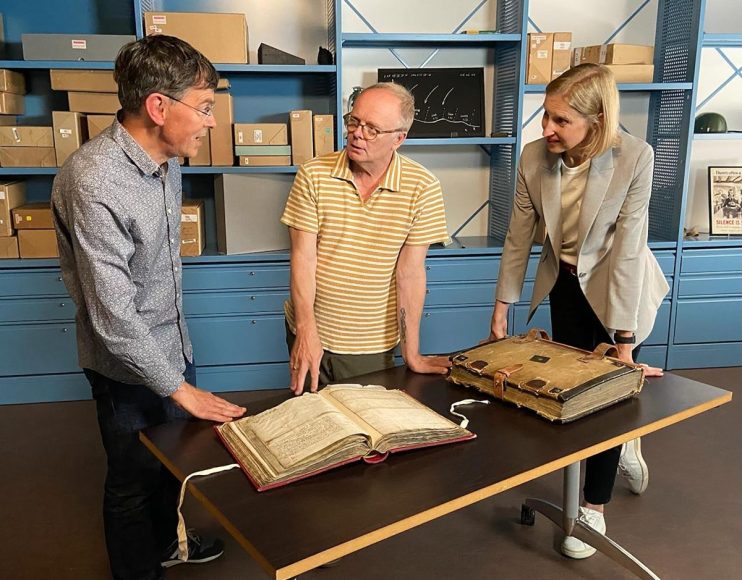
Last night Channel 5 broadcast the enticingly titled Princes in the Tower: A damning discovery. It combined the promise of historical revelation with celebrity involvement, as actor Jason Watkins accompanied Dr Tracy Borman, chief curator of Historic Royal Palaces, around a succession of archives and medieval chambers. It sold itself on promising finally to solve one of history’s great unsolved mysteries.
The Princes in the Tower, Edward V and his younger brother, Richard, Duke of York, are perhaps the most passive characters in English history. Edward was King of England for less than two months, and the brothers, aged 12 and nine, disappeared in summer 1483. It has traditionally been believed that the boys were murdered around that time on the orders of their uncle, Richard III.
It is a logical and persuasive story.
The princes’ father, Edward IV, an imposing man of six-foot-four, took the throne in 1461 after winning the Battle of Mortimer’s Cross for the House of York. He went into exile briefly in 1470-71 but returned triumphantly, then died unexpectedly, at only 40 years old, in April 1483. His son, Edward V, was a minor, so his will named his brother Richard, Duke of Gloucester, as Lord Protector. Shortly afterwards, on the grounds – accurate or not – that the late King’s marriage had been invalid, Richard staged a strikingly efficient coup, declared the princes illegitimate and had himself crowned king on 6 July.
It reveals nothing except that the 15th century was a period of internecine savagery, which we already knew
Whether the marriage was valid or not, his nephews were now a liability for Richard, as they represented a rallying point and alternative candidate for the throne to any would-be rebel. The obvious, effective solution was to have the boys killed, and there were contemporary rumours that Richard had done just that. The accusation was entrenched by Thomas More’s History of Richard III (c. 1513) and Shakespeare drew heavily on that work for The Tragedy of Richard the Third some 80 years later.
We don’t know, will never know, exactly what happened to the princes. They were last seen in the summer of 1483 and the subsequent historical void has created space for fierce debate and speculation over their fate and their likely killer.
The Channel 5 documentary impressively contrived to sensationalise the conclusion that it had been Richard all along. It established a link between More and the family of Sir James Tyrrell, a member of Richard’s household he accused of organising the murder of the princes, and concluded that More’s version of events was probably accurate.
As an historian, I think it’s likely that Richard ordered his nephews to be killed. He had, in police parlance, MMO: means, motive and opportunity. It was the sensible course of action politically, eliminating potential threats to his title, and it would not have been without parallel: Richard’s younger brother, George, Duke of Clarence, was tried and executed by Edward IV; and Edward may well also have arranged the murder of his Lancastrian predecessor, Henry VI. The case for any other candidate requires a far more convoluted explanation.
Unsolved crimes fascinate us. But the long-established presentation of the Princes in the Tower as a combination of whodunnit and morality tale distorts what history is.
The purpose of history
The purpose of history is to gather and analyse empirical evidence to reconstruct what happened, so that we can better understand the past. Channel 5 deserves credit for the inclusion of genuine documentary evidence, but the wider story remains one of drama and mystery, heroes and villains. Was Richard III a good king or a monster?
It doesn’t matter whether Richard had his nephews killed. It doesn’t even matter when or how they died. What is important is that they disappeared that summer, and that Richard was sufficiently strongly suspected of doing away with them that it was a weakness in his rule. Anyway, within two years, by the evening of 22 August 1485, Richard was dead. He went down fighting in a Leicestershire field near Market Bosworth, nine blows to his head ending his life and reign, and ushering in the House of Tudor.
Objectively, murdering your young nephews to secure your place as king is a brutal and immoral act. So what? What does that tell us about 15th-century England or the place of Richard III in our historical narrative? It reveals nothing except that it was a period of internecine savagery, which we already knew. Condemning Richard in moral terms is meaningless, because history is not “good” or “bad”. It is just what happened.
Without blaming Borman or Watkins, we learned nothing significant about history, about Richard III, his political milieu or medieval England. History is a journey planner in reverse, telling us how we got here, and that matters. We should listen to historians, to Niall Ferguson and Margaret MacMillan, to Diarmaid MacCulloch and Helen Castor. But history is not a morality play, and making it into one is dangerous. Saint or sinner, Richard’s actions and their contemporary consequences are the historical record, and that is what repays study.
Eliot Wilson is a writer