Skip to content
Sunday 13 September 2026London --:--Frankfurt --:--Zurich --:--
NewslettersSearchEN · DE · FR
MorningWire

European business, markets and politics

FTSE 100
10,650.44
+0.39%
DAX
25,568.56
+0.82%
CAC 40
8,179.77
+0.78%
STOXX 50
6,325.13
+0.90%
  • Europe
  • Markets
  • Business
  • Economy
  • Regulation
  • Politics
  • Opinion
More
GermanyFranceEU InstitutionsCompetitionPublic AffairsBankingTechnologyEnergy
  • Germany
  • France
  • Europe
  • Markets
  • Business
  • Economy
  • Regulation
  • Politics
  • Opinion
  • DE
Wednesday 11 November 2020 4:05 am  |  Updated:  Tuesday 10 November 2020 6:58 pm

The public are not to blame for the second lockdown

By: Paul Ormerod

Add as a preferred source on Google
UK In Fourth Week Of Coronavirus Lockdown As Death Toll Exceeds 10,000
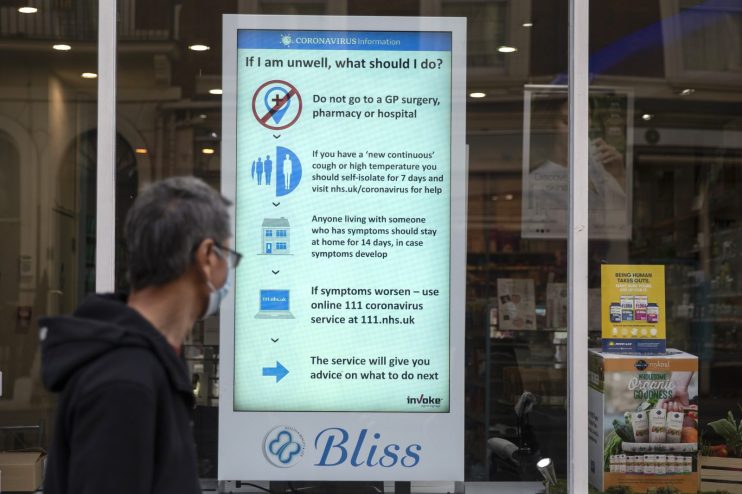
The UK government allowed doubts to creep in about the reliability of its information

Justice secretary Robert Buckland last week blamed the public for England’s new lockdown.  

In particular, the fault was with people failing to self-isolate properly. 

Of course, in a purely technical sense Buckland is right.  

The virus spreads by contact with an infected person. If people do not self-isolate, Covid-19 will continue to percolate across the population. 

But this is to miss the point. The real question is: why have people been so cavalier about following the regulations in recent months?

Back in March and April, lockdown rules were widely observed more or less to the letter. At first, regulations which banned crowds at sporting events and closed pubs were accepted as being reasonable. Later, the entire nation accepted the government’s message to stay at home except in extremely limited circumstances.

However, as the summer unfolded, the authorities began to give a more mixed message.  

Tens of thousands took part, for example, in Black Lives Matter marches. The police, far from dispersing these events, appeared to offer support.  

A reasonable inference to draw was that the authorities did not really believe that mass outdoor gatherings spread Covid in any serious way. The official line of the various UK governments, however, continued to be that the virus remained a major threat.

This kind of public information obviously plays a part when people decide what course of action to follow in terms of, say, self-isolation or not visiting crowded bars. But each person also has information which is private to that individual, or at most shared by a few close family and friends.

Many people, for example, visited crowded beaches and did not seem to catch Covid. And in their immediate circle, most of those who did catch the virus experienced no real problems.  It was not the killer the government scientists warned it was.

Read more

Burnham bounce? Business confidence tells a different story

Andy Burnham, John Healey, and Louise Haigh by a doorway, discussing tax policy for a news article.

Over time, the public has gradually come to place more weight on their own private information, and less on the set of public information provided by the government.

To the scientists on SAGE, this appears to be wholly irrational. Private information by definition is only partial. Public information gives a more complete and hence more accurate picture.

But it can be entirely rational for a person not to just to give increasing weight to one of these, but to come to rely exclusively on either private or public information.  

A famous 1992 paper in the Journal of Political Economy by Sushil Bikhchandani and colleagues of the University of California explains why.

A key driver of the change is the relative weights which other people use. The more the people you know rely on their own information rather than that put out by the government, the more rational it is for you to do the same. 

The California economists coined the phrase “information cascade” to describe this process.

The UK government allowed doubts to creep in about the reliability of its information. Mass gatherings were a Bad Thing, but the police did nothing to stop them. As such, the information they are giving out now about the importance of self-isolation is being viewed with scepticism.

It was not inevitable that the public message would be undermined. But thanks to other communication debacles (the wildly misleading Whitty-Valance charts, for example), momentum is now firmly moving against government messaging.

Such a trend can only be reversed by drastic action. The justice secretary should look close to home for the culprits of our current predicament. Sacking some prominent scientific advisers could get the “information cascade” flowing back in the government’s direction.

Main image credit: Getty

Read more

Champions Cup rugby team hacked in ransom attack with player data at risk

Rugby player in a pink uniform running with the ball, pursued by an opponent in a black jersey.

Share this article

  • Facebook
  • X
  • LinkedIn
  • WhatsApp
  • Email

Similarly tagged content:

Sections

  • Markets & Economics
  • News
  • Opinion

Categories

  • Economics
  • Opinion
  • Politics

Trending Articles

  • Wetherspoon boss: ‘Not up to Burnham’ to choose who is on the high street 

  • Badger Beer maker Hall & Woodhouse doubles profit ahead of tie-up with James May

  • Four interest rate hikes loom despite surprise economic growth

  • Primark sales slip as owner dresses up retailer for demerger

  • As it happened: FTSE 100 rallies as economy beats forecasts; oil falls back

More from Morning Wire

  • Burnham bounce? Business confidence tells a different story

    Opinion
    Andy Burnham, John Healey, and Louise Haigh by a doorway, discussing tax policy for a news article.
  • Champions Cup rugby team hacked in ransom attack with player data at risk

    Sport Business
    Rugby player in a pink uniform running with the ball, pursued by an opponent in a black jersey.
  • ‘Alice in Wonderland’ workspace firm lands £129m Aberdeen-backed finance

    Property
    Modern reception area with unique legs art installation, white desk, and colorful stools.
  • Public sector makes wage growth higher than expected

    Economics
    London has defied national trends as job postings in the capital rose.
  • Ditch the ‘usual suspects’: Gov.uk founder urges Labour to look beyond Big Four consultants

    Consulting
    Whitehall consultants
  • Our debt addiction can only end in tears

    Economics
    UK public finances and sovereign debt crisis
  • Healey oversees unexpected rise in borrowing in first month as Chancellor 

    Economics
    Man in suit and red tie speaking at a podium to an audience in a modern building.
  • ‘Social value’ procurement rules are an absurd waste of time and money

    Economics
    Tunnelling for the Euston link finally kicks off this week.
MorningWire

Independent European business, markets and political news for decision-makers.

Morning Briefing

Europe

  • Germany
  • France
  • EU Institutions
  • Europe

Business

  • Markets
  • Business
  • Economy
  • Regulation
  • Competition
  • Public Affairs

Editorial

  • Opinion
  • Editorial Policy
  • Corrections
  • Contact

Company

  • About Morning Wire
  • Privacy Policy
  • Terms of Use
  • Cookie Policy
© 2026 Morning Wire Ltd · Published by Morning Wire Media, Bahnhofstrasse 65, 8001 Zürich, Switzerland
Privacy · Terms · Cookies · Facebook