The purposeful CEO is dead: Long live the ‘corporate diplomat’

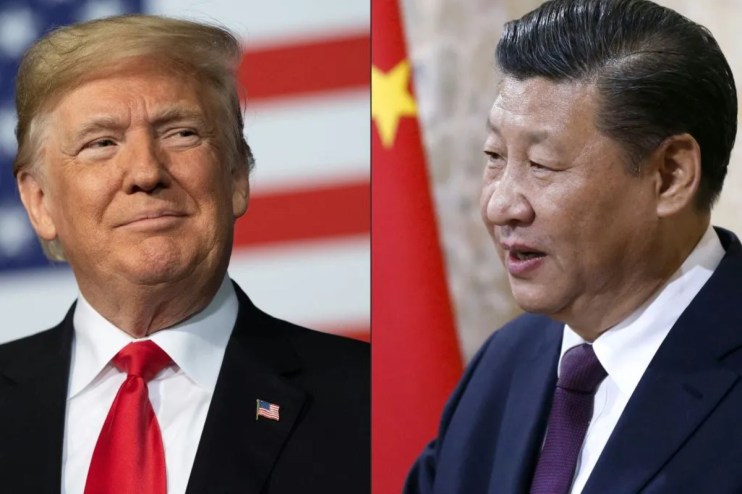
The era of green-centric grandstanding by CEOs might be over – welcome to the age of corporate diplomacy, writes Ali Lyon
It had never been more essential, Blackrock’s Larry Fink wrote in the 2022 edition of his widely-read annual letter to CEOs, for bosses “to have a clear purpose”.
“Putting your company’s purpose at the foundation of your relationships with your stakeholders is critical to long-term success,” Fink went on to say. “[Stakeholders] need to know where we stand on the societal issues intrinsic to our companies’ long-term success.”
Two years on from the Blackrock founder’s letter – years characterised by sobering gear shifts between stubborn inflation, higher interest rates and increasingly combustible geopolitics – and the ‘purposeful CEO’ Fink anointed as the dominant force of the corporate world already appears to be a creature of a bygone era.
Rather than devoting outsized amounts of their attention to diversity and inclusion policy rollout, ambitious net zero targets or stakeholder engagement, the CEO of 2025 will need an altogether different set of skills. Ones to help their firms navigate the parallel forces of heightening trade friction, ‘critical industries’ and deglobalisation that look likely to define the coming years.
They must – according to new paper from communications giant Fleishmanhillard – be a ‘corporate diplomat’.

The rise of the corporate diplomat
“As divisions get greater on the geopolitical landscape, lots of CEOs will have to find themselves representing their company’s interest on the international arena,” Marshall Manson, chair of corporate affairs at Fleishmanhillard’s UK office and author of the paper tells Morning Wire. “It’s no longer enough to have your foreign office or secretary of state representing your business needs. And you may find that your business needs sometimes contradict the broader foreign policy agenda of your home market.”
While Marshall doesn’t mention a certain coiffured president elect by name, it is clear that one of the predominant catalysts for companies needing to gird their loins for a period of intense diplomacy, is the looming spectre of Donald Trump’s move into the White House.
The prospect of a trade war between a China and the US has been simmering for some time. Joe Biden – and before him Trump – and President Xi regularly exchanged tactical trade embargoes and tariffs in an attempt to gain – or preserve – superiority.
In 2022, the US banned the import of all cotton originating from China’s Xinjiang province, citing the region’s links to forced labour. And earlier this year, Microsoft’s $1.5bn (£1.2bn) investment in Abu Dhabi AI firm G42 was given the green light by US regulators on the condition that the Emerati company severed its ties with the sanctioned Chinese tech behemoth Huawei.
But if Trump sees through just a fraction of his rhetoric regarding China – and trade more generally – then his second stint at the helm of the world’s largest economy is, Marshall argues, likely to send the recent period of brinkmanship and corporate retaliation into overdrive; with all the ramifications for the private sector that that would entail.
“If you look at what Trump’s been saying, he’s actually been quite open about the fact his approach to foreign policy is to create unpredictability and uncertainty,” he says. “He believes strongly in moving away from the kind of [World Trade Organisation] WTO post-World War Two rules-based system.
“So the imperative for CEOs is to have relationships in all of their key markets… independent of the traditional levers of diplomacy. Because, actually, those traditional levers of diplomacy are going to get even more unpredictable and even more uncertain.”
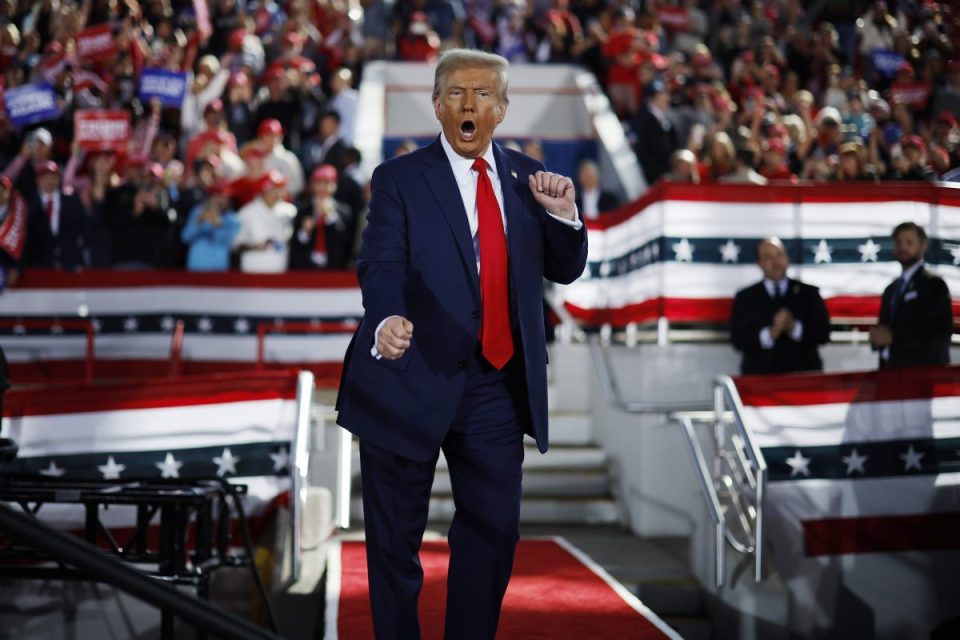
Treading the China-US tightrope
This diplomatic tightrope that chief executives will have to tread was especially apparent in a recent survey of bosses conducted by the international CEO advisory Teneo.
While 64 per cent of those polled in the annual research said they thought Trump’s presidency is set to have a positive impact on their company, the percentage of executives in this year’s survey to indicate that China was important to their corporate strategy doubled.
Capitalising on the benefits of a business-friendly presidency while also pursuing growth in the vast Chinese market is a challenging enough task for any multinational chief executive in any corporate environment. Doing so in a way that manages to keep a company’s respective teams in the Trump and President Xi administrations both happy, will be even harder.
The harsh sanctions on trade with Russia were arguably the first true sign of the new era of corporate diplomacy emerging, but Manson cites the example of the US and China’s approach microchips – and critical technologies more generally – as the better canary down the coalmine of this new order.
The last two years have seen a salvo of tariffs, restrictions and export bans relating to semiconductor technologies, of which corporate juggernauts like Nvidia, Microsoft and the UK-founded Arm have found themselves in the crosshairs.
“If you’re that sector,” Manson says, “you’re in a very difficult position. You’re basically being told you can’t export to China even though that’s one of your potentially biggest markets.”
Corporate ‘collateral damage’
While it is American and Chinese companies operating in strategically important industries like defence and technology that will inevitably find themselves at the coalface of these ratcheting tensions, the pattern is unlikely to be restricted to them.
Several other firms – from sectors and countries as ostensibly innoccuous as the French spirit market or Australian wine producers – have already been victim to vicious domino effects of this proxy trade war, prompting the affected firms’ bosses to go into a diplomacy overdrive.
In October, European drinks giants including Hennessy and Remy Martin found themselves on the receiving end of a 39 per cent export tariff from China – one of their largest international markets – on supposed anti-dumping grounds. Trade experts, however, largely interpreted the move as a retaliation to the equally steep levy on imports of Chinese EVs imposed by the European Union just a few weeks previously.
And a few years before that, the Australian wine industry found its exports to China taxed by more than 200 per cent by the Xi administration, after the antipodean country had become an outspoken China hawk, and one of the first to ban the Chinese telecoms firm Huwei from operating there.

Despite just being what Manson refers to as “collateral damage” in wider tensions, the Australian wine industry found itself having to make pleading representations to the two countries’ respective authorities in an attempt to get the ban lifted (which it eventually was earlier this year).
With Trump having promised universal tariffs of between 10 and 20 per cent on all imports – in a move that ING economists have said could cost the average US consumer up to $2,400 (£1,914) a year – Manson also says that bosses may find themselves going to even more drastic measures than back channel lobbying to avoid the reputational fallout from of higher prices.
“One thing a frustrated boss might want to say through the company’s marketing is, ‘Listen, if you’re wondering why it’s harder to find or buy our products, or our products have become more expensive, tariffs are the reason,'” he says. “Now that’s a pretty extreme communications posture, but you could imagine getting there at some point in the future.”
It would take a brave chief executive to use one of their firm’s big budget marketing campaigns to lay the blame of higher prices at the doorstep of an all powerful Donald Trump: one can easily imagine the President-elect launching an unsparing, block capital-laden retribution on social media.
But if bosses learnt anything from the brief period when the ‘purposeful CEO’ was in the ascendancy, it is the value of a well-timed public intervention. Only it wouldn’t be highfalutin topics like the import of the UN’s Sustainable Development Goals that would be the subject of their pronouncements, but the less pulse-raising – and more existential – issues of tariffs and free trade.