The return to normal: A timeline for businesses opening the office
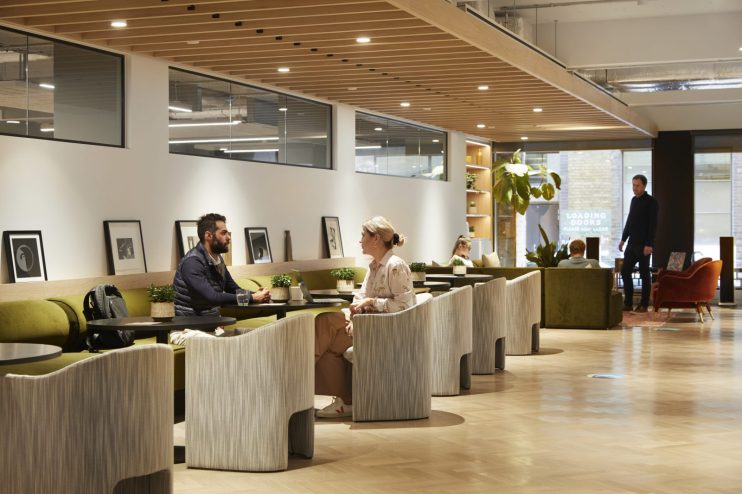
As businesses begin to reopen their offices, Oktra’s workplace specialists outline concrete steps for moving forward in the return to work.
With 69% of UK CFOs expecting the bulk of their workforce to return to the office in the third and fourth quarter of 2021, and 43 of the UK’s top 50 companies embracing a hybrid or remote working model, how best to return to the office is one of the most hotly discussed topics in the business world. The shift to more flexible working habits catalysed by the pandemic is here to stay, with recent research demonstrating that over 90% of UK employees want a remote or hybrid working solution. Employers are now faced with the challenge of creating productive working environments that keep employee wellbeing and engagement high.
Ultimately, the return to the office looks different for every business, which was true for successful workspace long before the pandemic sparked interest in the future of work. Dominic Dugan, Creative Director at Oktra, the UK’s leading office design and build firm, explains that “what we’re noticing, through change consultations, is that the workspace issues which were arising before the pandemic have become pain points during the past year and a half. Up until now, there just wasn’t an appetite to flex. Heightened flexibility has enabled a profound level of change.” Drawing from their experience creating office spaces for clients across sectors throughout the pandemic, Oktra have assembled a model timeline, geared to equip businesses with a framework for returning to the office now, next and in the future.
Now: gather data to create a new workplace strategy
The foundation of any effective business strategy is gathering the right data before making any definitive moves. Businesses need to consider their workspace requirements and what ways of working are most suited to their specific skills at play. For example, while legal and financial businesses will still have a real need for focused workstations, more creative industries will benefit from agile working areas built for collaboration, to capitalise on the time workers are actually present in the office.
Using surveys to collect sentiment data from employees will help to decide which operating model a business is best suited to adopting, whether it be a full-time return to a single core office space, or one of the three more flexible operating models: hybrid working, distributed working, or the hub and spoke working model, which features a central hub office as well as more localised work environments for easier employee access. Once a working model has been decided, a process like space rationalisation can help business leaders understand how much space they need, maximising the potential of their office space and optimising their assets, as well as building in future flexibility.
With employee safety and buy-in paramount to successful office reintegration, it’s important to prioritise a workplace strategy that makes workers feel safe and considered. Beginning the return-to-work journey with the right information will make all the difference for business leaders further down the line.

Next: achieve operational efficiency by implementing changes in design and behaviour
With clearly defined workspace requirements and a working model that supports both employees and their employers, managing an efficient return to the office becomes the next natural step. Soft infrastructural changes like the implementation of desk-booking systems and signage can also help to manage socially distanced attendance and instil best practice behavioural adjustments.
While these behavioural changes are crucial in the return to work, so are office design features such as private phone booths for digital meetings, and more customisable agile work environments for team celebration, creative collaboration and community-building. Aesthetic considerations like domestic design elements and biophilia can help increase employees’ comfort levels in the office and reduce reintegration anxiety, helping people work happier and more efficiently.
“Office infrastructure acts as the tangible points between which the real music, i.e. the community of your business, is made. It’s about cultivating a company culture that is engaging, that makes people want to return. It’s about providing the right workplace design to support that,” says Dugan.
The role of the office has continued to evolve: with 73% of UK companies considering adopting a hybrid working model, flexible or fluid working solutions are being adopted alongside phased returns. The office’s purpose is now to facilitate the social capital and human energy behind a company, driving staff and leaders to achieve their business goals.
Future: continue to monitor performance to ensure business success
Maintaining clear lines of communication between management and staff is vital to ensure continued business optimisation in the move back to the office. Establishing a process for the ongoing monitoring of the space will enable employers to maintain a clear understanding of ongoing staff sentiments and performance, as well as how efficiently their space is being used.
Technological solutions like smart lighting systems, which can collect data in real-time about how different spaces are being used, occupancy sensors and the analysis of room-booking data, help to illustrate where snags and inefficiencies are occurring. The distribution of regular sentiment surveys among staff is another simple and low-tech way to ensure that a workspace is doing what it needs to: facilitating operational efficiencies, driving productivity and supporting employee wellbeing.
The return to the office is a process, and it’s important to understand that from the outset of this journey. Businesses across sectors have learned to adapt to new ways of working throughout the pandemic, and have become remarkably resilient. Applying the new set of skills and heightened capacity for adaptability that businesses have achieved over the past year and a half to the workplace will provide the right type of environment for businesses to grow healthily into the future of work.