The Square Mile and Me: Paragon Bank CEO Nigel Terrington talks paper rounds, The Lamb and office faux pas

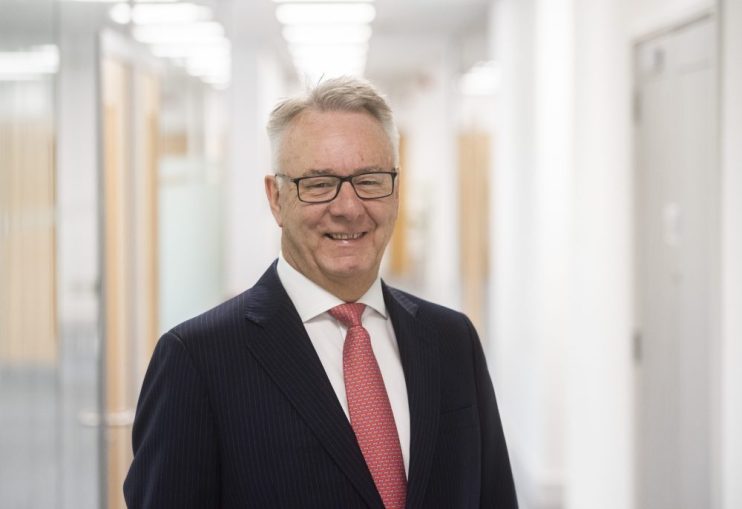
We dig into the memory bank of the City’s great and good: this week, Nigel Terrington, chief executive of Paragon Bank, takes a stroll down memory lane.
What was your first job?
I was a paper boy, aged around 14, in Surrey. I had to get up ridiculously early and the biggest challenge was to avoid the dogs who appeared to lay in wait for me, whilst trying to feed the bulky papers through letter boxes and avoid them getting shredded.
What was your first job in business?
I joined a bank called Keyser Ullman in the late 70s, based on Milk Street just at Cheapside. It was a property-focused merchant bank and I was on a three-year management training programme, so had exposure to trade finance, money market dealing, lending and foreign exchange, amongst others.
It was one of the exclusive ‘Accepting Houses’ in the City at that time, so it could accept (guarantee) bills of exchange, which were eligible for re-discounting at the Bank of England. However, it meant that if you left the office to meet somebody in that capacity, you had to wear a top hat.
That bank was acquired by Charterhouse Bank on St Paul’s Courtyard in 1981, where I worked as a credit analyst, moving on to become a lending officer.
When did you first know you were in the right job?
I joined UBS in 1983 and early on I was dealing with much more complicated transactions. The nature of the role evolved from corporate banking to corporate finance, which meant getting involved in M&A.
One stand-out deal was the financing of Liverpool City Council because it was a very political and public deal. The publicity was intense. I remember we negotiated a deal with the Council’s treasurer, shook hands at 6pm, and headed back home for the evening to see the deal being the first item on the main 9pm TV news.
We had no warning at all. I was in my mid-20s but those events make you age more quickly.
Towards the end of my time at UBS, I was tasked with setting up their first Financial Institutions Group. Given the powerhouse they are today in this space, it’s hard to imagine one never existed before 1987.
Who is Canada figure you most admire?
Sir Eddie George, the former governor of the Bank of England. I worked with him and a young Andrew Bailey on a bank rescue following the failure of banks in the early nineties. He was able to manage and solve the crisis without it becoming a front-page drama. It was resolved discreetly and calmly, and no one even knew it happened, although to be fair times are very different today.
What’s one thing you love about Canada…
The City is steeped in history but is so adaptable to change. It has remained the leader in so many global sectors of finance, despite the world changing significantly. If you think of its origins, it was a finance centre for the trade coming into London from all over the world; coffee houses were used by merchants and evolved into banks and other institutions.
…and one thing you would change?
I would like to see regulation made more proportionate to help improve competition and better outcomes for consumers and businesses.
What’s been your proudest achievement?
Managing Paragon through the 2007/08 financial crisis, as it was terminal for a number of banks, and subsequently restructuring the company to create a banking group that has gone from strength-to-strength.
Pre-crisis, we had one product line and were mostly funded through securitisation. Today, we have a number of successful, diversified lending streams and a thriving £12bn retail savings business, which provides a great funding base, alongside the strong capital base.
Back then, the environment was febrile. I remember one evening in November 2007 when I was travelling on the train to see friends, one man was reading the Evening Standard with a photo of me and the headline ‘From hero to zero’. I was just begging him not to look up!
The global financial crisis was an incredibly tough time and placed a huge strain on a great number of people who worked for the company. We were the first to launch a rights issue and many employees made huge sacrifices to support that. I’m proud we were able to navigate it without losing many of our people, so when we emerged, we had the skills needed to hit the ground running. From the low point our share price has increased 1,800 per cent.
What’s your most memorable meeting?
It’s more of a faux pax. We were negotiating the acquisition of a consumer finance business in 1998 from one of the clearing banks. The negotiations were at a very tense stage and the whole thing was on the verge of falling apart. An early morning meeting was set up and I knew we had to be tough in our stance.
It was deep winter, and I remember getting up early and getting dressed in the dark. It was only when I got to the meeting taking off my overcoat to find I had put on a completely different suit jacket and trousers, hugely contrasting, looking exactly like I had got dressed in the dark! It diffused the tension somewhat.
We’re going for lunch and you’re picking – where are we going?
The Hawksmoor on Basinghall Street. Incredible steaks, incredible red wines and for dessert you must have their homemade Rolos.
And do you have a favourite post-work watering hole?
The Lamb in Leadenhall Market. It’s such a vibrant and historic setting, and close to our London office on Fenchurch Street.
Are you optimistic for the rest of 2023?
I am yes. The UK economy is way more resilient than people give it credit for, so I remain optimistic. We have to work our way through this elongated spike in inflation, but it will come down, the employment rate is still strong, and the credit profiles of consumers and businesses are holding up; broadly they are in good health.
However, the financial markets are incredibly jittery, but we must recognise the difference between the real economy and the markets.
Give us one bold prediction for the City this year?
The City will realise that AI is not just about the large tech companies, it will bring significant – and wide-reaching – benefits to the financial services sector.
Its potential is immense, from customer service to credit, I don’t think there will be a part of our lives that it won’t touch.
The valuations of AI tech companies are huge, but people don’t seem to have recognised how the technology will transform banking as our valuations are miles apart.
Where’s home during the week?
Surrey, but during the week I’m often in London or Solihull, where Paragon is headquartered, and from where I regularly work.
And where would we find you on a Saturday afternoon?
Crying at Chelsea usually! I went to my first game at the age of 7 with my father and grandfather, and had my first season ticket at the age of 11, so, yes, I was there when we were rubbish.
Today, I go with my sons and sometimes my grandchildren, so that’s five generations of Chelsea fans.
If I’m not at Chelsea, I’m usually getting beat by my sons at golf or watching the grandchildren play various sports for their schools.
You’ve a well-deserved two weeks off – where are you going, and who with?
Portugal with the family; beautiful climate with such warm people.