‘The superstars are getting smaller’: Why emerging artists are Spotify’s golden ticket

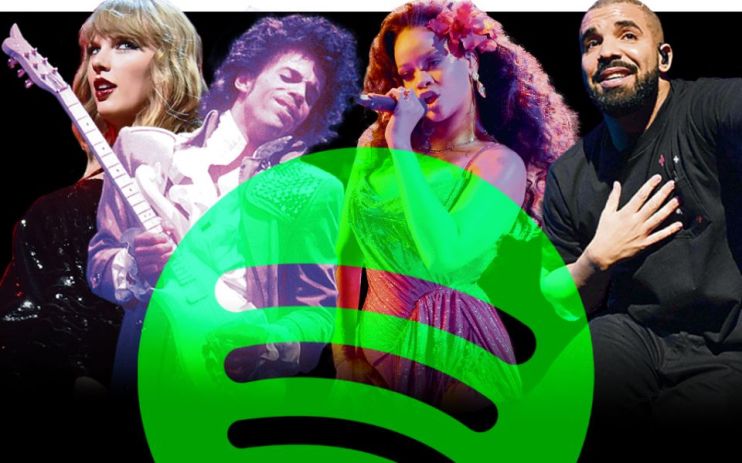
Emerging musicians are finding it easier to break into a traditionally tightly-controlled market using streaming platforms, like Spotify.
Despite industry concerns about the viability of these platforms as a way for small artists to make money, according to Spotify’s yearly report into music streaming Loud & Clear – it’s starting to actually make money.
In 2023, Indies – artists signed to independent record labels – generated nearly $4.5bn (£3.53bn) on Spotify, according to Loud & Clear.
Over 30 per cent of music streamers worldwide had a subscription to Spotify in 2023, according to Statista, making it a good bellwether for the industry.
Last year was the first year that Indies accounted for about half of what the entire industry generated on Spotify, and a four-fold increase from 2017, the company said.
“Artists who—in the past—might have struggled to break through are now finding their audiences,” Spotify said.
Streaming is increasingly popular across the board: The BPI (British Phonographic Industry) measured 179.6bn streams in the UK in 2023, double the number in 2018. Streaming platforms made up around 67 per cent of global music industry revenue last year, according to IFPI (International Federation of the Phonographic Industry).
Bryan Johnson (no, not the AC/DC frontman), Head of Artist & Industry Partnerships, International at Spotify, said: “Our Loud & Clear report this year shows that many of the artists who generated at least $1M on Spotify in 2023 aren’t household names and didn’t need a “hit” song to have a big year… 80 per cent of them didn’t have a song reach the Top 50 of Spotify’s Daily Global Songs chart.”
“If you were to list out all of the artists on Spotify, in order of how much money they generated, even the 50,000th in rank generated at minimum $16,500 (£12,927) from Spotify alone,” the company said.
There were 225,000 “emerging and professional” artists on Spotify in 2023, although there were 10,000,000+ uploaders with at least a single track.
“There’s a much broader pool of artists coming through. The fact that nowadays the cost of creating, producing and releasing music has become more affordable allows artists to access the same global audience and resources as the superstars,” Johnson added.
Mark Mulligan, founder of music research firm MIDiA, said that the music industry has undergone a profound shift with the advent of streaming.
“The superstars are getting smaller and the middle-class artists are growing,” he said.
“There is a very clear trend that’s been happening for about 10 years: the fragmentation of fandom,” Mulligan said. “[In the past] everybody would see or hear the same thing around about the same time [but] now an artist might have a million listeners because they might be spread across 200 countries.”
“There are a lot more artists reaching global audiences than ever before,” he added.
The number of artists generating at least $1,000,000, $100,000 and $10,000 has nearly tripled since 2017, according to Spotify.
Despite the eye-catching numbers, many musicians remain unhappy with the low royalties they receive from Spotify.
The Digital, Culture, Media and Sport Committee (DCMS) called for nothing short of a “complete reset” of the streaming market in a report in 2021. It argued artists should be given a legal right to get the fair share of revenue they deserve.
“A lot of artists are making.. a reasonable amount of money, but the majority aren’t and the majority never will,” Mulligan said.
Controversially, songs that aren’t streamed much on Spotify are set to be ‘demonetised’ in an effort to stop paying out money to bots.
In November, Spotify confirmed that it would stop paying royalties on songs that received fewer than 1,000 streams a year.
Spotify has estimated that this change will direct an extra $1bn in royalties to “emerging and professional” artists by 2028.
Some, however, have condemned the move as discriminatory against legitimate small artists.
Labels, too, are worried about losing money to “bad actors”, who use bots to boost listening numbers. Spotify is full of increasingly short songs which are uploaded and played on repeat to maximise royalties.
Last year, a Swedish newspaper found that gangs were using Spotify to launder money – they would hire out ‘phone farms’ using dirty money to listen to music they owned on repeat to earn ‘clean’ royalties.
This games Spotify’s payment system, which pools the money it earns from subscribers and pays it out to artists based – largely – on the number of streams they have. More fake accounts mean less money for legitimate musicians.
Spotify told AFP in a statement that manipulated streams were “an industry-wide challenge and Spotify has been working hard to address this issue”.
Number one fans
Labels and artists are beginning to realise the opportunities of monetising these fans brought to a diverse range of artists by streaming, Mulligan said.
“[Last year was] the first year where streaming didn’t grow as fast as the overall industry – nearly as fast but not quite as fast. And the reason is because the music industry is beginning to diversify away from streaming.
This includes physical sales of vinyls and CDs in addition to expanded rights, which include merchandise and brand partnerships, Mulligan explained.
“That was one of the fastest growing parts of the business last year [and] it’s worth 10% of revenues now,” he said.
“Yes, streaming is still the centre of music but [a] lot of people feel like it doesn’t pay enough. I think that 2023 was the first year of the music industry evolving from a streaming industry into a fan economy.”