The threat of higher taxes is already harming growth

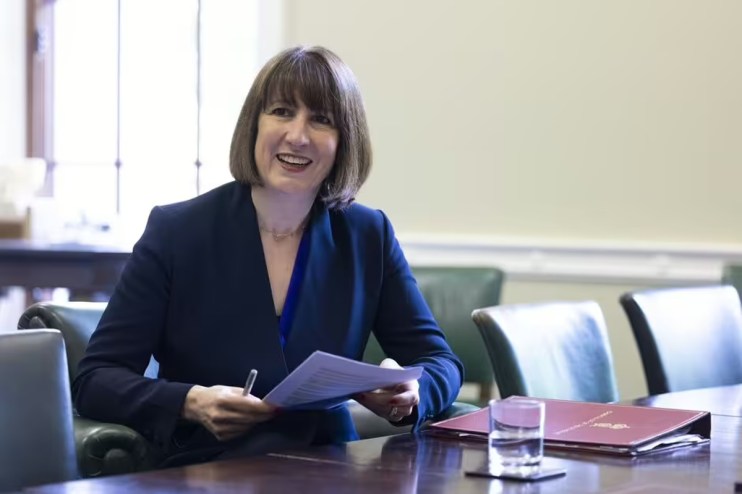
An important reason why there was zero growth in June and July is that households are saving bigger proportions of their incomes, says Paul Ormerod
The Chancellor, Rachel Reeves, had made no secret of her desire to make economic growth her top policy objective.
She reinforced the message this week in an interview with the Financial Times, using the mantra “invest, invest, invest!”. Perhaps unwittingly, this carries echoes of Karl Mark’s memorable phrase in Das Kapital: “Accumulate, accumulate. That is Moses and the prophets!”. Mark was virtually giving the status of a biblical law to the importance of capital investment, or accumulation as he described it.
Of course, it remains to be seen whether Labour can create an environment in which companies are willing to boost investment.
It will be an interesting real-world experiment to test whether higher taxes will stimulate activity, especially amongst start-ups and scale-up firms, which are the most dynamic job-creating part of every advanced economy.
But worryingly for the government, the latest data suggest that there was zero growth in both June and July.
An important reason for this is that households are saving bigger proportions of their incomes. In the first two quarters of this year, for example, the savings ratio, as it is known, was 8.9 and 10.0 per cent respectively. In the same periods in 2023 it was 6.4 and 7.4 per cent. The second quarter is the latest date for which official estimates are available. But initial evidence suggests it has since risen even more.
Around £20bn has been switched from spending into saving
In cash terms, this represents a lot of money. Consumer spending, the amount that individuals splash out on goods and services, is by far the biggest component of the economy. Overall, it amounts to around two-thirds of GDP.
The increase in savings in the first half of this year compared to 2023 means that around £20bn has been switched from spending into saving. No wonder growth is stalling.
The long tail of lockdown
In the lockdown years of 2020 and 2021, savings were exceptionally high, essentially because of, well, lockdown. You just couldn’t get out and about to spend your money.
There was a sharp fall in 2022, but by no means as much as many economists expected. At six per cent, the savings ratio was only just below its average from 2000 until 2019, the last pre-pandemic year. Households had been effectively forced to save during lockdown. But when the chance came, they did not offload them in a spending binge. Instead, they continued to save.
During the financial crisis of the late 2000s, individuals also behaved in a seemingly paradoxical way. Incomes were squeezed sharply. But rather than maintain living standards by running down savings, they saved even more. At 11 per cent, the savings ratio in 2010, for example, was getting on for double its pre-crisis levels.
Both during the financial crisis and now, government borrowing is high. Then as now there was widespread expectation that taxes would rise in order to try and plug the gap in the public finances.
Households have reacted perfectly rationally to the likelihood of higher taxes by boosting their savings in order to be able to pay the taxes.
This idea goes all the way back to the great English economist David Ricardo. Ricardo argued in the early 19th century that if governments issued more debt to meet the then enormous costs of the Napoleonic wars, a stream of higher taxes in the future would be created. People would save more in order to meet the interest charges on the debt and its eventual repayment.
We have yet to see what the effect of higher taxes on investment will be. But we can see that the threat of higher taxes has already caused personal spending to be cut back and growth to stall.
Paul Ormerod is an economist at Volterra Partners LLP, an Honorary Professor at the Alliance Business School at the University of Manchester and author of Against the Grain: Insights of an Economic Contrarian, published by the IEA in conjunction with Morning Wire