The Tories won’t redesign the NHS but they could get rid of the bottlenecks

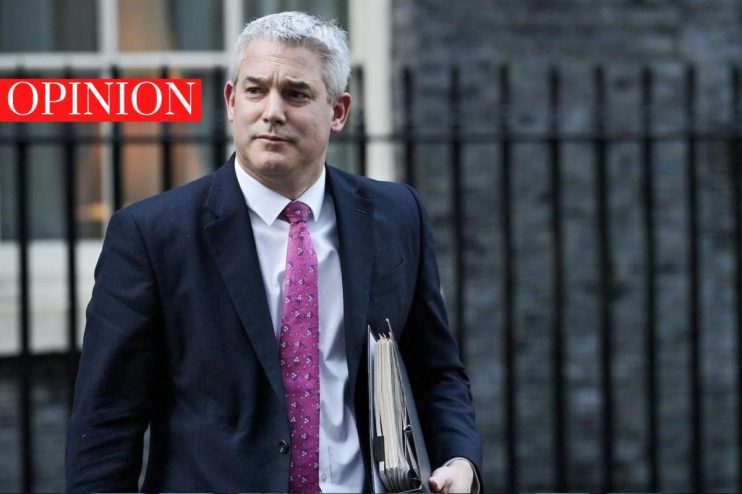
We have long since past the point where we will fundamentally change a free-at-point-of-care NHS, but the Conservatives can deal with the bottlenecks, writes Eliot Wilson.
Perhaps realising that the general election cannot be very far away, the government has abandoned Westminster’s traditionally leisurely silly season. Instead, Rishi Sunak and his ministers have gone on the offensive, setting out a coordinated framework of policy areas on which to promote its new thinking even over the summer.
Last week was “NHS Week”. We are all aware of the squally weather: 7.5 million patients are waiting for hospital treatment; 40 per cent of patients in accident and emergency are waiting more than four hours to be seen; nearly half of cancer patients have to wait more than 62 days for treatment. These are not good statistics, and when you are Steve Barclay, the sixth Conservative health secretary in a row over 13 years, it is hard to avoid all responsibility for the status quo.
The debate over the future of the NHS is not currently at a vaultingly high level. Sir Keir Starmer gave a major speech on health in May, scoring more strongly on staccato emotive declarations than on detailed policy. Both parties have grasped that promising additional spending on health finds little traction, since the electorate is sceptical of these pledges, and Labour’s recently announced intention to work within the current government’s financial plans has made this a moot point. Instead, the savvy politician dealing with health policy will zoom in on the shibboleth since the days of Tony Blair and Alan Milburn, “reform”.
It is, of course, the absolute core of any practical long-term approach to the NHS. We are operating a system which was created for a population of 50 million, of whom men reached pensionable age at 65 and women at 60, and average life expectancy was just over 68. We now number 67 million, and can expect on average to live to around 82. Those bare figures should tell you that the system requires more than a financial uplift.
While ministers and their shadows will make every effort to seem brave and radical, large areas of policy remain off-limits. While we have admitted that healthcare is inextricably linked with social care, the latter remains a patchwork of provision which is state-funded only for the poorest, and is provided at several different levels of government as well as by charities and the private sector. In 2019, Boris Johnson promised to “fix social care”, but that was before the Covid-19 pandemic, two premierships ago and, in any event, a Johnson promise.
Equally, neither party dare compromise the principle—first “compromised” as early as 1951—that treatment remains free at the point of use. And it is a settled truth that major reorganisation is off the table for the time being. The Health and Social Care Act 2012 was the largest structural reform in the NHS’s history but followed substantial programmes of change in 2006, 2001, 1999, 1997, 1990, 1982 and 1974.
Last week, however, Steve Barclay, interviewed by the Daily Telegraph, talked a lot about processes. In particular, with reference to the treatment of cancer, he spoke of “designing out bottlenecks”. Ideas include patients being able to go straight to an NHS diagnostic centre without a referral from a general practitioner, choosing where possible the location or their treatment and making greater use of the NHS app to speed up access to test results. This could cut large chunks out of the waiting process and make a major difference to accessing care.
This has placed a ministerial fingertip on one of the vital areas of change for a sustainable NHS. In a recent interview, Lord Darzi of Denham, pioneering surgeon, former health minister and guru of systemic reform, talked about using artificial intelligence to analyse test results and have them sent directly to the patient’s smartphone or handheld device; he is already working with Google DeepMind to refine the necessary technology.
Barclay, a solicitor and former financial regulator, is not a stereotypical health visionary. But in his use of the phrase “designing out bottlenecks”, he may have identified a central plank of NHS reform. It is neither panacea nor silver bullet, but a modern NHS will have to reframe our whole notion of where and how healthcare is delivered, treating problems further upstream and in a much more streamlined way than ever before.
The government remains on the backfoot, but a fleeting idea in a brief summer publicity offensive may have identified a policy area which could be the foundation of transformational change. Let us now hope that enthusiasm for “designing out the bottlenecks” remains focused and lively.