The UK’s housing crisis is creating a generation of broke retirees

The affordability crisis in the UK housing market is creating a generation who will still face monthly mortgage or rent payments well into retirement, according to a new study.
With deposits increasingly hard to save up for and mortgages increasingly burdensome, few people will be free of housing costs by 2050, unless something changes.
A prospective buyer earning the average UK income and buying a typical first-time buyer property with a 20 per cent deposit would have a monthly mortgage payment equivalent to 36 per cent of their take-home pay – well above the long-run average of 30 per cent, according to the Nationwide Affordability Survey.
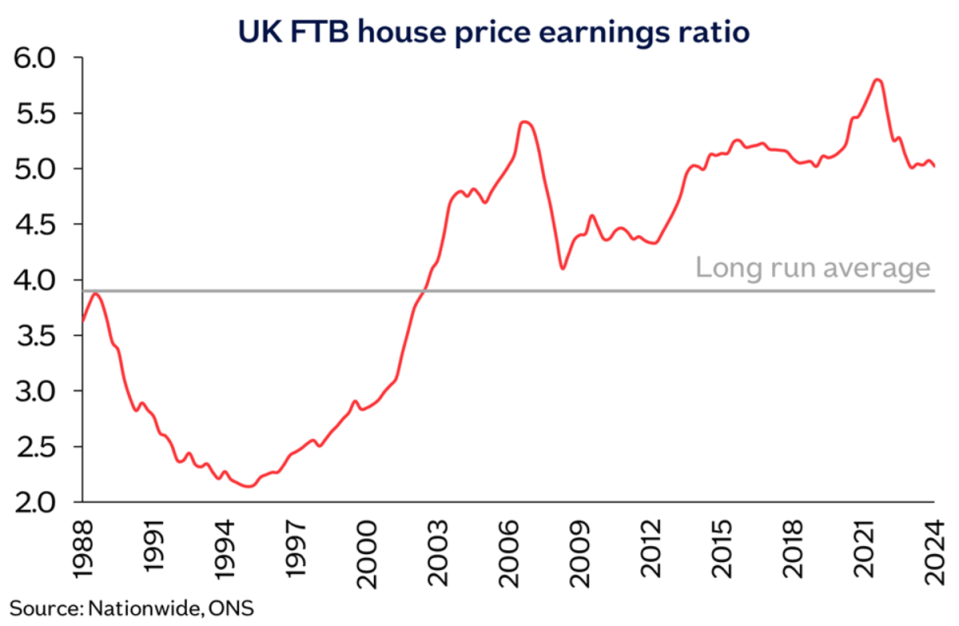
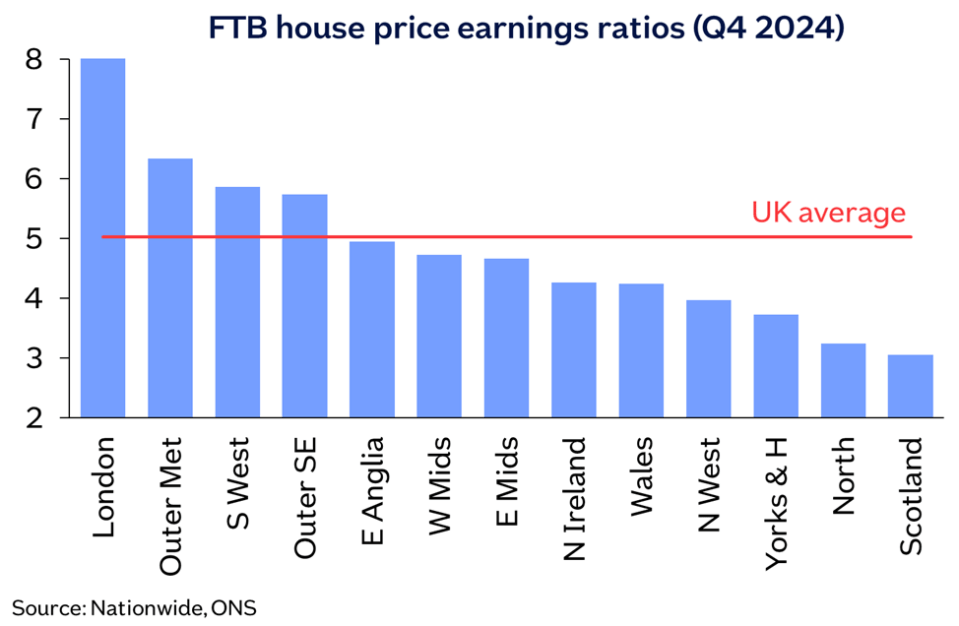
Furthermore, house prices remain high relative to average earnings, with the first-time buyer (FTB) house price to earnings ratio standing at 5.0 at the end of 2024, still far above the long run average of 3.9.
This makes the deposit hurdle exceptionally high, something only made worse by the rental crisis, during which rents have risen far faster than wages, excluding wages in the financial sector.
But curiously, the number of mortgage approvals returned to 2019 levels in 2024, despite typical mortgage rates being around three times higher, Nationwide found.
How are Brits still buying houses?
Higher wages have been supporting house-buying for the past few years, as well as still-affordable houses in areas of Scotland and the north of England.
But house-buying has been supported by long-term mortgages, according to wealth management firm Quilter. There has been a “significant rise” in people aged over 36 taking out mortgages with terms of 35 years or more, the firm found.
In the first nine months of 2024 alone, over 22,000 such loans were sold – a rise of 156 per cent since 2019.
“Affordability pressures are pushing borrowers into commitments that extend well into their 70s,” Karen Noye, mortgage expert at Quilter, said.
“While longer terms can reduce monthly repayments, they lead to dramatically higher total borrowing costs and delay financial independence,” Noye added.
The other option, of course, is to boost income by either dramatic personal cost-saving or financial gifts.
First-time buyers will receive almost £30bn in financial support from their parents over the next three years, according to Savills.
Gifts and loans from the Bank of Mum and Dad totalled £9.4bn in 2023. This figure has nearly doubled in the last five years. Nationwide found that 40 per cent of all deposits in 2024 were either from inheritances or gifted.
Of course, the glaring issue with this course of action is that it is only available to already-wealthy families, and will inevitably increase inequality.
“Those who have the option of family support… find it much easier to get onto the housing ladder and only the highest earners and those who have received significant support are likely to be able to buy at the top end of the market,” Frances McDonald, director of residential research at Savills, has said.
Long-term renting
The other option, for those who cannot get onto the housing ladder at all, is to continue to rent rather than buy.
“Retirees on fixed incomes will face the burden of managing mortgage repayments alongside other living costs, while those who remain renters will grapple with escalating rental payments that erode their savings and leave little room for a secure and comfortable retirement,” Quilter said.
For a single person, the average retirement income varies from a minimum income of £14,400 a year to £43,100 a year for a comfortable retirement, according to the the Pensions and Lifetime Savings Association. For a couple, this rises to between £22,400 and £59,000.
The average rent in the UK was about £900 as of November 2024, falling to around £500 in some areas of the North, Wales and Scotland, and rising to over £1,100 in big cities.
If nothing changes, “retirees on fixed incomes will face the burden of managing mortgage repayments alongside other living costs, while those who remain renters will grapple with escalating rental payments that erode their savings and leave little room for a secure and comfortable retirement,” Noye said.
“The challenge is ensuring that the decisions made today do not jeopardise financial stability in the future. This generation’s housing affordability crisis threatens to create a profound legacy of financial insecurity,” she added.
Build, baby, build
Luckily, the government has a solution: build more houses.
Labour has promised to build 1.5m homes before the end of its term, an ambitious figure which has garnered widespread support from across the political divide.
Ministers are pushing ahead with major reforms to the planning regime to meet their targets, but some analysts think the government will still struggle to hit its goals.
“The industry is held back by land availability, affordable housing, productivity and labour shortages, with the root cause of these issues being the planning system,” Stacy Eden, national head of real estate and construction at RSM UK, said.
A recent report from the Centre for Cities suggested that the government would still fall 388,000 homes short of its target, even if private sector building increased at its fastest pace since World War II.
But building is essential, according to CEO of Yopa Verona Frankish. “We need to see the government deliver on its promises of building more homes if any meaningful progress is to be made with respect to addressing housing affordability across the nation.”