The UK’s Tech Prosperity Deal is a high-stakes gamble

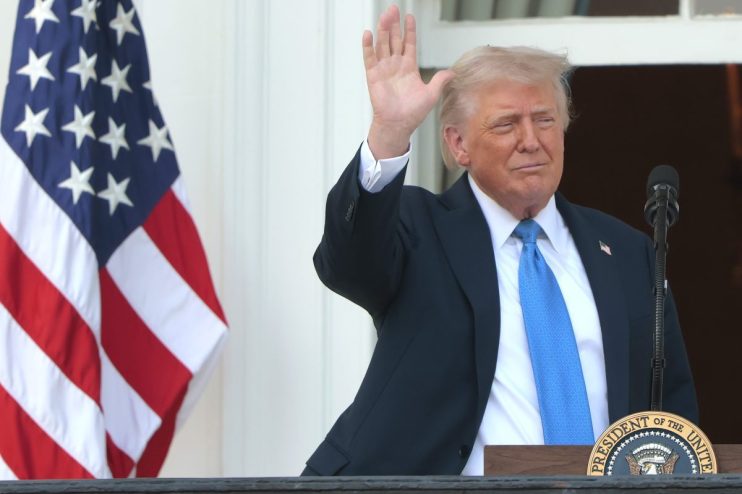
As President Donald Trump stepped on British soil, the two nations unveiled a landmark “Tech Prosperity Deal,” a pact aimed at cementing Britain’s position as a global leader in AI, quantum, and nuclear energy.
Hailed by prime minister Keir Starmer as a “generational step change”, the agreement is underpinned by £31bn in private investment from America’s largest tech firms.
While the scale of this commitment is undeniable, a closer look at the details and the government’s strategy reveals a complex picture of opportunity mixed with the risk of becoming a junior partner in a US-led technological future.
A flood of US capital and the ‘goldilocks’ position
The deal’s most striking aspect is the massive influx of foreign capital, which officials believe will provide the UK with the critical infrastructure it needs to compete in the AI race.
Microsoft leads the charge with its largest-ever financial commitment in the UK – a $30bn (£22bn) investment to build cloud and AI infrastructure, including the country’s biggest supercomputer with more than 23,000 advanced GPUs.
This is not a singular investment. Google is pouring in a further £5bn over two years, which includes a new data center in Waltham Cross, while Salesforce is committing an additional $2bn (£1.4bn) to make its UK business an AI hub for Europe.
Marc Benioff, Salesforce chair and chief executive, said the firm is “doubling down on our long-standing commitment to the UK with this significant investment”.
The agreement also includes significant contributions from specialist firms, with CoreWeave investing £1.5bn in AI data centers and Scale AI quadrupling its London-based workforce with a £39 million investment.
“It allows us to deliver unparalleled AI performance with the lowest possible environmental impact, setting a new global standard”, said Michael Intrator, chief executive at CoreWeave.
Jensen Huang, founder and chief executive of Nvidia, claims that the UK is in a “Goldilocks position” to lead the AI era, with the right mix of talent, research, and industry.
His leading AI firm is set to deploy 120,000 advanced GPUs across the UK by the end of 2026, marking its largest rollout in Europe and providing the essential compute power that has been “the only thing that’s been missing”.
This collective investment has been sold as a powerful signal to international founders and researchers that Britain is ‘open for business’, as it aims to become a central hub for AI development outside the US.
A partnership, or a pipedream?
While the investment is predominantly American, the UK government is determined to frame the deal as a true partnership that protects and fosters British technological sovereignty.
The strategy hinges on integrating UK companies directly into the new infrastructure, the Department of Science, Innovation and Technology has claimed.
Minister Narayan emphasised this pledge, telling Morning Wire that a British-headquartered firm, Nscale, will be “right at the heart” of the new infrastructure.
Nscale’s commitments include building the UK’s supposed largest AI supercomputer with Microsoft and establishing “Stargate UK” with OpenAI and Nvidia.
According to Nscale chief executive, Josh Payne, this demonstrates “how we can be makers, not takers, of the most important technology of our time”.
The minister also told Morning Wire that British firm Arm will be “right at the heart of powering” the new Nvidia chips, a key element of the deal.
He argued that the UK’s approach focuses on three things: “scale, sovereignty, and salience”.
The deal provides the necessary scale, while the integration of firms like Nscale and frontier quantum companies ensures sovereignty. Salience, he explained, is the application of AI to improve the “felt experience of citizens”.
Yet, a degree of skepticism remains on the UK’s position in the AI race.
Julia Lopez MP, the Conservative Shadow Science, Innovation and Technology secretary, pointed to a broader decline in foreign direct investment into the UK, stating that the deal “comes against a backdrop of declining foreign direct investment into the UK”.
The reliance on US tech giants for fundamental infrastructure, rather than a significant domestic capital base, raises concerns about long-term control.
While the government has announced a new AI Growth Zone in the North East, Minister Narayan clarified that there are no specific tax incentives, explaining the government’s role is to “clear the path for firms: by streamlining planning and offering support.
The question remains on whether this is enough to create a lasting, independent technological ecosystem.
A comprehensive pact
The tech deal extends beyond AI, encompassing two other critical areas: quantum computing and nuclear energy.
The partnership with quantum technologies aims to accelerate the development of revolutionary quantum computers.
A joint task force of top UK and US researchers will be established to discover breakthroughs in fields from medicine to defense, with the goal of speeding up complex tasks like drug discovery. The pact already shows results, with UK-based Oxford Quantum Circuits installing New York City’s first quantum computer and a US firm, IonQ, establishing its EMEA headquarters and an R&D hub in Oxford.
This collaboration, as Dr. Keegan McBride of the Tony Blair Institute argues, allows the UK to “plug into America’s unrivalled infrastructure and expertise”, and to focus on becoming a leader in the “diffusion and application” of AI.
Elswhere, the civil nuclear ‘Atlantic partnership for advanced nuclear energy’ is designed to cut red tape and accelerate the delivery of nuclear projects.
The goal is to provide cleaner, homegrown energy and reduce the UK’s reliance on international fossil fuels.
Tone Langengen, an energy expert at the Tony Blair Institute, praised the deal for adopting “mutual recognition of regulatory approvals,” which he says is essential for staying competitive with China and Russia in the advanced nuclear race.
Ultimately, the UK-US Tech Prosperity Deal is a high-stakes gamble.
It represents a massive vote of confidence and a much-needed injection of capital and compute power, which Minister Narayan believes is enough to make the UK “very much open for business”.
However, its long-term success will hinge on whether Britain can leverage this partnership to cultivate its own independent technological strength and move from being an attractive destination for foreign capital to a true “maker, not a taker”.
The pact’s outcomes will determine if this will allow Britain to lead the AI race, or simply lead to a deepening of the UK’s technological reliance on its closest ally.