The weird and wonderful world of Japanese model food

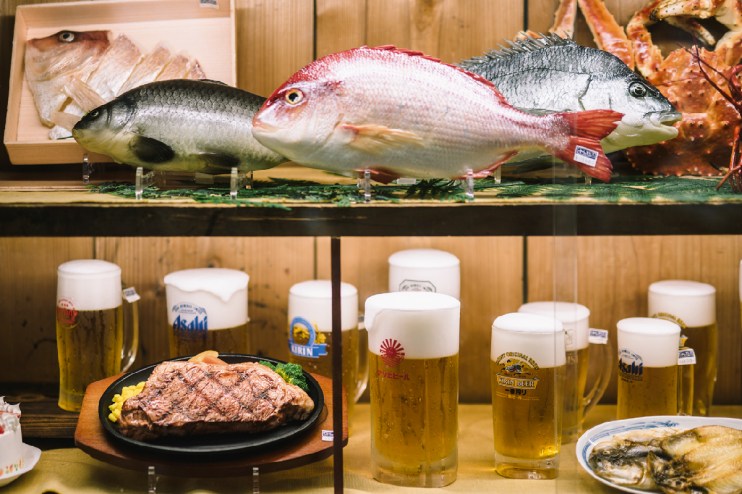
Japan is famous for the way its cultural artefacts seem to evolve separately from the rest of the world. Travel to Tokyo and you can find fax machines that have continued to develop new bells and whistles long after their use in the west began its terminal decline in the 1990s.
Shokuhin sanpuru (literally: food samples), ubiquitous in restaurants and cafes across Japan, are another such Japan-centric creation, accepted as a part of daily culture from Hokkaido to Kyushu but rarely seen elsewhere. But this unlikely crafts industry, which rose to prominence in the 20th century, is having a moment on these shores.
Shokuhin sanpuru provide the focus of a fascinating new exhibition at Japan House in Kensington, while the UK’s first food replica store has begun supplying everything from historic palaces to major blockbuster movies. Could this Japanese tradition of hyper-real food mimicry have a genuine future beyond izakayas (Japanese pubs), retro cafés, and ramen joints?
The phenomena began in 1920s Japan as a culture for eating out in department store dining halls emerged. High-quality replicas were utilised as a marketing tool for window-front displays at casual restaurants before colour photography was widespread — the primary function being to catch the eye and make people hungry. Ninety-two years after Iwasaki’s grandfather founded Iwasaki Co in 1932, it has proven as durable as its hyper-realistic creations: it now controls some 70 per cent of the industry’s domestic market, with the wider food replica industry worth an estimated $90m as of 2018.
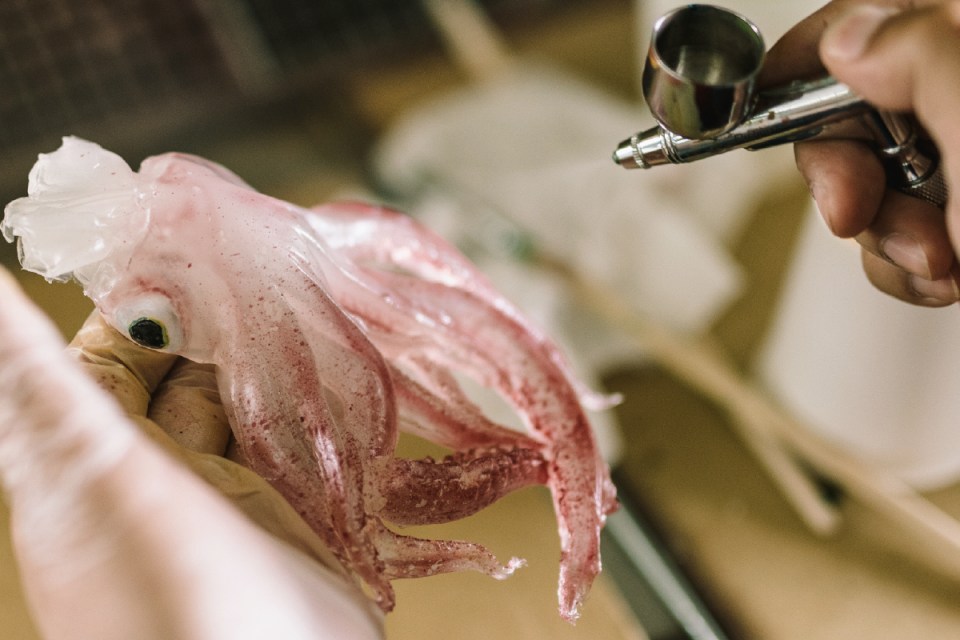
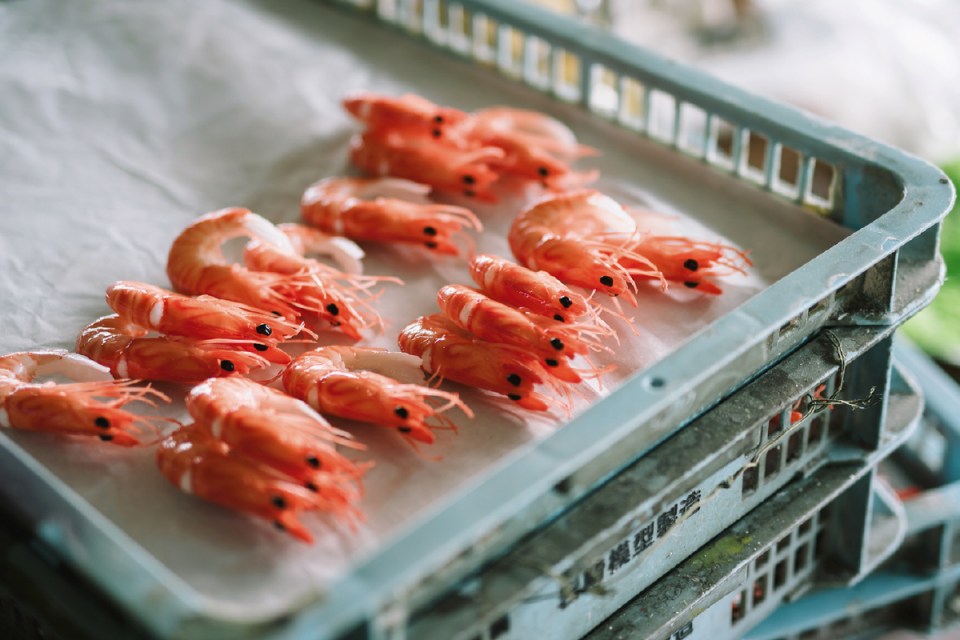
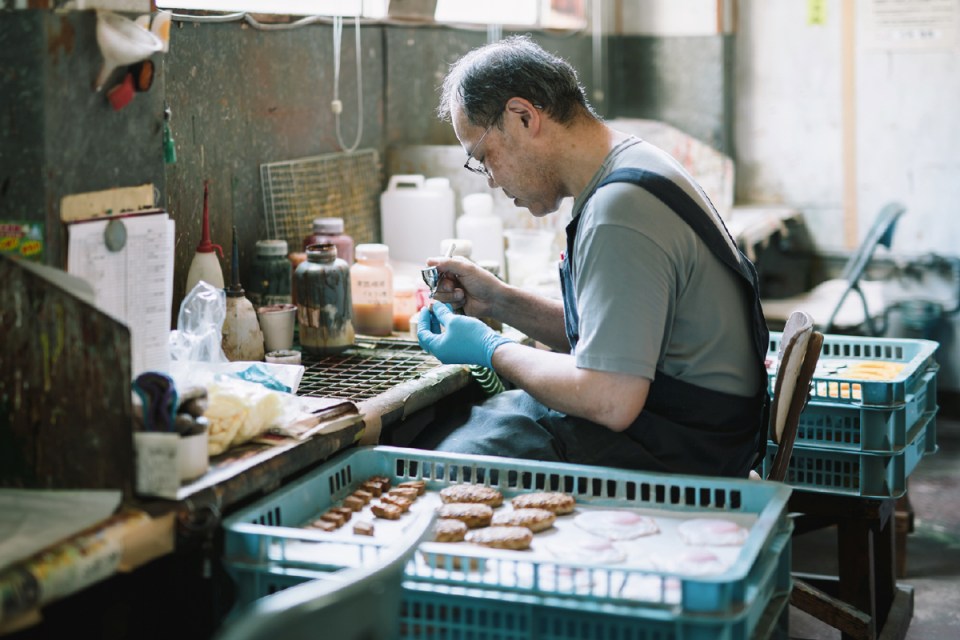
The science behind these models is simple: when we see nice food, we get hungry. Accuracy is therefore essential to Iwasaki Group’s craft – replicas are faithfully moulded and painted based on dishes supplied by their clients. And it makes sense, when you think about it: there’s less chance of buyer’s remorse if you’ve already eye-balled, in all three glorious dimensions, what you’re about to be served. This “immediate advertising” remains effective, according to John Prescott, professor of psychology at the University of Newcastle, Australia, and editor of the Food Quality & Preference scientific journal. “We rely on and trust visual information more than any other form of information,” he says. “In other cuisines, we can go on a menu description, but that’s really a poor way of describing what we’ll be getting.”
HIDEN, a Japanese “curry lab” founded in London in November 2020, and operating in two locations in King’s Cross and Finsbury Park, shares this sentiment. Though their bold yellow branding, minimal interior design and use of stylised photography highlight an astute understanding of contemporary marketing, co-founder Yuichi Hashimoto also sees the value in replica food models, which are imported from a bespoke manufacturer in Japan. “It’s a conversation starter,” he tells me. “People come inside and touch it, and ask ‘what is it?’, and take photos. It’s all about design, information, and who we are as a business. It’s not like an Apple product being manufactured on a large scale – [the craftsmen] put so much effort and time into making them.”
So why do we rarely see these models at restaurants serving other cuisines? Beyond the simple fact that most other countries haven’t developed such a specialised industry, Prescott believes a difference in psychology is a factor. “French chefs have a tradition of believing that they are offering the best dish and you should just trust them,” he says. “Many Western cuisines probably follow this model.”
As a Western food replica manufacturer, Kerry Samantha Boyes is a rarity – but her business, Fake Food Workshop, is thriving. With a background in stonemasonry and taxidermy, Boyes now specialises in British food, ranging from pork pies and pastries to roast chickens and fry-ups. She gets enquiries “daily” from all over the world, with around 40 per cent being shipped abroad. She started out on her kitchen table in Edinburgh in 2019 before graduating to her spare room; in November 2023, she opened a dedicated workshop in picturesque Kirkcudbright, Scotland. She believes it’s the UK’s first fake food store.
“Our clientele is a real mixed bag,” she says, during a virtual tour of her enchanting, pink-walled haberdashery. “One of the first jobs I did was build a dessert menu for a franchise in America called Johnny’s Italian Steakhouse. They use them on a dessert trolley. Instead of having to chuck out products at the end of the day, they bring out my replicas.” She’s just received a repeat order from the chain, which has 13 locations across the States.
At the other end of the spectrum, she’s supplied TV and movie productions — ranging from British soaps (“my sister saw one of my pieces on Corrie the other day”) to Hollywood blockbusters. For Guy Ritchie’s Netflix crime-comedy series The Gentlemen, Boyes created a banquet feast that included a gun set in jelly at the Theatre Royal, Drury Lane, which was transformed into a stately home for a “fully immersive” premiere event. And Warner Bros. bought raspberry ripple ice cream replicas for use in their $1.4 billion-grossing Barbie movie (Boyes admits these jobs are uncommon, since most film companies have their own in-house prop makers).
“There is a real appreciation of how food can help interpret a story and create a narrative now,” says Boyes. “We’ve just done Christmas menus — turkey, pies, jellies — for Hillsborough Castle in Northern Ireland. For Hill House, the National Trust site, I’ve created dishes that tell the story of the Blackie family who once lived there. We’ve just sent three parcels to the Kunstmuseum in the Hague for The Grand Dessert, a big exhibition covering the history of dessert. And I recreated iconic dishes by Julia Child [the American chef who popularised French cooking in American homes in the 1960s], like cheese soufflé and coq-au-vin, for a touring exhibition.”
“There’s a real push to make historic settings, kitchens and dining rooms more accessible to the public,” she says. “If there’s food on the table, people can relate to it.”
The souvenir market is another major outlet for food replica manufacturers, making up an estimated 10-15 per cent of Iwasaki Group’s total sales. Boyes, too, sells directly to customers through her online Etsy business. Sushi wall clocks, hamburger bento handbags, and takoyaki (fried octopus ball) back scratchers are among the items that can be purchased from Fake Food Japan’s English-language website. The highest demand comes from the US and Australia, says founder Justin D. Hanus, and he believes that the artistry is part of the appeal: “I would imagine [it’s about] wanting something from Japan that is unique and handcrafted to show to friends and family.”
At Japan House, the exhibition’s spread of regional dishes – citrus fruit somen noodles, mustard-miso lotus root, sweet red bean paste on-toast – are realistic enough to make your stomach rumble, although the sillier installations are the most fun. In one corner, a snow crab is reassembled as if it were a Transformers robot — while an impossibly tall “earthquake-proof burger” stands a few tables over. In the gift store, you’ll find books containing pizza cowboy hats and shoe-shaped lasagne, “masterpieces” of Iwasaki Group’s annual staff contests, which have run since 1968 as a way of encouraging creativity and developing new technology.
This light-hearted character is part of the industry’s charm, which endures even as Iwasaki admits that usage rates in restaurants are on the decline. New technologies such as 3D printing and holographic displays threaten to disrupt the market further (it’s not lost on me that one of Iwasaki’s presentation slides, titled ‘Uncovering the Potential of Food Replicas’, depicts a giant T. Rex made out of crisps) though Iwasaki aims to harness new technologies rather than bow to them, experimenting with digital processes to give the impression of steam rising from a bowl of hand-crafted replica ramen, for instance.
In any case, “relying on skilled craftsmen making everything by hand” remains the plan for Hanus for the foreseeable, while Boyes’ innovative use of Jesmonite, a composite material made from gypsum and water-based acrylic resin, points to a sustainable future for the craft (in Japan, PVC has been the primary material in food replica manufacturing since the 1970s, replacing wax designs, which were prone to melting).
As for whether they belong in the realm of high art – be it as decorative installations in British heritage homes or as the subjects of kooky museum showcases – history speaks for itself. In 1985, the New York Times declared food replica models as being “gleefully added to the canon of pop art”, pointing to their use at the Japan Style Exhibition at the Victoria and Albert Museum in 1980. By 1990, Japanese food samples had even been incorporated into the permanent collection of New York’s Museum of Modern Art. As recently as 2022, New York Times Magazine deemed the craft worthy of a stunning photo series shot by Kyoko Hamada, declaring the area around the Tokyo Biken fake foods store a “Plastic Paradise”.
Whether they’ll one day be found in the Louvre remains to be seen – but they might at least convince you to stop by the café on the way out.