The West End works as one economy – policy should catch up

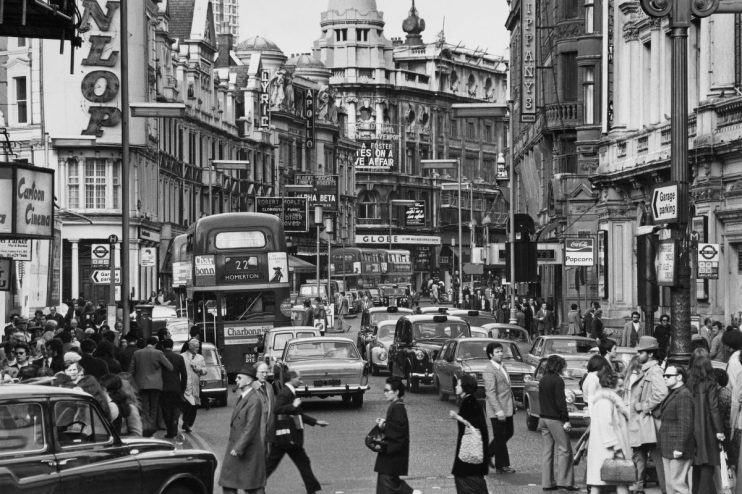
The West End functions as an integrated economy, yet policy continues to govern it in fragments, writes Ros Morgan
The case for a West End International Centre
London has never lacked ambition. It’s where culture, commerce, tourism, hospitality, retail, heritage and public life come together at a scale few cities can match.
To recognise the heart of our city for the powerhouse it is, it’s in everyone’s interests that all stakeholders work more closely and strategically together.
That is why we are calling for the wider West End to be formally designated as the West End International Centre for Culture and Commerce (WEIC): a framework recognising one of the world’s most successful mixed-use districts as the integrated ecosystem it already is.
The numbers alone justify it. The wider West End generates more than £55bn a year for the economy, supports around 500,000 jobs and attracts hundreds of millions of visitors annually.
Yet policy still too often treats the West End as disconnected pieces: Oxford Street here, theatres there, hospitality elsewhere. That fragmentation no longer reflects how the district actually functions.
Representing over 500 businesses, we know that the modern West End operates as a single, highly interconnected economic engine where culture, retail, tourism, hospitality, transport and nightlife depend on each other. Post-pandemic recovery proved precisely that. The West End did not truly rebound when shops reopened. Recovery accelerated when theatres, live entertainment and cultural venues returned, bringing people back across the wider economy.
Our latest data shows there is still work to be done. While there was a 2.4 per cent rise in visits to central London in the 12 months to March, spending was down 7.7 per cent, with particular pressure on the night-time economy, with post-6pm visits down five per cent.
We need to bring all partners together to the benefit of both residents and visitors. Oxford Street cannot succeed in isolation from Soho, Covent Garden, Trafalgar Square, St James’s, Regent Street, Piccadilly Circus and Leicester Square.
Other global cities already understand this. Paris has long treated its central commercial core as a unified strategic zone combining tourism, culture, luxury retail and transport investment. Sydney’s central business district similarly benefits from integrated governance and long-term coordination across the visitor economy, public realm and night-time activity.
London should do the same.
WEIC would provide the framework needed to align planning, licensing, transport, safety and investment across one of the world’s most globally recognised destinations. It would also support ambitions around later Tube services, extended trading hours and the evening economy – all of which rely on the wider economic and cultural ecosystem functioning cohesively.
The West End is not simply another district within London. It is the UK’s foremost international economic and cultural asset. The forthcoming London Plan should finally recognise it as such.
Stop taxing tourists
Tourism is one of our most important industries, supporting millions of jobs. That’s why we are concerned about the government’s decision to press ahead with plans allowing local authorities to impose a new overnight levy on tourist accommodation. We risk sending the wrong message at a time when we should be doing all we can to remain globally competitive: that coming to Britain will cost more. If ministers insist on implementing this policy, businesses must have a real voice in how funds are invested locally, and revenue should be directed towards measures that directly enhance tourism.
Business rates ignored in King’s Speech
We were disappointed that the King’s Speech failed to address business rates – the number one issue facing many firms, particularly those investing in physical premises, jobs and high streets. The government promised fundamental reform to level the playing field between bricks-and-mortar businesses, which currently bear the brunt of ever-rising bills, and online operators. Business now needs to see that ambition translated into action. HOLBA is calling for a hybrid business rates model that ensures online businesses pay their share, while supporting growth, investment and vibrant city centres.
Pedicab progress at last!
HOLBA has campaigned for more than a decade to see pedicabs regulated in London. People should be able to board a pedicab confident that it is roadworthy, that drivers are properly vetted and that fares are transparent. We welcome new measures which will include a ban on external audio from pedicabs. For the first time, Transport for London will also enforce maximum journey fares to ensure customers are treated fairly with consistent and transparent pricing. This is a significant step forward.
What I’m listening to
My playlist can range from Mary Black to Queen, Stevie Wonder and David Bowie. I’m equally happy listening to artists like The Lumineers and Noah Kahan, or singing along to karaoke favourites from Adele and Fleetwood Mac to Gloria Estefan. I’m looking forward to the opening of the Blue Note Jazz Club in St Martin’s Lane and who knows – I may discover a love of jazz too.
Ros Morgan is the chief executive of Heart of London Business Alliance