The year in law: Scale, survival, and the surge of the transatlantic titans

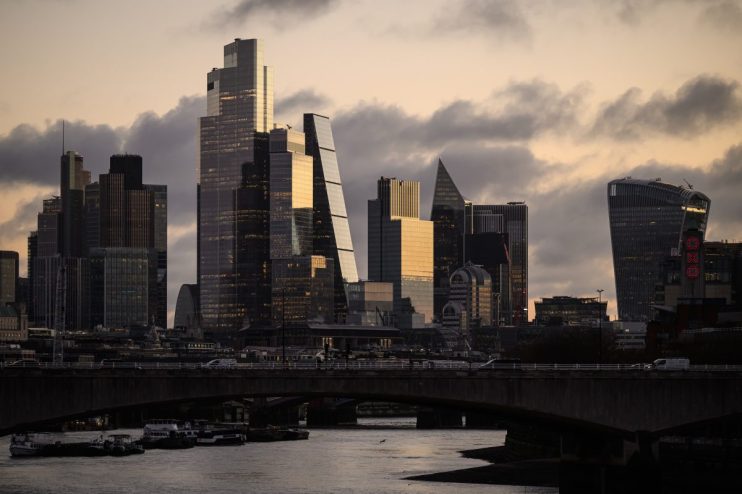
From the birth of new transatlantic titans to a government-led rescue of the litigation funding market, 2025 has seen the City’s legal landscape rewritten by a relentless pursuit of scale and a newfound reliance on the machine.
The legal sector started the year with US President Donald Trump attacking the industry, as Trump vs Big Law kicked off with several firms facing executive orders (EOs).
Between late February and most of March, Big Law firms, many of which have major offices in London, found themselves in the news after Trump issued an EO targeting them over links to the Democratic Party and their involvement in January 6 prosecutions.
Another point of contention for the President was DEI policies, which, in some US businesses, including some law firms, started mysteriously disappearing from websites.
Some firms, such as Jenner & Block and WilmerHale, took the Administration to court and blocked the EO. However, not all have done this, as the likes of Paul, Weiss, Rifkind, Wharton & Garrison, folded to Trump. As a result, Trump secured pledges for approximately $940m in pro bono (free) legal services from nine firms to support causes backed by his administration, to avoid the EOs.
Thanks to these firms rolling over, you can now argue that Trump has one of the biggest in-house legal teams in US political history.
Transatlantic mega mania
The main story that dominated the market this year was the mega-merger between US and UK law firms to create a giant transatlantic firm.
As A&O Shearman celebrated its first year as a merged firm by posting results showcasing £2.9bn in revenue, and Herbert Smith Freehills’ merged with the US firm Kramer Levin went live on 1 June, the idea was dominating many board discussions across the City.
So much so that we not only got one, but two transatlantic stories in recent months: London-based Ashurst and Seattle-based Perkins Coie announced a $2.7bn merger in November, and Chicago-based Winston and Strawn and Taylor Wessing revealed their merger in early December.
And just last week, London-based Hogan Lovells announced its intention to merge with Wall Street’s oldest law firm, Cadwalader, Wickersham & Taft, to create a nearly £2.7bn law firm.
The ambition for some is to join the ‘Global Elite’ table, where firms such as Kirkland & Ellis, the highest-grossing and most profitable law firm in the world, generate nearly $9bn.
It is also part of the strategy of ‘keeping competitive’ in an era when clients need more globalised law firms to meet their expectations. Speaking to Morning Wire earlier this month, Karen Davies, Ashurst’s global chair, said: “Clients want global solutions, and that is what drives everything in our business.”
This trend shows no sign of slowing down in 2026. As is standard in the legal sector, boards will soon convene to determine whether to commit to this strategy or if the window of opportunity has already closed.
However, despite the prominent, shiny figures for the potential post-merger revenue, previous mergers of this kind have shown the market the fallout that can occur when the new firm’s culture is treated as an afterthought. “It is hard enough merging two domestic firms, but when the merger is of a transatlantic nature, then there are so many factors involved,” explained Nick Woolf, partner at Woolf&Co, in a previous Eyes on the Law.
The Big Tech question
2025 also marked the continued transition of AI from the ‘hype’ phase to a core operational tool, and the knock-on effects this will have on the industry.
The surge in AI has seen a flurry of legal tech start-ups hit the market, including Legora, which was founded in early summer 2023. In its short two-year history, its valuation has increased dramatically, from $50m to $1.8bn.
The focus now is to incorporate the AI tools globally. Legora CEO Max Junestrand told Morning Wire last month, “When we rolled out with Linklaters, it was a global deployment for all their offices, all the lawyers, and all the practice areas.”
While other firms’ focus is on making sure staff are using AI. So much so that Morning Wire revealed in April that Shoosmiths set a target for staff to get an extra £1m in its bonus pot in exchange for 1m Microsoft Copilot prompts. Target met, bonuses paid.
However, with the increased use of AI, the elephant in the room – the impact on jobs – is getting bigger. A PwC survey in October warned that AI is putting “downward pressure” on fees. The increased use of AI and its effects on lawyers’ time are driving the Hourly Rate system toward phasing out.
Spanner in justice system
Pressures within the criminal justice system continued into 2025, as the cracks have become craters.
The Legal Aid Agency was caught up in the cyberattacks on retail giants in April, after the Ministry of Justice (MoJ) confirmed that a criminal gang had successfully accessed and downloaded up to 15 years’ worth of sensitive data.
While the pressure on the prison system has continued to mount, with several high-profile missing prisoners who were mistakenly released under the emergency measures to free up prison spaces to avoid overcrowding.
The Secretary of State for Justice, David Lammy, then found himself all over the news earlier this month after a leaked memo, now confirmed, suggested that the government was going to scrap some jury trials.
The backlog of cases in the criminal division stands at nearly 80,000 and is expected to surpass 100,000 over the next couple of years. Minister for Courts, Sarah Sackman, stated, “There is no one working in the legal system who doesn’t think the criminal justice system is broken.”
However, the move has sparked backlash from the profession, with most legal bodies and criminal barristers opposing it. Even in the Labour Party, it is fast becoming a problem as this week it was reported that Labour MP Karl Turner is organising a backbench letter to protest the move, with the former deputy PM, Angela Rayner, named as also asking her own questions on the reform.
However, over on the civil side, the government announced plans last week to legislate to protect the litigation funding industry. The government will reverse a 2023 Supreme Court judgment that put the sector into crisis mode over how cases were funded.
Looking ahead to 2026, the legal industry stands at a stark crossroads. While corporate law continues to grow, putting even more pressure on smaller firms, the domestic justice system faces yet another year of reckoning.