There can be no route back to normality for ableist commuter culture

“Do not expect to return to the transport network you were used to.”
We’re all used to hearing that there will be no return to “normal” life any time soon. So it’s no surprise that Transport for London (TfL) has broadcast the same message about our commutes as some tentatively plan to return to the office.
While the experience of being shoved on platforms and packed into carriages isn’t beloved by the average commuter, our reliance on the TfL network is immense. Talk of reduced services and restricted passenger numbers going forward is a cause of concern.
But for disabled people, the reality of post-pandemic travel will add further frustration to what was already a traumatic experience.
On average, journeys for disabled people last 49 per cent longer than for other passengers. Most stations are not wheelchair friendly. People are frequently left stranded when promised ramps don’t appear.
And while recent years have seen progress, these hard-won gains suddenly look at risk as the transport network focuses primarily on adapting to Covid-19.
As all facets of life are reshaped, we mustn’t miss this opportunity to prioritise accessibility and consign ableist commuter culture to history.
This is not just about convenience — it’s a matter of economic and social mobility.
Disabled people are twice as likely to be unemployed as their able-bodied counterparts. Barriers to employment are compounded by the difficulties in navigating transport systems and by the traditional resistance of employers when it comes to home working and flexitime.
We now have coronavirus to contend with as well — disabled people are 42 per cent more likely to have poor health and are therefore extremely vulnerable. Alongside this, as initiatives like the Freedom Pass are being cut back, there is growing anxiety among disabled people that their access to free travel might be next.
These conditions create a perfect storm to restrict access to opportunities.
Any and all restructuring plans must include the one in five people who are disabled. Of course new cycling networks should be celebrated, but what about the 60 per cent of the London Underground that’s still inaccessible to wheelchair users?
We could accept immediate frustrations if we were confident that needs would be met in the long term. Yet, so far, glimmers of hope are scant.
This issue doesn’t lie solely at the feet of transport planners. Employers have a duty to ensure that commutes and working practices are safe for all staff. This means flexing hours to allow disabled people to travel when it is safest for them to do so — and negating the need for commuting at all by maintaining the option to work from home for those who want it.
The argument that companies can’t “accommodate” such varying needs (a long-standing barrier to diverse hiring practices) has been well and truly scotched over the last three months.
Finally, remember commuter culture is shaped by commuters themselves. Disabled passengers are often rendered invisible as fellow travellers elbow their way onto carriages or bury their heads into their phones. When it comes to recognising the needs of those with disabilities — sometimes visible, sometimes not — it takes willingness to engage which goes beyond a glance.
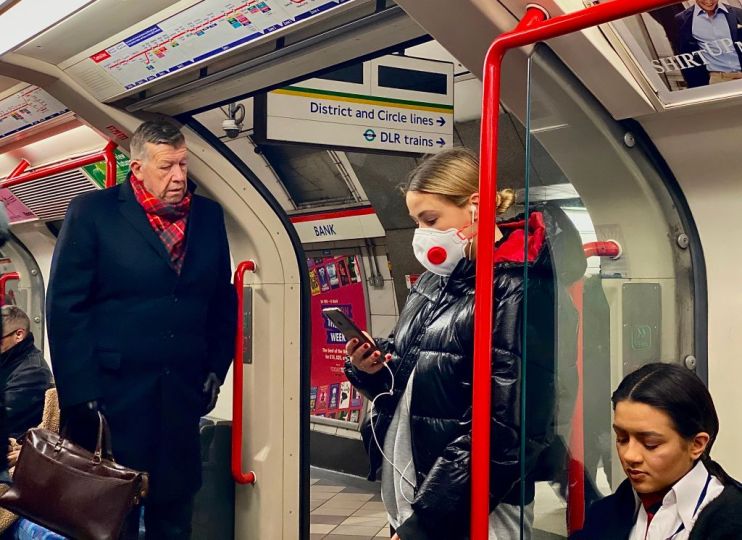
As we adapt to masked encounters, many of us will be introduced to this feeling of otherness, of invisibility. And as we learn to navigate journeys at a 2-metre distance, all commuters will come to know how it feels for their safety to directly rely on the actions of those around them.
We must seize this lesson and learn from it.
We cannot eradicate the risk of coronavirus on public transport, but policymakers must ensure new measures don’t further exclude disabled communities from public spaces. Employers and the public must also do their bit to foster a commuter and wider working culture which is more considerate of everyone.
We can’t go back to “normal” and nor should we aim to. Instead, we must travel forward.
Main image credit: Getty