There’s no reason to fear local shale development in South East England

ALTHOUGH the national case for shale has been put strongly, for many people in the South East the arguments in favour of local shale developments have not been made with enough clarity. They are, however, relatively straightforward. First, they will benefit the local economy, and second, they won’t be nearly as disruptive as is often thought.
Two examples illustrate the local economic benefits. First, shale gas development has been widespread in Pennsylvania, but has not taken place in all counties in that state. This allows comparisons to be made. A recent study by the Manhattan Institute found that, between 2007 and 2011, per capita income rose by 19 per cent in counties with at least 200 wells, compared with 8 per cent in counties with no wells. Similarly, the number of jobs grew by 7 per cent a year in counties with more than 200 wells, compared to a small fall in jobs in counties with no wells.
But we don’t only have to look to the US. Aberdeen is a great example of how oil and gas development can have significant local benefits. In the 1960s, before North Sea production began, Aberdeen’s main industries – shipbuilding, granite and fishing – were starting to decline. Now, Aberdeen City and Shire has the second highest income per head in the UK after central London, while one third of the top 50 Scottish companies are located there and 60 per cent of employment in the region is either directly in the oil and gas industry or supported by it. Last year, unemployment was 6 per cent in Aberdeen, compared with 9 per cent in neighbouring Dundee, where oil and gas development has not been extensive.
What relevance do these examples have to the South East, which is already prosperous with generally low unemployment? The answer is quite a lot. There are over 90,000 unemployed people aged between 18 and 24 in the South East and a further 100,000 in London. More still are working part time because they can’t find a full-time job, while others will be taking lower-paid jobs than their qualifications suggest. Although pay won’t be quite as high as the average £64,000 salary offshore, a shale industry in the South East would provide plenty of well-paid job opportunities.
At the same time, most people in the South East drive petrol or diesel cars – often rather large ones – and heat their homes with gas. That oil and gas has to come from somewhere. And it needn’t be a worry if some of it comes from the South East.
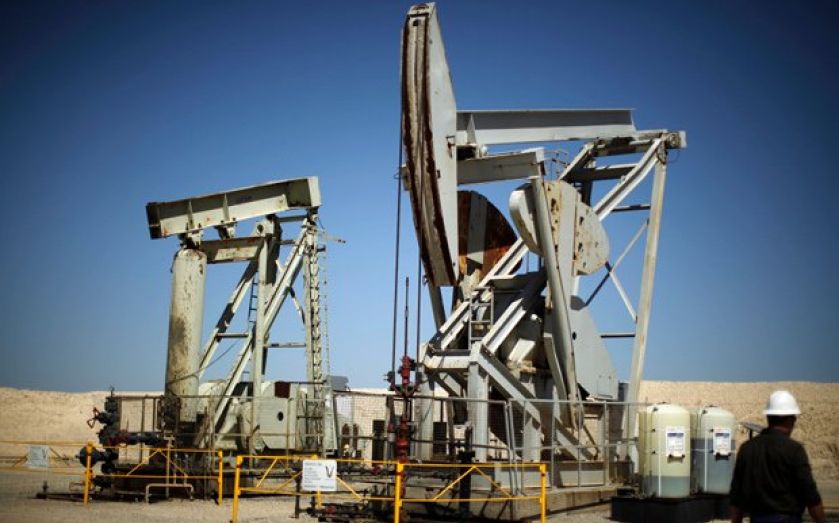
Actually, some of it already does. Wytch Farm, which began production in 1979, is Western Europe’s largest onshore oil field. At peak production in the late 1990s, it was producing enough oil to run 4m or so cars and enough gas to heat over 100,000 homes. The field has horizontal wells up to 10km long and hydraulic fracturing has been used. It’s located in an Area of Outstanding Natural Beauty, featuring Sites of Special Scientific Interest, a World Heritage Coastline, designated wetlands, National Trust land and National Nature Reserves. It is on the south west side of Poole Harbour (the “English Riviera”). It hasn’t been in the news because there haven’t been problems.
Shale developments needn’t be any different. Each site is around two hectares in size and, given that horizontal wells can be clustered, sites can be spaced a long way apart. Once drilling and fracturing is completed, equipment is taken away and the truck movements largely stop. With trees planted around the perimeter, the site will then be quite difficult to see. In fact, a shale site won’t feel that different to a local building site.
Strong regulations cover the much talked-about risks. Real-time seismic monitoring will ensure that fracturing operations are shut down if any seismicity above 0.5 is detected. The Health and Safety Executive will ensure that wells are properly constructed – it’s been doing this for years in the North Sea. Any fracturing fluid that flows back up the well will be put into a steel tank, with an overflow to capture any spills, and will be taken away to be treated like any other domestic or industrial waste. Planning rules will control everything from lighting to making sure trucks avoid the start and end of the school day.
The big question that those of us who support shale developments have to answer is whether we would be willing to see shale production in our local area. I live in rural Hertfordshire. It’s a peaceful place, but human activity is everywhere, from the big agricultural vehicles producing the food I eat to the rail line that gets me into my London workplace every day. If shale development were to come to my local area, I would welcome it as a way to keep my car running and my home warm. And at the same time, it could provide a well-paid career opportunity to young people in Hertfordshire.
Corin Taylor is a senior economic adviser at the Institute of Directors (www.iod.com). Follow him on Twitter @CorinTaylor2