There’s no evidence to justify tough fines for taking children on holiday in term time

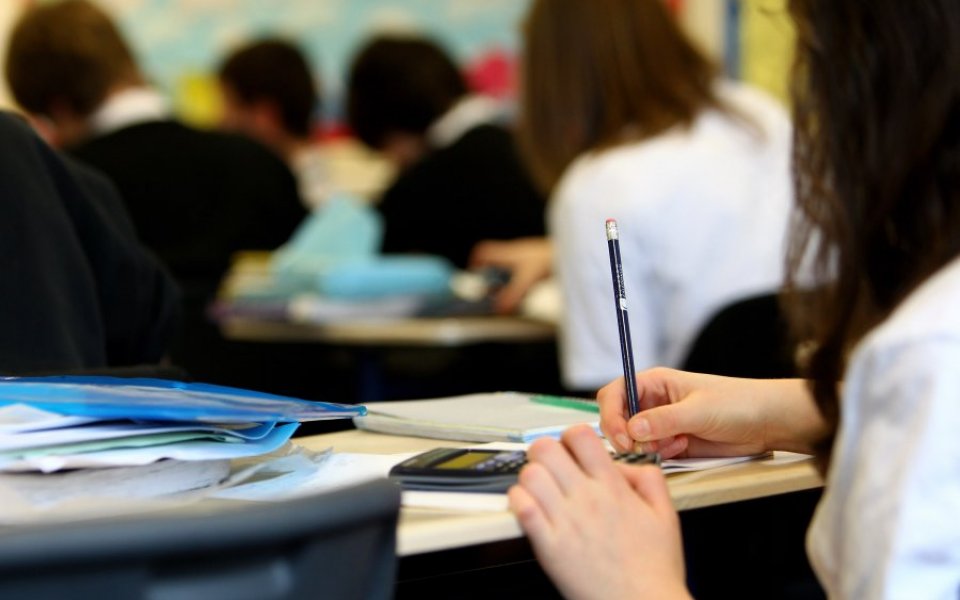
The recent decision by Isle of Wight magistrates to throw out the case against Jon Platt, who took his daughter to Disney World in termtime, has cast doubt on the hardline policy on school attendance introduced by Michael Gove.
In 2013, the Department for Education (DfE) started to get tough on school absenteeism, reducing the discretion of headteachers to allow absences for holidays and family visits.
This has led to an increasing number of fines – 86,000 in 2014-15, up from 32,000 in 2012-13 – and threats of jail sentences for persistent offenders. Yesterday, the Local Government Association called the rules “unworkable”.
There is of course a venerable liberal case for compulsory education. John Stuart Mill saw it as “almost a self-evident axiom, that the State should… compel the education, up to a certain standard, of every human being who is born its citizen”.
But it’s a long way from a few paragraphs in On Liberty to the current disposition. Mill saw his requirement as outputbased: children should have to reach a certain level of literacy and numeracy and failure to do this would produce sanctions against parents.
There was no need to specify how children reached this standard, and certainly no requirement that they spend the years 5-18 in formal schooling five days a week for the bulk of the year, with arbitrary dates set for holidays and fines for non-attendance.
It’s also worth mentioning that Mill wanted parents largely to bear the cost of schooling (except in cases of extreme poverty), rather than having the state provide “free” education with all the concomitant regulation – from Matthew Arnold to Ofsted – which this has produced.
Perhaps the DfE, and officious headteachers concerned about their Ofsted reports, would be less inclined to criminalise their customers if parents were paying upfront.
The DfE bases its policy on the claim that even a short period out of school tends to reduce school performance.
In February, it published a report which was argued to support this view. At the time, education secretary Nicky Morgan said that “the myth that pulling a child out of school for a holiday is harmless to their education has been busted by this research”.
As so often, people read (if indeed Morgan did read) what they want into “research” findings. The data which the report covers indeed show that there is a continuous decline in performance at Key Stages 2 and 4 with individual reported absence. However, there are no statistical controls at all, so this finding is practically worthless.
Other DfE research shows, first, that holiday absence only accounts for about 10 per cent of the recorded absence shown in the February report: illness is by far the largest factor. Second, the characteristics of those who have poor attendance records are very different from those of average children.
Absentees are far more likely among those entitled to free school meals, those who live in the most deprived areas, those who have special educational needs, and members of some ethnic minorities, notably Irish travellers and Roma.
In other words, the raw attendance figures in the February DfE report tell us nothing much about the underlying relationship between attendance and school performance. Moreover, the emphasis on children’s attendance misses the point that schools themselves have responsibilities.
Teachers’ average absence rates from school are very similar to those of pupils, and of course teacher absence potentially damages the performance of large numbers of children.
When you add in the disruptive effects of training days, and closure for pointless strikes or for a few flakes of snow, schools have room for improvement without unnecessary browbeating of parents and stigmatising those who don’t conform.
The DfE should take the Isle of Wight case as an opportunity to think again about its school attendance policy.