Skip to content
Friday 14 August 2026London --:--Frankfurt --:--Zurich --:--
NewslettersSearchEN · DE
MorningWire

European business, markets and politics

FTSE 100
10,772.67
-0.56%
DAX
26,299.74
0.00%
CAC 40
8,650.56
0.00%
STOXX 50
6,545.47
0.00%
  • Europe
  • Markets
  • Business
  • Economy
  • Technology
  • Politics
  • Opinion
More
GermanyFranceBankingAIEnergyFintechPropertyCapital Markets
  • Germany
  • France
  • Europe
  • Markets
  • Business
  • Economy
  • Technology
  • Politics
  • Opinion
  • DE
Wednesday 17 October 2018 8:08 pm  |  Updated:  Tuesday 21 May 2019 4:22 pm

There’s nothing to fear from the latest easing back of Dodd-Frank’s reach

By: Julian Harris

Add as a preferred source on Google

NULL

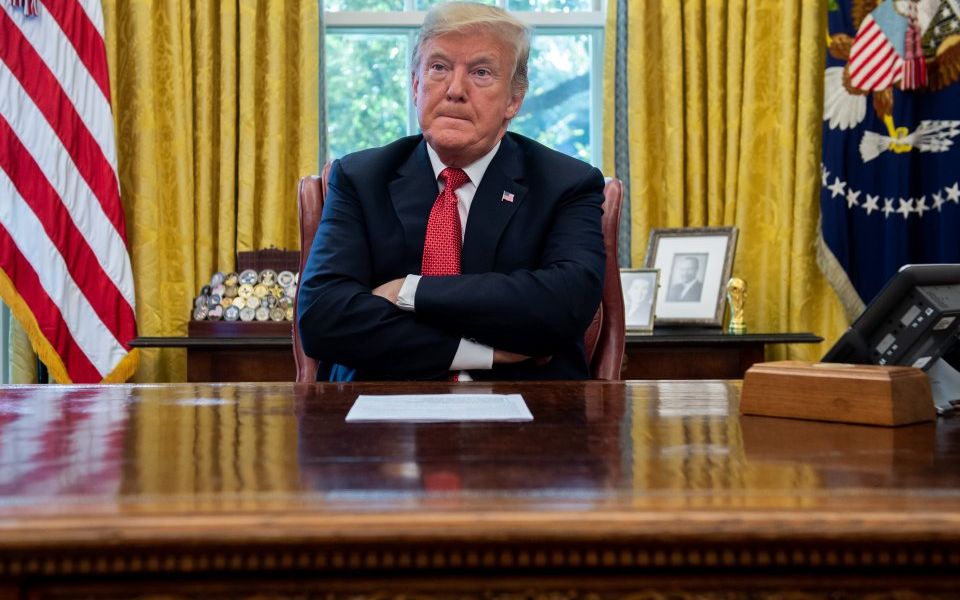
Shortly after his inauguration as President, Donald Trump pledged to do “a big number” on Dodd-Frank regulations, labelling the post-crisis measures “a disaster” and promising to “kill” parts of the legislation.

While the rhetoric was typically Trumpian, the reality has proven to be somewhat more modest. Nonetheless, a change in the White House's direction of travel has been observed under the influence of former Goldman Sachs banker Steve Mnuchin and other lesser-known advisers such as Mike Pence’s chief economist Mark Calabria, an ardent free-marketeer and Dodd-Frank critic.

Yesterday, in one such example, Washington scrapped its “systematically important” classification of Prudential Financial, meaning that no insurers are now considered too big to fail. Other insurers such as AIG and MetLife had previously fallen off the list.

Given the character of the man in charge of the White House, it is easy to see these developments as an impulsive and irresponsible unravelling of reforms designed to prevent or mitigate future shocks to the financial system. Indeed, Trump’s primary reason for opposing Dodd-Frank – to put a rocket under lending and growth under his premiership – looks as short-termist and brash as his disgraceful attacks on the Federal Reserve.

However, beyond Trump, there are reasons to be comfortable with the change in tack delivered by Treasury secretary Mnuchin. Firstly, the systemic risks from insurance companies are relatively minor, with lending still dominated by traditional banks. At times it has seemed as if the decision to include insurers was more due to a lingering memory of the US government’s bailout of AIG than any analysis of the fundamentals.

But more importantly, too much of Dodd-Frank rests on the premise that future crises can be thwarted by adding layer upon layer of supervision on to financial companies (the Pru says it spent $135m in one year on reporting work related to its “systematically important” status). Meanwhile, the regulators’ efforts to privatise bailouts remain far from convincing, and market data shows that investors still believe a safety net exists. Dodd-Frank says it is opposed to bailouts, but provides a clear path for the state to step in and save troubled banks.

Rather than worrying about ultra-tight supervision designed to protect big financial beasts, we should be asking if regulators are doing enough to facilitate a financial system in which all businesses can fail without the need to raid taxpayers’ pockets. Worryingly, the answer still seems to be “no”.

Share this article

  • Facebook
  • X
  • LinkedIn
  • WhatsApp
  • Email

Similarly tagged content:

Sections

  • Markets & Economics
  • News

Categories

  • Banking
  • Business
  • Economics

Related Topics

  • Company
  • Donald Trump
  • Federal Reserve
  • Goldman Sachs
  • Insurance
  • People
  • Prudential

Trending Articles

  • Revolut takes flight with launch of new airport lounges

  • It’s not just Jason Arday, most of sociology is a scam

  • IT consultant ordered to pay £50,000 after being accused of stealing Soho House members’ personal details

  • Grandparents fund university degrees to avoid inheritance tax net

  • Five-star Mayfair hotel hit with HMRC winding-up petition

More from Morning Wire

  • Young’s pubs score World Cup trading boost

    Hospitality
    Youngs pub bustling with patrons enjoying drinks, cozy interior, and lively atmosphere in a popular neighborhood setting
  • RGI Group Strengthens Its Personal Insurance Capabilities in France Through KAPIA-RGI’s Acquisition of Cegid Assurex Solutions

    Business Wire
  • INTX Introduces Tenet, the Industry’s First Native Intelligence Layer for the (Re)Insurance Operating System

    Business Wire
  • How Harry Maguire is using AI to help England… at table tennis

    Sport Business
    Scottish Premiership match between St. Johnstone and Hibernian at McDiarmid Park, featuring players in action on the field
  • London Lions in EuroLeague franchise bid – but may have to quit Super League Basketball

    Sport Business
    London Lions basketball team in action during a game, showcasing dynamic play and teamwork on the court.
  • Anthony Joshua v Tyson Fury venue tug of war on pause, says Matchroom boss Hearn

    Sport Business
    Anthony Joshua landing a punch on Jake Paul during a boxing match
  • World Cup sponsors could pay price if Infantino’s Fifa sell-off goes ahead

    Sport Business
    Person holding a red FIFA World Cup branded cup and a smartphone, wearing a white shirt and watch
  • AM Best Upgrades Fortegra Insurance Subsidiaries to A (Excellent)

    Business Wire
MorningWire

Independent European business, markets and political news for decision-makers.

Morning Briefing

Europe

  • Germany
  • France
  • Europe
  • UK & Ireland

Business

  • Markets
  • Banking
  • Technology
  • Energy
  • Property
  • Fintech

Editorial

  • Opinion
  • Editorial Policy
  • Corrections
  • Contact

Company

  • About Morning Wire
  • Privacy Policy
  • Terms of Use
  • Cookie Policy
© 2026 Morning Wire Ltd · Published by Morning Wire Media, Bahnhofstrasse 65, 8001 Zürich, Switzerland
Privacy · Terms · Cookies · Facebook