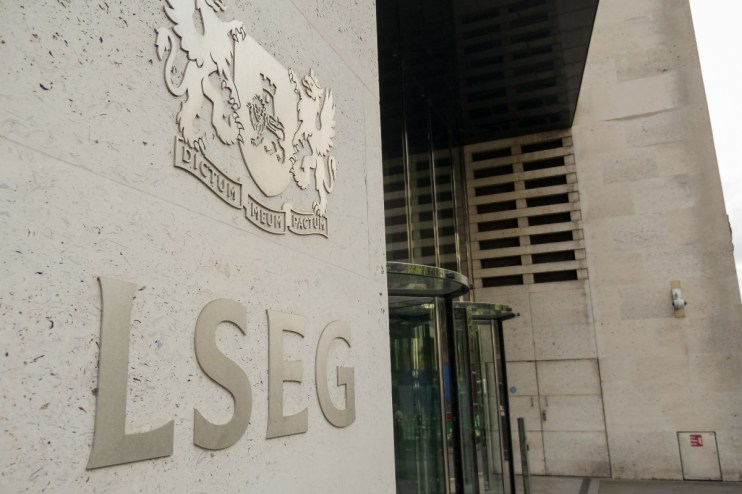
These charts show the scale of the London Stock Exchange’s decline

In May, one of the London Stock Exchange’s smallest constituents decided to leave. Brighton Pier, which had been listed on the exchange’s AIM market with a £5m market cap, delisted and jumped ship to private securities venue JP Jenkins.
“It’s something that had been building up for quite a while for the past several years,” CEO Anne Ackord told Morning Wire.
“In our sector there’s been particularly challenging trading conditions. We focused our strategy on cost savings and one of the big costs we had was our AIM listing.”
Brighton Pier said its AIM listing was costing the firm at least £300,000 per year, or around one per cent of its total turnover. Cutting this overhead was an easy way to save money with relatively little downside.
“There’s also the regulatory burden and the red tape that goes with it,” Ackord said.
“The other major factor in our decision was the lack of liquidity on AIM. As a result small trades in ordinary shares can have a huge impact on share price and we always felt our share price did not reflect the underlying value of the business.
“So staying there was not doing our image any good, our shareholders were unhappy…and that affects the perceptions of the company, amongst its customers, its partners, its suppliers. It’s not good for staff morale.
“All those things combined made the decision to move to a private company easier to make.”
The London Stock Exchange might be nonplussed over the exit of a relative minnow in the market. But the sentiments of Brighton Pier are echoed from the bottom of the stock market right the way up to the top.
Firms large and small depart the London Stock Exchange
Last week it emerged the biggest UK-listed company, pharma giant Astrazeneca, was itself considering dropping London as its primary listing venue in favour of a move to New York. Such a move would come as a huge blow to the LSE – and could prove the final nail in the coffin in efforts to revive the troubled exchange.
It would not be the first large-cap company to consider the move. £11bn London fintech Wise has already announced it will be jumping ship to the Big Apple, following in the footsteps of £37bn betting company Flutter and £49bn Irish construction materials firm CRH.
But the biggest threat to the London Stock Exchange is not the allure of its mightier cousin across the Atlantic but rather the deep pockets of private equity.
The US has welcomed as much as $676bn worth of European flotations in the form of IPOs and primary listing switches in the past decade, a report by New Financial found. But the figure is dwarfed by the more than $1tn that has exited those markets in the form of delistings via takeovers from privately-held firms or private equity.
That has included the likes of cybersecurity darling Darktrace, which was snapped up by Thoma Bravo for $5.3bn last year, as well as precision instruments maker Spectris, which last week agreed a £4.1bn takeover offer from US PE firm KKR.
And while more and more firms leave, fewer and fewer are joining in their stead.
Yesterday, reports surfaced that fast-fashion retailer Shein filed for a Hong Kong IPO, blowing a hole in expectations the e-commerce giant would be London’s hottest flotation of the year – though insiders insist the UK remains its preferred venue.
IPO fundraising slumped to a 30-year low in London in the latest warning sign on the health of the UK’s capital markets. Just £160m was raised from five listings on the London markets in the first six months of the year, the lowest-first half since 1995.
Indeed, virtually every conceivable statistic about the London stock market lays bare the scale of its demise, from the relative poor performance of the FTSE compared to America’s S&P, to the endless net outflows from UK equities quarter after quarter as more funds cut their UK exposure, to the rapid decline of the number of London-listed small caps.
Today the CBI joined a growing chorus of business groups demanding urgent action to revive the London Stock Exchange before it fades into obscurity.
Chair Rupert Soames said lighter regulation, better marketing and incentives for investors to put cash into British firms were needed to stem the outflow. He also called for more secondary listings and better remuneration for non-executive directors.
“We are brilliant at exporting capital,” said Charles Hall, head of research at Peel Hunt.
“If you look at pensions they have sold out of UK equities. Wealth managers are increasingly going into global portfolios and retail investors are increasingly buying overseas.
“There is no doubt about what causes low valuations. You can talk about the UK economy, you can talk about the performance of companies, but the day-to-day shift in funds from the UK into overseas markets inevitably impacts on the share price performance of companies.”
What’s behind the London Stock Exchange’s demise?
What is responsible for London’s demise? Hall has called for radical changes to tax relief to disincentivise the purchase of overseas shares, such as for ISAs and pension funds, as well as cutting the cash ISA limit to get more consumers into UK stocks. The latter of these appears to have attracted the support of the Chancellor. But other proposals, such as scrapping stamp duty on the trading of UK shares, seem to be off the cards for now.
“We have a tax system that gives tax benefits and there are no requirements to invest in the UK,” Hall complained.
“The ISA market gives £9bn of tax benefits each year and has no criteria attached to it – is that a good use of taxpayer money? The pension system you get £50bn of tax benefits for savings in pensions, no requirement to invest in the UK.
“If you go “that doesn’t matter and we’re totally happy for all this money to help grow companies overseas” then it’s absolutely fine.
“If you take a view that says “actually growing the UK economy is quite important,” if you think that does matter, then we should address those tax incentives.”
But London’s ailing market cannot just be a matter of fiscal policy. Some say operator LSEG have taken their eye off the ball. Since its $27bn takeover of US analytics firm Refinitiv in 2021, the money LSEG makes from running the London Stock Exchange is a tiny share of its turnover.
The CEO of one rival European exchange told me: “Them being a data company and them focused so much on data might take some of their focus away from [running the exchange].
“I think maybe they lost a bit of their focus – you might not be as good as you have been because you have other priorities.”
Reasons for hope
There are reasons for optimism that London could be turning a corner. Last week it emerged €19 billion Norwegian software giant Visma had opted for a London IPO in favour of Amsterdam, while Italian food group Navlat has unveiled plans for a £700m London float.
“While broader market uncertainty is affecting deal activity, including London IPOs, underlying demand for transactions remains strong,” said Mark Williams, Datasite Global Chief Revenue Officer.
“Once regulatory clarity is achieved and market volatility stabilizes, pent-up demand is likely to drive a strong recovery in London IPOs. While current constraints are primarily related to the exit environment, the fundamentals of UK businesses remain intact.”
“I don’t think it’s totally beyond rescue,” Ackord said.
“I don’t have much confidence in the fiscal policies of the government. I’m sure there are things that could be done – whether they have the will to do them I don’t know.”