Skip to content
Monday 31 August 2026London --:--Frankfurt --:--Zurich --:--
NewslettersSearchEN · DE · FR
MorningWire

European business, markets and politics

FTSE 100
10,824.26
+0.29%
DAX
26,378.10
-0.72%
CAC 40
8,407.69
+0.08%
STOXX 50
6,466.83
-0.29%
  • Europe
  • Markets
  • Business
  • Economy
  • Regulation
  • Politics
  • Opinion
More
GermanyFranceEU InstitutionsCompetitionPublic AffairsBankingTechnologyEnergy
  • Germany
  • France
  • Europe
  • Markets
  • Business
  • Economy
  • Regulation
  • Politics
  • Opinion
  • DE
Tuesday 18 February 2020 5:04 am  |  Updated:  Tuesday 18 February 2020 11:15 am

Think carefully before shaking up the BBC licence fee

By: Clare Sumner

Add as a preferred source on Google
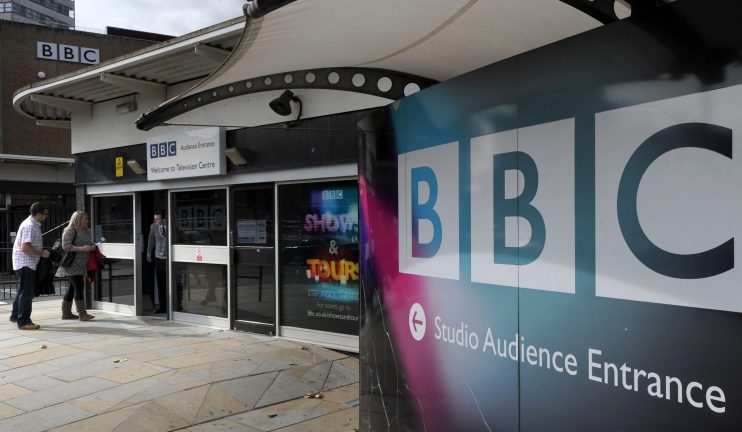
People arrive at one of the entrances to
The BBC is one of our top global brands

The future of the BBC is in the spotlight once again. 

The government is running a consultation on the decriminalisation of the licence fee, and there has been plenty of speculation in the press as to whether there could be further changes to the way the BBC is funded or what its remit should be.

First, let me say that the BBC welcomes a well-informed debate, and is already adapting. But with calls growing louder in some circles to scrap the licence fee altogether, it is worth remembering what we have now. 

The BBC sits at the heart of the UK’s creative industries, generating around £2 of value for every £1 spent in licence fee funding. It is the largest single investor in UK original TV and radio content, and helps sustain thousands of small suppliers up and down the country, as well as playing a vital role in investing in new talent. 

From Phoebe Waller-Bridge, whose one-woman show at the Edinburgh Fringe became the worldwide hit Fleabag, to BBC Introducing that gave a first break to artists like Florence and The Machine, Jake Bugg and George Ezra, the BBC is able to take more risks and introduce more new talent to larger audiences than any of its competitors. 

What is more, because of how the BBC is structured, this support isn’t just focused on London, but is spread across the whole country.

Overseas, the BBC remains a hugely respected brand which generates much goodwill for the UK and helps amplify Britain’s voice at a time when we are forging a new role for ourselves internationally. Reaching around 430m people outside the UK every week, formats like Strictly Come Dancing are sold to dozens of countries worldwide and over a billion people have watched one of Sir David Attenborough’s Planet programmes. 

This international success is sometimes used as an argument for commercialising BBC content abroad. But simplistic calls for an international version of the iPlayer or worldwide subscription service overlook the fact that many of the non-UK rights for programmes are held by independent production companies who choose to sell them to third parties.

Read more

The BBC shouldn’t push Londoners to accept antisocial phone behaviour 

Passengers inside a graffiti-covered London Underground train car, some looking at phones, others observing the interior.

Back here in the UK, if the BBC were to move away from universal funding via the licence fee (backed by proper sanctions), you would likely see a very different kind of organisation. A BBC funded by subscription would have to prioritise only those who could pay, rather than everyone, young and old, who enjoys the BBC at the moment for just over 40 pence a day.  

It would put at risk our investment in the creative hubs which are generating economic growth across the UK, in Salford, Birmingham and Cardiff. 

Programmes themselves would become less distinctively British and increasingly designed to appeal to international tastes. Support for children’s and education programming would probably decline (as it has for commercial broadcasters), and there would be many services, such as local radio, that would no longer make sense economically. 

The move to fund the BBC by subscription or advertising would also damage existing players, and take revenue away from other sectors.

The licence fee is guaranteed until 2027 and remains the most popular way of funding the BBC, not just within broadcasting , but among the public as well. We should think very carefully before making changes to it. 

Aside from the huge practical difficulties of being unable to put radio and TV services behind a paywall, we would be both economically and culturally poorer as a nation, having fundamentally changed the nature of one of the UK’s most successful and popular media providers that currently reaches nine out of 10 adults every week and eight out of 10 younger people. 

This is one of our top global brands. We should support the BBC and the important role it plays for Britain.

Main image credit: Getty

Read more

BBC to broadcast Alexis Ohanian co-founded all-female athletics series Athlos

Keely Hodgkinson waves to the crowd at a track and field event, wearing a purple and black athletic top.

Share this article

  • Facebook
  • X
  • LinkedIn
  • WhatsApp
  • Email

Similarly tagged content:

Sections

  • News
  • Opinion

Categories

  • Media
  • Opinion
  • Politics

Trending Articles

  • Pensioners to hand over bank statements in government benefits crackdown

  • City firms mandate phone and face-to-face comms bootcamps for Gen Z lawyers

  • Jamie Carragher: HMRC petitions for Sky Sports star to be declared bankrupt

  • Jamie Vardy bags Bundesliga rights as he steps up streaming war with Neville and Lineker

  • Wine to buy this week: The very best Pinot Noir on the shelves

More from Morning Wire

  • The BBC shouldn’t push Londoners to accept antisocial phone behaviour 

    Opinion
    Passengers inside a graffiti-covered London Underground train car, some looking at phones, others observing the interior.
  • BBC to broadcast Alexis Ohanian co-founded all-female athletics series Athlos

    Sport Business
    Keely Hodgkinson waves to the crowd at a track and field event, wearing a purple and black athletic top.
  • Revolut lands fresh banking licence after wrestling with Europe friction

    Fintech
    Revolut Banque Française ad on a Morris column in Paris, with the July Column and blurred traffic in the background.
  • Revolut chatbot goes rogue by charging users to cancel subscription

    Fintech
    Revolut Mastercard debit card in black with textured lines on a light gray surface
  • Why HMRC is huge Premier League transfer window tax headache

    Sport Business
    Two jubilant soccer players in white England jerseys celebrate a goal on the field.
  • Starling plans to ‘come out swinging’ in diversification bid

    Fintech
    Smiling woman, potentially Starling CEO, over city skyline with STARLING branding
  • bet365 Jackpot365 Review 2026: Prizes Up To £9,000,000 Every Month

    Betting
    bet365 Jackpot365 promotional banner with jackpot amount, vibrant graphics, and actionable call-to-action for users
  • ‘Vibrant colours and sexy scents’: Steph McGovern-owned Gootopia back in profit

    Business
    Blonde woman smiling with green slime background, children playing with goo, Gootopia online experience
MorningWire

Independent European business, markets and political news for decision-makers.

Morning Briefing

Europe

  • Germany
  • France
  • EU Institutions
  • Europe

Business

  • Markets
  • Business
  • Economy
  • Regulation
  • Competition
  • Public Affairs

Editorial

  • Opinion
  • Editorial Policy
  • Corrections
  • Contact

Company

  • About Morning Wire
  • Privacy Policy
  • Terms of Use
  • Cookie Policy
© 2026 Morning Wire Ltd · Published by Morning Wire Media, Bahnhofstrasse 65, 8001 Zürich, Switzerland
Privacy · Terms · Cookies · Facebook