Skip to content
Monday 17 August 2026London --:--Frankfurt --:--Zurich --:--
NewslettersSearchEN · DE · FR
MorningWire

European business, markets and politics

FTSE 100
10,720.30
-0.28%
DAX
26,338.61
-0.38%
CAC 40
8,579.60
-0.66%
STOXX 50
6,530.45
-0.14%
  • Europe
  • Markets
  • Business
  • Economy
  • Regulation
  • Politics
  • Opinion
More
GermanyFranceEU InstitutionsCompetitionPublic AffairsBankingTechnologyEnergy
  • Germany
  • France
  • Europe
  • Markets
  • Business
  • Economy
  • Regulation
  • Politics
  • Opinion
  • DE
Wednesday 25 March 2020 1:14 pm

This pandemic may lead to more trade barriers, but is that such a bad thing?

By: Paul Ormerod

Add as a preferred source on Google
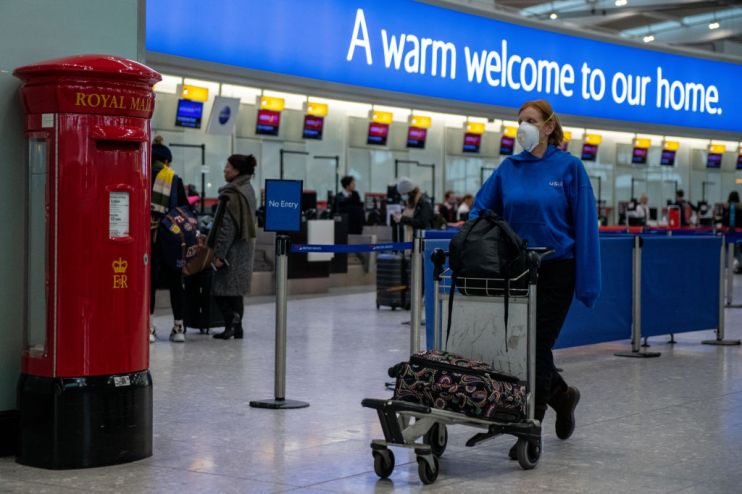
Coronavirus may affect trade
Coronavirus has spread across Europe

The current crisis dominates everything, from trade to everyday life. But, within a relatively short space of time, it will pass. What next? What will be the “new normal” after coronavirus?

A key policy aim across the west for many decades since the Second World War was to reduce barriers to international trade. But it seems likely that the crisis will reverse this longstanding trend. There were already signs of it slowing down. 

President Trump is trading accusations with China on who is to blame for the coronavirus pandemic. Of course, this mood can swing.  

But an important new phrase in US government circles is “decoupling”. American supply chains have become increasingly dependent on China in the past 20 years or so. The talk is of breaking this dependence, probably by using new trade barriers.

Within the EU, national governments have reasserted domestic sovereignty in a dramatic way.  The authority of the Europea Commission has been reduced, and it will not be easy to restore it.

The instinct of economists is to recoil in horror whenever they are confronted with the idea of barriers to trade. These are regarded as being unequivocally a Bad Thing. But their own discipline shows that matters are not necessarily so clear-cut.

Over 60 years ago, the theoretical journal the Review of Economic Studies — then as now a desired outlet for academic economists — published a paper entitled “The general theory of second best”.  

Richard Lipsey, one of the authors, went on to write a best-selling textbook. The other, sadly dead now, was Kelvin Lancaster. He was a highly original thinker who in the opinion of many should have been given the Nobel Prize.

Read more

Singapore on Thames or the Sick Man of Europe?: The Economics of Brexit Ten Years from the Referendum 

UK-EU Brexit negotiations meeting with officials discussing trade agreements and policy impacts in a formal conference room

The paper is set in the highly abstract context of what economists call general equilibrium.  Everyone behaves exactly in accord with economic theory. Supply and demand balance in every market, so there is no unemployment, for example. It represents the theoretical ideal of the efficient allocation of resources.

If there were only one barrier to such a perfect state of affairs, getting rid of it would lead to a better outcome. Lipsey and Lancaster asked the simple question: if there were more than one, what can we say if just one of these is eliminated?

Their answer was quite devastating — so much so that economists who encounter this famous article as students look it firmly in the eye and then try and forget it.

They showed that there was no theoretical presumption that the economy would be more efficient if an imperfection were removed but others still remained.

In the real world, there are of course many deviations from this abstract, perfect world. This means that there is no presumption in economic theory that bringing in some restrictions on trade will make things worse. It is an empirical and not a theoretical issue.

Just like the UK leaving the EU, what really matters is the domestic response to changes in the external environment. A bit more protectionism across the globe could stimulate a new wave of innovation in the west, as we look to rely on ourselves rather than China.


Paul Ormerod is an economist at Volterra Partners LLP, a Visiting Professor in the Department of Computer Science at UCL, and author of Against the Grain: Insights of an Economic Contrarian, published by the IEA in conjunction with Morning Wire

Read more

UK inks trade deal with Switzerland – despite shouting match

UK and Switzerland officials signing a trade deal, highlighting international services agreement and bilateral cooperation

Share this article

  • Facebook
  • X
  • LinkedIn
  • WhatsApp
  • Email

Similarly tagged content:

Sections

  • Markets & Economics
  • News
  • Opinion

Categories

  • Business
  • Economics
  • Opinion

Related Topics

  • Brexit
  • Coronavirus
  • UK trade

Trending Articles

  • As it happened: FTSE 100 drops as oil prices rise after Trump makes Hormuz threat

  • Is the Zeekr 9X Super Hybrid the new luxury SUV to beat?

  • US bond market jitters spark UK economy recession warning

  • Grandparents fund university degrees to avoid inheritance tax net

  • Aldi boss wades into supermarket ‘price-gouging’ row

More from Morning Wire

  • Singapore on Thames or the Sick Man of Europe?: The Economics of Brexit Ten Years from the Referendum 

    Opinion
    UK-EU Brexit negotiations meeting with officials discussing trade agreements and policy impacts in a formal conference room
  • UK inks trade deal with Switzerland – despite shouting match

    Politics
    UK and Switzerland officials signing a trade deal, highlighting international services agreement and bilateral cooperation
  • Making free trade a reality: The UK-GCC strategic dialogue

    Partner
    Alexey Fedorenko credited image showing a relevant scene or subject matter related to the General news article content
  • Retailers urge Burnham to slash tax and back youth employment

    Retail
    Burnham cityscape at sunset with historic buildings and bustling streets, highlighting the vibrant urban landscape
  • Top investment bank: Starmer and Reeves left UK ‘no better off than they found it’

    Economics
    Keir Starmer and Rachel Reeves discuss the Great British Summer Savings scheme at a press conference podium with banners b...
  • Elavon renews partnership with Sage to simplify payments for growing businesses

    Business Wire
  • Here’s how to fix London listings

    Opinion
    GettyImages 2211256637 showing a significant event or figure relevant to recent news updates in the business sector
  • Would a Burnham premiership deepen the North-South housing divide?

    Property
    Andy Burnham returns to Parliament
MorningWire

Independent European business, markets and political news for decision-makers.

Morning Briefing

Europe

  • Germany
  • France
  • EU Institutions
  • Europe

Business

  • Markets
  • Business
  • Economy
  • Regulation
  • Competition
  • Public Affairs

Editorial

  • Opinion
  • Editorial Policy
  • Corrections
  • Contact

Company

  • About Morning Wire
  • Privacy Policy
  • Terms of Use
  • Cookie Policy
© 2026 Morning Wire Ltd · Published by Morning Wire Media, Bahnhofstrasse 65, 8001 Zürich, Switzerland
Privacy · Terms · Cookies · Facebook